Ingredients
Pasta
- 1 pound (450 g) elbow macaroni
(Shells, cavatappi, or rotini also work well because they hold sauce)
Cheese (very important)
Use freshly grated cheese if possible. Pre-shredded cheese often contains anti-caking agents that make sauces grainy.
- 3 cups sharp cheddar cheese, grated
- 1½ cups mild cheddar or Monterey Jack, grated
- ½ cup Parmesan cheese, finely grated
This mix gives sharp flavor, creaminess, and depth.
Sauce Base
- 4 tablespoons unsalted butter
- ¼ cup all-purpose flour
- 3½ cups whole milk, warmed
- ½ cup heavy cream
Seasonings
- 1½ teaspoons salt (divided)
- ½ teaspoon black pepper
- ½ teaspoon paprika (optional but recommended)
- ¼ teaspoon garlic powder
- ¼ teaspoon onion powder
- ¼ teaspoon dry mustard powder (optional, but adds classic flavor)
Topping (Optional but Recommended)
- 1 cup breadcrumbs (panko or regular)
- 2 tablespoons melted butter
- 2 tablespoons Parmesan cheese
Equipment Needed
- Large pot for boiling pasta
- Medium saucepan for cheese sauce
- Whisk
- Wooden spoon or spatula
- 9×13-inch baking dish
- Cheese grater
Step 1: Cook the Pasta Correctly
- Bring a large pot of water to a rolling boil.
- Add a generous amount of salt. The water should taste like the sea.
- Add the macaroni and cook 1–2 minutes less than the package instructions.
- This is crucial. The pasta will finish cooking in the oven.
- Drain the pasta well.
- Do not rinse the pasta. The starch helps the sauce cling.
Set aside.
Step 2: Make the Roux (Foundation of the Sauce)
- In a medium saucepan, melt the butter over medium heat.
- Once fully melted and bubbling gently, add the flour.
- Whisk continuously for about 1–2 minutes.
- The mixture should look like a smooth paste.
- You are cooking out the raw flour taste, not browning it.
This mixture is called a roux, and it thickens the sauce.
Step 3: Turn the Roux into a Cream Sauce
- Slowly pour in the warm milk while whisking constantly.
- Add it gradually to prevent lumps.
- Whisk until smooth.
- Add the heavy cream.
- Continue cooking over medium heat, stirring frequently.
- After about 5–7 minutes, the sauce should thicken enough to coat the back of a spoon.
Do not rush this step. Gentle heat creates a smooth sauce.
Step 4: Season the Sauce
Add:
- 1 teaspoon salt
- Black pepper
- Paprika
- Garlic powder
- Onion powder
- Mustard powder (if using)
Stir well and taste. Adjust seasoning if needed.
Step 5: Add the Cheese (Most Important Step)
- Lower the heat to low.
- Add the cheese one handful at a time.
- Stir until each addition melts completely before adding more.
- Do not let the sauce boil.
If the heat is too high, the cheese can separate and become grainy.
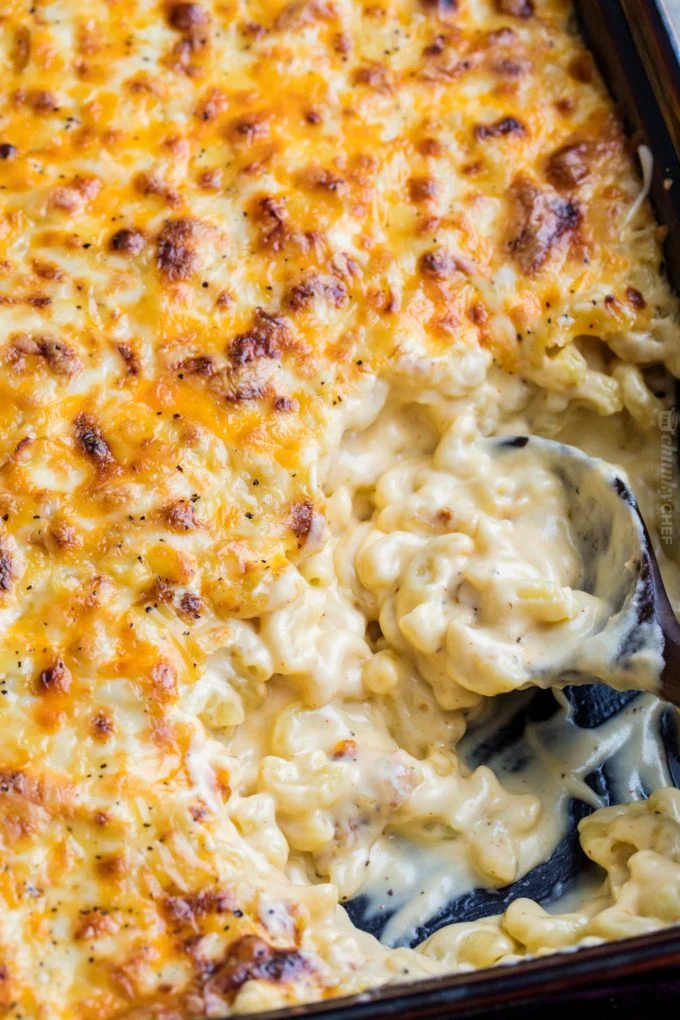
When finished, the sauce should be:
- Smooth
- Thick
- Glossy
- Richly cheesy
Step 6: Combine Pasta and Sauce
- Add the drained pasta to the cheese sauce.
- Stir gently until every piece is coated.
- Taste again and adjust salt if necessary.
Step 7: Prepare the Baking Dish
- Preheat the oven to 375°F (190°C).
- Lightly butter or grease a 9×13-inch baking dish.
- Pour the mac and cheese mixture into the dish.
- Spread evenly.
Step 8: Make the Topping
In a small bowl, mix:
- Breadcrumbs
- Melted butter
- Parmesan cheese
Sprinkle evenly over the mac and cheese.
This creates a crisp contrast to the creamy interior.
Step 9: Bake
- Place the dish uncovered in the oven.
- Bake for 25–30 minutes, until:
- The top is lightly golden
- The edges are bubbling
- For extra browning, broil for 1–2 minutes at the end (watch carefully).
Step 10: Rest Before Serving
Let the mac and cheese sit for 10 minutes after baking.
This allows the sauce to set slightly and improves texture.
How to Customize
Extra Creamy Version
- Add an extra ½ cup cream
- Reduce baking time by 5 minutes