This Matthew McConaughey inspired tuna salad has taken the internet by storm, and for good reason. Unlike traditional tuna salad recipes that stick to basic ingredients, this version brings together unexpected flavors that create something truly memorable. The combination of creamy mayonnaise, tangy vinegar, spicy wasabi, and crunchy jalapeño chips transforms ordinary canned tuna into a restaurant-quality dish. Whether you’re looking for a quick lunch idea, meal prep option, or something to impress guests, this recipe delivers on all fronts. The best part is that it comes together in just 15 minutes with ingredients you can easily find at any grocery store.
Understanding the Flavor Profile
The genius of this tuna salad lies in its balanced flavor profile that hits all the right notes. The wasabi paste adds a distinctive heat that’s different from typical hot sauce or pepper, giving the salad a sophisticated edge. Red wine vinegar and fresh lemon juice provide brightness and acidity that cuts through the richness of the mayonnaise. The pickles contribute a briny, tangy element while the red onion adds a sharp bite that mellows beautifully when soaked in water. Sweet elements from the corn and optional green apple create contrast against the savory tuna. The jalapeño potato chips aren’t just a garnish – they’re an essential ingredient that adds crunch, saltiness, and a subtle heat that ties everything together.
Choosing the Right Tuna
The type of tuna you select can significantly impact the final result of your salad. Canned tuna packed in water is the healthier choice and allows the other flavors to shine through without being overpowered by oil. Chunk light tuna works perfectly fine and is more budget-friendly, while albacore or white tuna offers a meatier texture and milder flavor. Make sure to drain the tuna thoroughly by pressing it against the side of a strainer to remove excess moisture. Too much liquid will make your salad watery and dilute the dressing. For the freshest taste, check the can date and use tuna that hasn’t been sitting in your pantry for years.
The Secret Ingredient That Changes Everything
Wasabi paste is what sets this tuna salad apart from every other recipe you’ve tried. This Japanese horseradish brings a clean, sharp heat that’s completely different from chili peppers or black pepper. Unlike hot sauce that can make things watery, wasabi paste blends smoothly into the mayonnaise base without changing the texture. Start with just one teaspoon if you’re not familiar with wasabi, as its heat level can surprise you. The spiciness hits your sinuses rather than your tongue, creating a unique sensation that wakes up your taste buds. You can find wasabi paste in the international aisle of most supermarkets, or substitute with prepared horseradish if needed, though the flavor will be slightly different.
Preparing Your Vegetables Properly
Proper vegetable preparation makes a real difference in how this tuna salad turns out. Dice the pickles into small, uniform pieces so you get a bit in every bite without overwhelming chunks. Finely chop the red onion rather than slicing it into large pieces – smaller pieces distribute the flavor more evenly throughout the salad. The green apple should be cut into small cubes about the size of a corn kernel for the best texture. Leaving the skin on the apple adds color and extra crunch, plus it saves time. If you’re sensitive to raw onion, definitely take the time to soak the chopped pieces in cold water for ten minutes, which removes the harsh sulfur compounds that cause that intense bite.
Mixing the Dressing First
Creating the dressing base before adding the other ingredients is a crucial step that many home cooks skip. Whisking together the mayonnaise, lemon juice, red wine vinegar, wasabi, and oregano creates a smooth, well-blended sauce that will coat every ingredient evenly. If you add these components separately, you’ll end up with pockets of intense wasabi or vinegar that haven’t been properly distributed. Season the dressing with salt and black pepper at this stage so you can taste and adjust before mixing in the tuna and vegetables. This method gives you much better control over the final seasoning and ensures consistent flavor throughout the entire salad.
Adding Texture with Corn and Peas
The addition of corn and peas might seem unusual in a tuna salad, but they serve important purposes beyond just nutrition. Canned corn adds pops of sweetness and a pleasant texture that contrasts with the flaky tuna. Make sure to drain the corn completely and even pat it dry with a paper towel if it seems too wet. The frozen peas can go directly into the salad without thawing – they’ll defrost quickly when mixed with the other room temperature ingredients. Peas bring a fresh, slightly sweet flavor and vibrant green color that makes the salad more visually appealing. Together, these vegetables bulk up the salad and make it more satisfying without adding significant calories.
The Role of Fruit in Savory Dishes
Including green apple in a tuna salad might raise eyebrows, but this ingredient adds a delightful crunch and subtle tartness that complements the other flavors beautifully. Granny Smith apples work best because they’re crisp and tart rather than mealy and sweet. The acidity in the apple echoes the lemon juice and vinegar, reinforcing that bright, fresh taste. The apple also adds a refreshing quality that keeps the salad from feeling too heavy or rich. Cut the apple just before mixing to prevent browning, or toss the pieces in a little lemon juice if you need to prep ahead. This small amount of fruit makes the salad feel lighter and more interesting without being obviously sweet or fruity.
Timing Your Chip Addition
The jalapeño potato chips require careful timing to maintain their signature crunch. Adding them too early will result in soggy chips that lose their appeal and texture. After mixing all the other ingredients and chilling the salad, wait until just before serving to crush and add the chips. Break them into bite-sized pieces rather than crushing them into crumbs – you want recognizable chip pieces that still have structure. Mix half the crushed chips into the salad so every bite has some crunch, then sprinkle the remaining chips on top as a garnish. This two-step approach gives you both integrated flavor and a visually appealing presentation with extra crunch on top.
Why Chilling Time Matters
Allowing the tuna salad to rest in the refrigerator for at least ten minutes before serving isn’t just a suggestion – it’s essential for developing the full flavor. During this chilling time, the ingredients have a chance to mingle and the flavors begin to blend together. The wasabi mellows slightly, the vinegar and lemon juice work their way into the tuna, and the vegetables absorb some of the dressing. The cold temperature also firms up the mayonnaise base, giving the salad a better consistency. If you have more time, letting it chill for thirty minutes to an hour will result in even better flavor development. Just remember to keep those chips separate until you’re ready to eat.
Serving Ideas and Meal Combinations
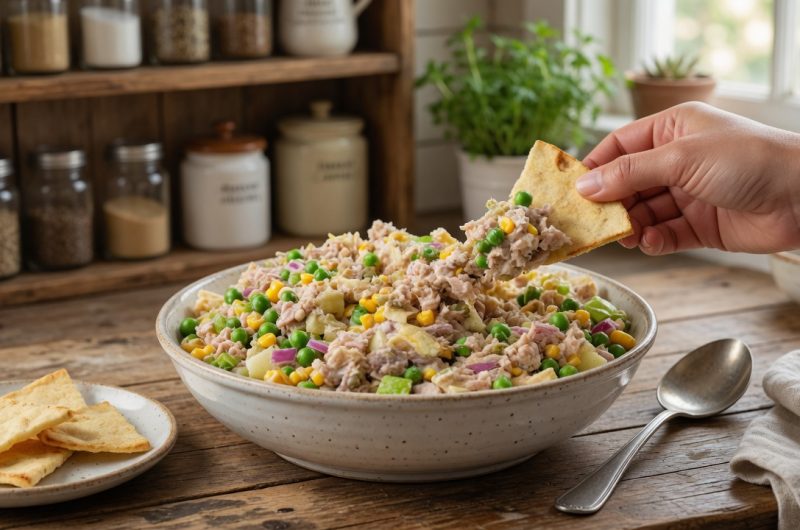
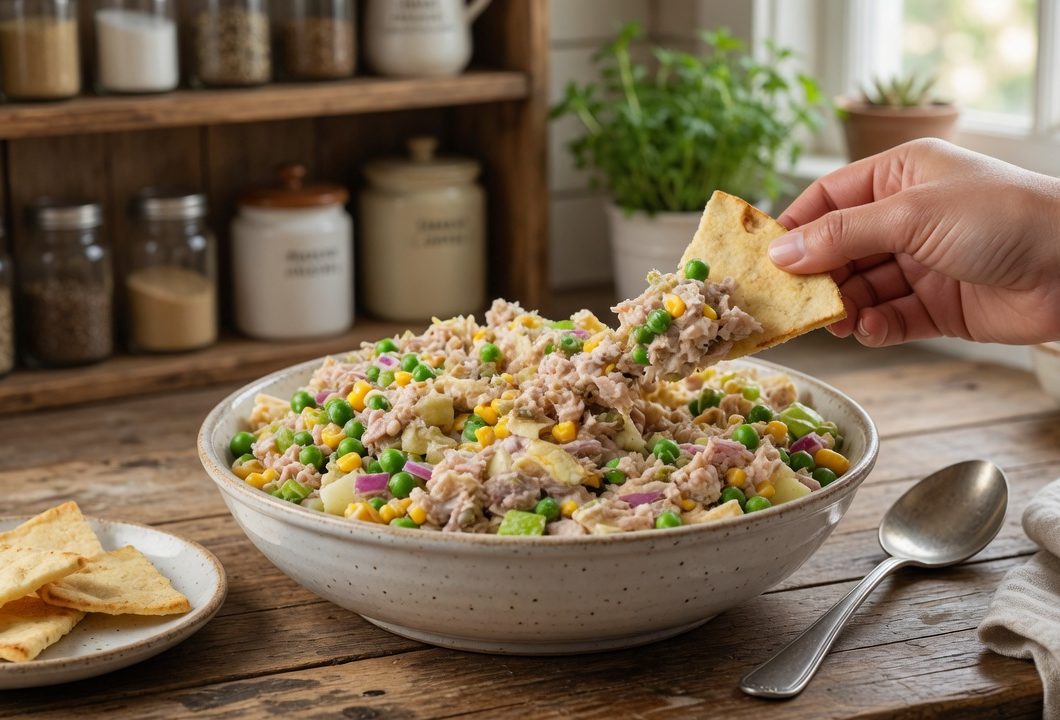
This versatile tuna salad works in numerous serving formats depending on your preference and occasion. Stuffed into a pita pocket, it makes a portable lunch that’s easy to eat on the go. Piled onto toasted bread with lettuce and tomato, it becomes a classic tuna salad sandwich with a gourmet twist. For a low-carb option, scoop it into butter lettuce cups or serve it over a bed of mixed greens. The salad also works wonderfully as a dip for sturdy crackers, pita chips, or vegetable sticks at parties or casual gatherings. You can even serve it as a topping for baked potatoes or mixed into pasta for a cold pasta salad variation.
Storage and Meal Prep Tips
This tuna salad keeps well in the refrigerator, making it perfect for meal prep and advance planning. Store it in an airtight container for up to three days, keeping the jalapeño chips separate in their own bag or container. The salad may release some liquid as it sits, which is normal – just give it a good stir before serving. If you’re making it ahead for lunches throughout the week, portion it into individual containers and pack the chips separately to add right before eating. The flavors actually improve after a day in the fridge as everything continues to meld together. Avoid freezing this salad as the mayonnaise and vegetables won’t maintain their texture when thawed.
Adjusting for Dietary Needs
While this recipe is already relatively healthy and naturally gluten-free if you skip the chips, you can modify it to suit various dietary requirements. For a lighter version, use Greek yogurt in place of half the mayonnaise to reduce calories while maintaining creaminess. Those avoiding nightshades can skip the jalapeño chips and use regular potato chips or crushed pretzels instead. If you’re watching sodium, choose low-sodium tuna and reduce or eliminate the added salt. For extra protein, add chopped hard-boiled eggs or chickpeas. Vegans can substitute canned chickpeas for the tuna and use vegan mayonnaise for a plant-based version that’s equally delicious.
Common Mistakes to Avoid
Several common errors can prevent your tuna salad from reaching its full potential. Don’t skip draining the tuna properly – excess liquid will make the salad watery and dilute the flavors. Avoid using too much wasabi initially, as you can always add more but can’t take it away once it’s mixed in. Don’t cut your vegetables too large or they’ll overpower the delicate tuna texture. Resist the temptation to add the chips early just to save time – you’ll regret the loss of crunch. Don’t overdress the salad thinking more is better; the amount of mayonnaise in this recipe is carefully balanced. Finally, don’t serve it immediately without the chilling period, as you’ll miss out on the developed flavors that make this recipe special.
Ingredient Substitutions That Work
Sometimes you need to work with what you have on hand, and several substitutions can work without compromising the recipe too much. If you don’t have red wine vinegar, apple cider vinegar or white wine vinegar will work in its place. Fresh oregano can replace dried if you have it, using about three times the amount. When jalapeño chips aren’t available, regular kettle chips or even tortilla chips can provide the necessary crunch. If green apples aren’t in season, use a firm pear or just omit the fruit entirely. Regular horseradish can stand in for wasabi paste, though start with a smaller amount as prepared horseradish can be quite potent.
Scaling the Recipe Up or Down
This recipe is easily adjustable depending on how many people you’re feeding. The measurements scale up proportionally, so you can double or triple everything for a crowd or potluck. When making larger batches, mix everything in a big bowl rather than trying to cram it all into a small container. For a single serving, simply divide all ingredients by four and mix in a small bowl. Keep in mind that smaller batches don’t keep quite as long since you’re breaking the seal on all the ingredients. If you’re cooking for one, consider making the full recipe anyway and enjoying it for several meals throughout the week.
Nutritional Benefits of This Recipe
Beyond being delicious, this tuna salad offers solid nutritional value that makes it a smart choice for regular meals. Tuna provides lean protein that helps keep you full and satisfied for hours after eating. The omega-3 fatty acids in tuna support heart health and brain function. Vegetables like peas and corn add fiber, vitamins, and minerals without many calories. The small amount of mayonnaise provides healthy fats that help your body absorb fat-soluble vitamins from the vegetables. At roughly 267 calories per serving, this salad is substantial enough for a meal yet light enough not to weigh you down.
Matthew McConaughey Tuna Salad
 Recipe by admin
A fresh and tangy tuna salad with wasabi kick, crunchy jalapeño chips, and unique flavor combinations. Perfect for sandwiches, wraps, or served with crackers.
4
servings15
minutes267
kcal15
minutesIngredients
10oz canned tuna, drained
3 tablespoons chopped pickles
3 tablespoons finely chopped red onion
½ cup canned corn, drained
½ cup frozen peas
¼ large green apple
½ cup jalapeño potato chips
1 to 2 teaspoons wasabi paste
1 tablespoon lemon juice
1 tablespoon red wine vinegar
½ teaspoon oregano or Italian herbs
1 teaspoon agave or honey, optional
Salt and black pepper to taste
Directions
- Dice the green apple into small cubes and finely chop the pickles and red onion. If desired, soak the chopped red onion in cold water for 10 minutes while preparing other ingredients.
- Combine mayonnaise, lemon juice, red wine vinegar, 1 teaspoon wasabi paste, and oregano in a large bowl. Add a pinch of salt and black pepper, then whisk until smooth and well blended.
- Add drained tuna, corn, peas, chopped apple, red onion, and pickles to the bowl. Stir everything together with a spoon until evenly combined. Taste and add the second teaspoon of wasabi if you want more heat.
- Cover the bowl and refrigerate for 10 minutes to allow flavors to develop and blend together.
- Just before serving, break the jalapeño chips into bite-sized pieces. Stir half the crushed chips into the salad, then sprinkle the remaining chips on top for extra crunch.
Nutrition Facts
- Calories: 267kcal
- Fat: 15g
- Carbohydrates: 16g
- Fiber: 2g
- Sugar: 5g
- Protein: 16g