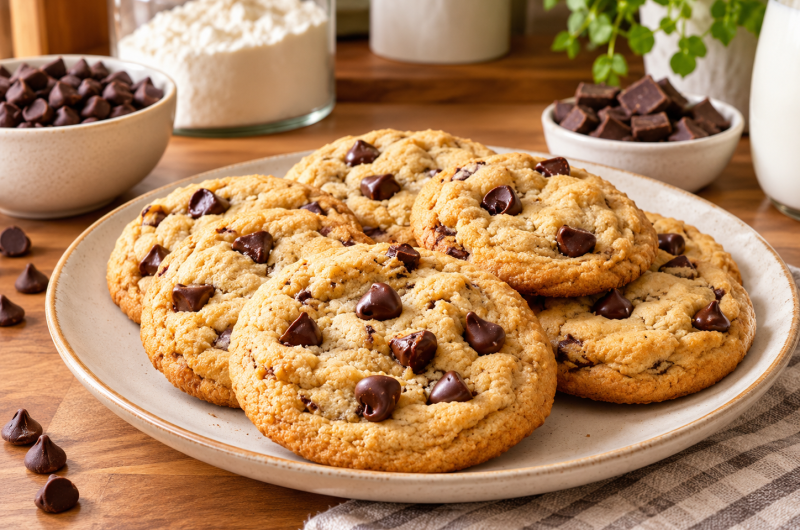
Chocolate Chip Cookies are a classic homemade dessert with crispy golden edges, soft and chewy centers, and plenty of melted chocolate in every bite. Made with butter, brown sugar, granulated sugar, vanilla extract, and semisweet chocolate chips, these cookies deliver the perfect balance of sweetness and rich flavor.
They are easy to prepare with simple pantry ingredients and make a delicious treat for family gatherings, afternoon snacks, holidays, or everyday baking.
One of the best features of this easy chocolate chip cookie recipe is that the dough does not require chilling before baking. You can mix the ingredients, shape the dough, and bake fresh cookies in approximately 30 minutes.
If you have extra time, chilling the dough can create thicker cookies with a deeper flavor. Both methods work well, allowing you to choose between quick preparation and a more developed cookie texture.
What Makes These Chocolate Chip Cookies Special?
The secret to delicious chocolate chip cookies is using the right balance of ingredients. Brown sugar adds moisture and a subtle molasses flavor, while granulated sugar helps the edges become golden and crisp. Butter provides richness, and vanilla extract enhances the overall flavor. Baking soda supports spreading and browning, while semisweet chocolate chips create pockets of chocolate throughout the cookies.
This recipe produces cookies that are crisp around the edges without becoming hard in the center. The dough is easy to prepare, and the baking method helps the cookies maintain a soft middle. Using evenly sized dough portions also ensures that the cookies bake at a similar rate, making it easier to achieve consistent results.
Key Ingredients for Chocolate Chip Cookies
All-Purpose Flour
All-purpose flour provides the structure needed to hold the cookies together. Accurate measurement is important because too much flour can make the cookies dry, thick, and less chewy. For the best results, weigh the flour using a kitchen scale. If measuring with cups, spoon the flour into the measuring cup and level it without packing it down.
Brown Sugar and Granulated Sugar
Light brown sugar contributes moisture, chewiness, and a rich caramel-like flavor. Granulated sugar helps create crisp edges and balances the softness of the center. Using both sugars gives these homemade chocolate chip cookies their classic texture. Dark brown sugar can provide a stronger molasses flavor, but light brown sugar is the recommended choice for the original recipe.
Unsalted Butter
Softened unsalted butter adds flavor and tenderness. It should be soft enough to press with a finger but should not look greasy or melted. Properly softened butter combines well with the sugars, creating a fluffy mixture that helps the cookies bake evenly. Unsalted butter also allows better control over the amount of salt in the dough.
Egg and Vanilla Extract
The egg binds the ingredients together and contributes to the cookie’s structure. Vanilla extract adds warmth and enhances the flavor of the butter, sugar, and chocolate. For easier mixing, allow the egg to come closer to room temperature before preparing the dough.
Baking Soda and Salt
Baking soda helps the cookies spread and brown during baking. It should be fresh and free from hard lumps. Fine salt balances the sweetness and enhances the chocolate flavor. If desired, flaky sea salt can be sprinkled over the cookies immediately after baking for a sweet-and-salty finish.
Semisweet Chocolate Chips
Semisweet chocolate chips provide a rich chocolate flavor without making the cookies excessively sweet. You can also use chocolate chunks or a mixture of chips and chopped chocolate. Pressing a few extra pieces onto each dough ball before baking creates an attractive finish and gives the cookies visible pools of melted chocolate.
How to Make Chocolate Chip Cookies
Step 1: Prepare the Oven and Baking Sheets
Preheat your oven to 350°F (175°C). Line baking sheets with parchment paper or silicone baking mats to prevent sticking and make cleanup easier. Preparing the trays before mixing the dough allows you to move directly to portioning and baking when the ingredients are ready.
Step 2: Mix the Dry Ingredients
In a medium bowl, whisk together the all-purpose flour, baking soda, and salt. Mixing these ingredients first distributes the leavening agent and seasoning evenly throughout the flour. This simple step helps the cookies bake consistently and prevents concentrated pockets of baking soda or salt.
Step 3: Cream the Butter and Sugars
Place the softened butter, light brown sugar, and granulated sugar in a large mixing bowl. Beat on medium-low speed for approximately five minutes, until the mixture becomes light and fluffy. This process incorporates air into the butter and helps create the desired texture. Scrape down the sides of the bowl if necessary.
Step 4: Add the Egg and Vanilla
Add the egg and vanilla extract to the butter mixture. Beat until everything is thoroughly combined, scraping the sides and bottom of the bowl to incorporate any remaining ingredients. The mixture should look smooth and creamy before you add the flour.
Step 5: Combine the Dough
Gradually add the dry ingredients while mixing on low speed. Stop as soon as the flour disappears into the mixture. Overmixing can make the cookies tougher than intended. Fold in the semisweet chocolate chips with a spatula, making sure the chocolate is evenly distributed throughout the dough.
Step 6: Shape the Cookies
Use a one-and-a-half-tablespoon cookie scoop to portion the dough into evenly sized balls. Arrange them on the prepared baking sheets, leaving enough space between each portion for spreading. Press a few extra chocolate chips onto the tops if you want a bakery-style appearance.
Step 7: Bake Until Golden
Bake the cookies for 12 to 14 minutes, preferably one baking sheet at a time. The edges should be golden brown, while the centers may still appear slightly soft and raised. Avoid waiting until the centers become completely firm because the cookies will continue cooking on the hot baking sheet after removal.
Step 8: Cool Before Serving
Remove the cookies from the oven and sprinkle with flaky sea salt if desired. Let them rest on the baking sheet for five to ten minutes before transferring them to a wire rack. This resting period helps the centers set while keeping the cookies soft and chewy.
Should You Chill Chocolate Chip Cookie Dough?
Chilling is optional, so you can bake these cookies immediately after preparing the dough. Freshly mixed dough produces delicious cookies with crisp edges and soft centers, making it ideal when you want a quick homemade dessert.
Refrigerating the shaped dough for one hour can produce thicker cookies with a deeper flavor. The cold butter takes longer to melt in the oven, allowing the edges to set before the cookies spread too much. The flour also has more time to absorb moisture, which can improve the final texture.
For advance preparation, cover the shaped dough balls and refrigerate them for up to 72 hours. When baking chilled dough, allow approximately 13 to 15 minutes, checking the cookies toward the end of the baking time because ovens can vary.
How to Freeze Chocolate Chip Cookie Dough
Freezing cookie dough makes it easy to enjoy fresh cookies whenever you want. Scoop the dough into individual balls and arrange them in a single layer on a lined baking sheet. Freeze until firm, then transfer the portions to a freezer-safe container or sealed bag.
For the best quality, use the frozen dough within three months. Label the container with the date so you can keep track of storage time. Individual portions are convenient because you can bake only the number of cookies you need.
Frozen dough can go directly into the oven without thawing. One-and-a-half-tablespoon portions generally need approximately 15 minutes at 350°F, although the exact time depends on your oven. Check the edges and centers carefully before removing the cookies.
Tips for Perfect Chocolate Chip Cookies
Measure the Flour Accurately
Too much flour can make cookies dry and thick. Weighing the flour is the most reliable option, but the spoon-and-level method works well when using measuring cups.
Use Properly Softened Butter
Butter should be soft enough to mix easily but should not be melted or greasy. Butter that is too warm can cause excessive spreading and thinner cookies.
Avoid Overmixing
Once the flour has been added, mix only until the ingredients are combined. Fold in the chocolate chips by hand to prevent unnecessary mixing.
Do Not Overbake
Remove the cookies when the edges are golden and the centers remain slightly soft. They will continue to set as they cool, helping maintain their chewy texture.
Bake Similar-Sized Portions
Using a cookie scoop ensures that the dough balls are similar in size. This helps the cookies bake evenly and reduces the chance of some cookies becoming overdone while others remain underbaked.
Easy Chocolate Chip Cookie Variations
You can customize these cookies to suit different tastes. For a softer texture, the original recipe suggests adding two tablespoons of cornstarch to the flour mixture. This changes the ingredient list but may produce a more tender cookie.
For a deeper flavor, try a browned-butter variation using a recipe specifically adjusted for browned butter. Browning removes moisture from the butter, so the original measurements may need to be changed to maintain the right dough consistency.
Nuts and other mix-ins are another simple way to add variety. Chopped walnuts, toasted pecans, white chocolate chips, peanut butter chips, toasted coconut, and candy-coated chocolates can all work well. Keep the total quantity of mix-ins around one and a half cups to help maintain the intended cookie structure.
How to Store Homemade Chocolate Chip Cookies
Allow the cookies to cool completely before placing them in an airtight container. Storing warm cookies can trap steam and make their surfaces damp. At room temperature, properly stored cookies can stay fresh for up to five days.
Keep the container in a cool, dry place away from direct sunlight. If you prefer softer cookies, make sure the container is sealed tightly. For crispier cookies, allow them to cool completely before storing so excess moisture does not become trapped.
You can also freeze baked cookies in a freezer-safe container, separating layers with parchment paper. Thaw them before serving, or warm them briefly if you prefer a freshly baked texture.
What to Serve With Chocolate Chip Cookies
Chocolate chip cookies are delicious on their own, but they also pair well with cold milk, coffee, or tea. Serve them as an afternoon snack, add them to a dessert platter, or prepare a batch for family gatherings and celebrations.
For a more indulgent dessert, serve a slightly warm cookie with vanilla ice cream. The cold, creamy ice cream contrasts with the buttery cookie and melted chocolate. These cookies are also suitable for lunchboxes, bake sales, holiday treats, and casual get-togethers.
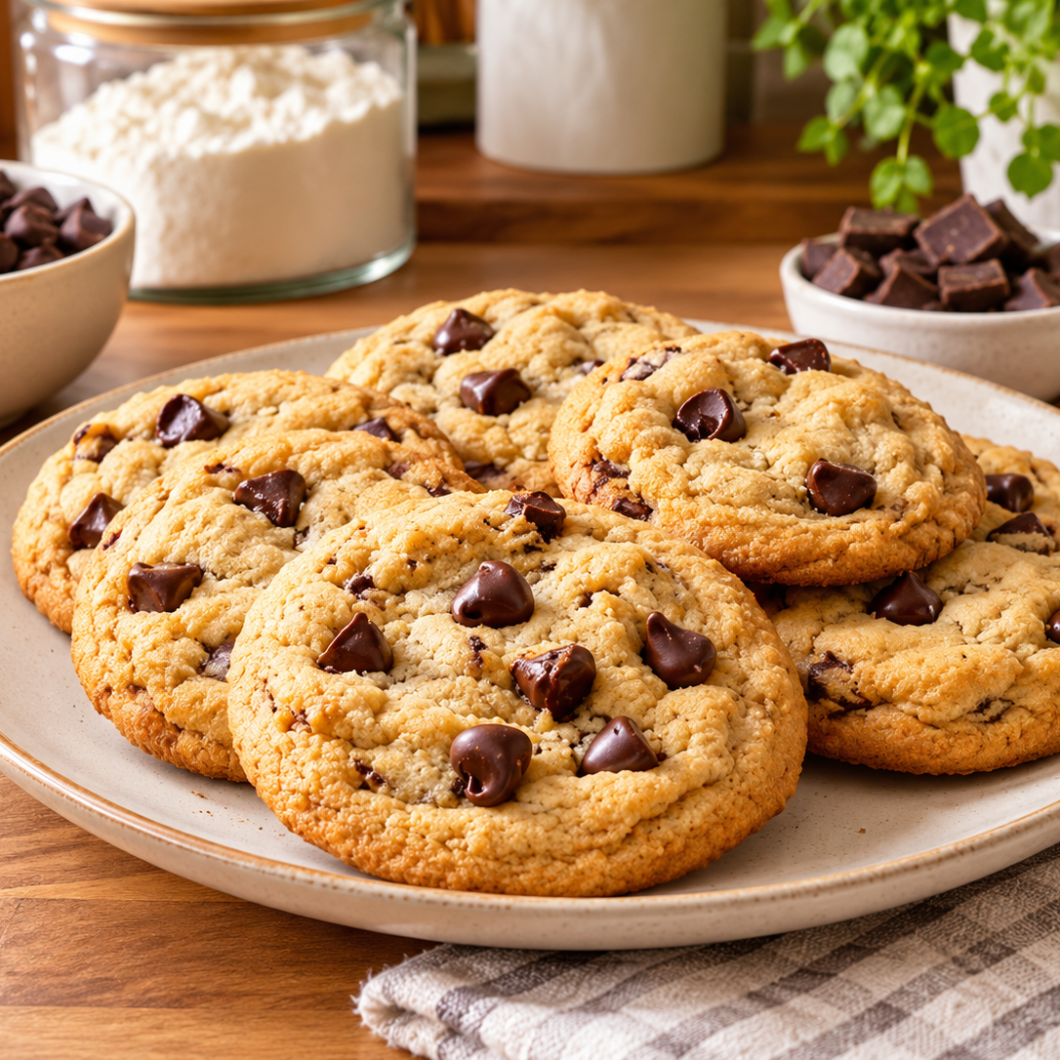
Chocolate Chip Cookies Dessert
 Recipe by admin1
These homemade chocolate chip cookies have crispy golden edges, soft centers, and plenty of melted chocolate chips in every bite.
32
servings10
minutes12
minutes170
kcal60
minutes1
hour22
minutesIngredients
2½ cups all-purpose flour (300 g)
¾ teaspoon baking soda
¾ teaspoon salt
1 cup unsalted butter, softened (227 g)
¾ cup light brown sugar (165 g)
½ cup granulated sugar (100 g)
1 large egg
1 tablespoon vanilla extract
1½ cups semisweet chocolate chips or chocolate chunks (270 g)
Directions
- Preheat the Oven:
Preheat the oven to 350°F (175°C). Line two baking sheets with parchment paper or silicone baking mats. - Mix the Dry Ingredients:
In a medium bowl, whisk together the all-purpose flour, baking soda, and salt until evenly combined. - Cream the Butter and Sugars:
In a large mixing bowl, beat the softened butter, brown sugar, and granulated sugar for approximately 5 minutes until light and fluffy. - Add the Egg and Vanilla:
Mix in the egg and vanilla extract until fully incorporated. Scrape down the sides of the bowl as needed. - Prepare the Cookie Dough:
Gradually add the flour mixture while mixing on low speed. Mix just until combined, then fold in the chocolate chips. - Shape the Cookies:
Scoop approximately 1½ tablespoons of dough per cookie and arrange the dough balls on the prepared baking sheets. Press additional chocolate chips onto the tops if desired. You can bake immediately or chill the dough for 1 hour, or up to 72 hours when covered. - Bake the Cookies: Bake for 12–14 minutes, or until the edges are golden brown. Chilled cookies may require 13–15 minutes. Bake one sheet at a time for more consistent results. Sprinkle with flaky salt if desired.
- Cool and Serve: Allow the cookies to rest on the baking sheet for 5–10 minutes before transferring them to a wire rack to cool completely.
Notes
- Extra Chocolate: Press additional chocolate chunks onto each dough ball before baking for delicious pools of melted chocolate.
- Soft and Gooey Centers: Avoid overbaking. Remove the cookies when the edges are golden and the centers still look soft. They will continue to set as they cool.
- Crispier Cookies: Bake for an additional 2 minutes if you prefer a firmer, crispier texture.
- Storage: Store cooled cookies in an airtight container at room temperature for up to 5 days.
- Chilling Tip: Chilling the dough can help develop the flavor and make the cookies easier to handle.
Nutrition Facts
- Calories: 170kcal
- Fat: 9g
- Carbohydrates: 20g
- Fiber: 1g
- Sugar: 11g
- Protein: 2g