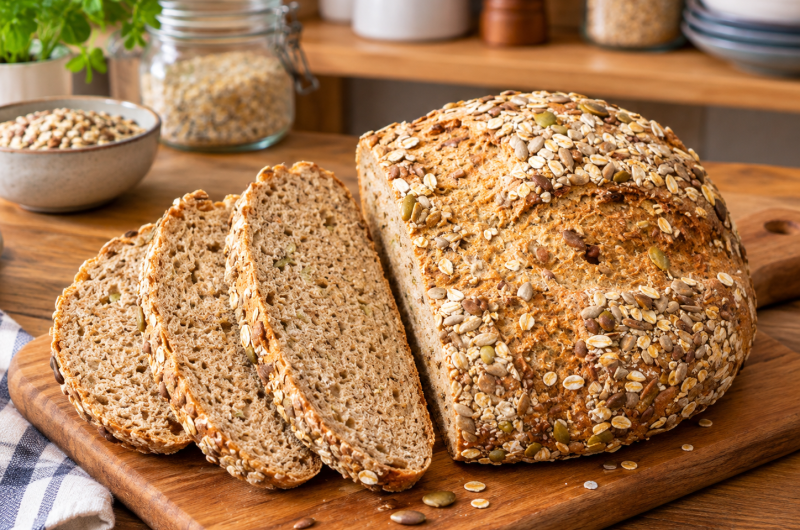
Seeded whole grain bread is a hearty, flavorful homemade bread packed with a variety of seeds, grains, and a soft, satisfying interior. Its golden-brown crust, crunchy seed topping, and rustic appearance make it an appealing choice for breakfast, lunch, or a quick snack. Whether served with butter, toasted with avocado, or used to prepare sandwiches, this homemade seeded bread offers a delicious alternative to ordinary sliced bread.
Making seeded bread at home allows you to enjoy its fresh aroma and control the ingredients used in the recipe. The combination of oats, sunflower seeds, pumpkin seeds, flaxseeds, and other grains creates a distinctive texture and nutty flavor. Every slice has a beautiful appearance, with visible seeds throughout the crust and crumb. This bread works well for everyday meals and can be enjoyed with both sweet and savory toppings.
If you enjoy homemade bread with a rustic bakery-style appearance, this seeded whole grain bread recipe is worth adding to your collection. It is suitable for serving at family breakfasts, preparing lunchbox sandwiches, or pairing with soups and salads. The seeds add texture and flavor, while the bread itself provides a satisfying base for many different meals.
Why You Will Love This Seeded Bread Recipe
A Delicious Nutty Flavor
One of the best features of seeded whole grain bread is its naturally nutty taste. Sunflower seeds, pumpkin seeds, and flaxseeds contribute different flavors that complement the bread’s soft interior. The seeds become especially aromatic during baking, creating a delicious contrast between the crisp crust and tender crumb. This combination makes each slice enjoyable even when served with simple toppings.
A Rustic Bakery-Style Appearance
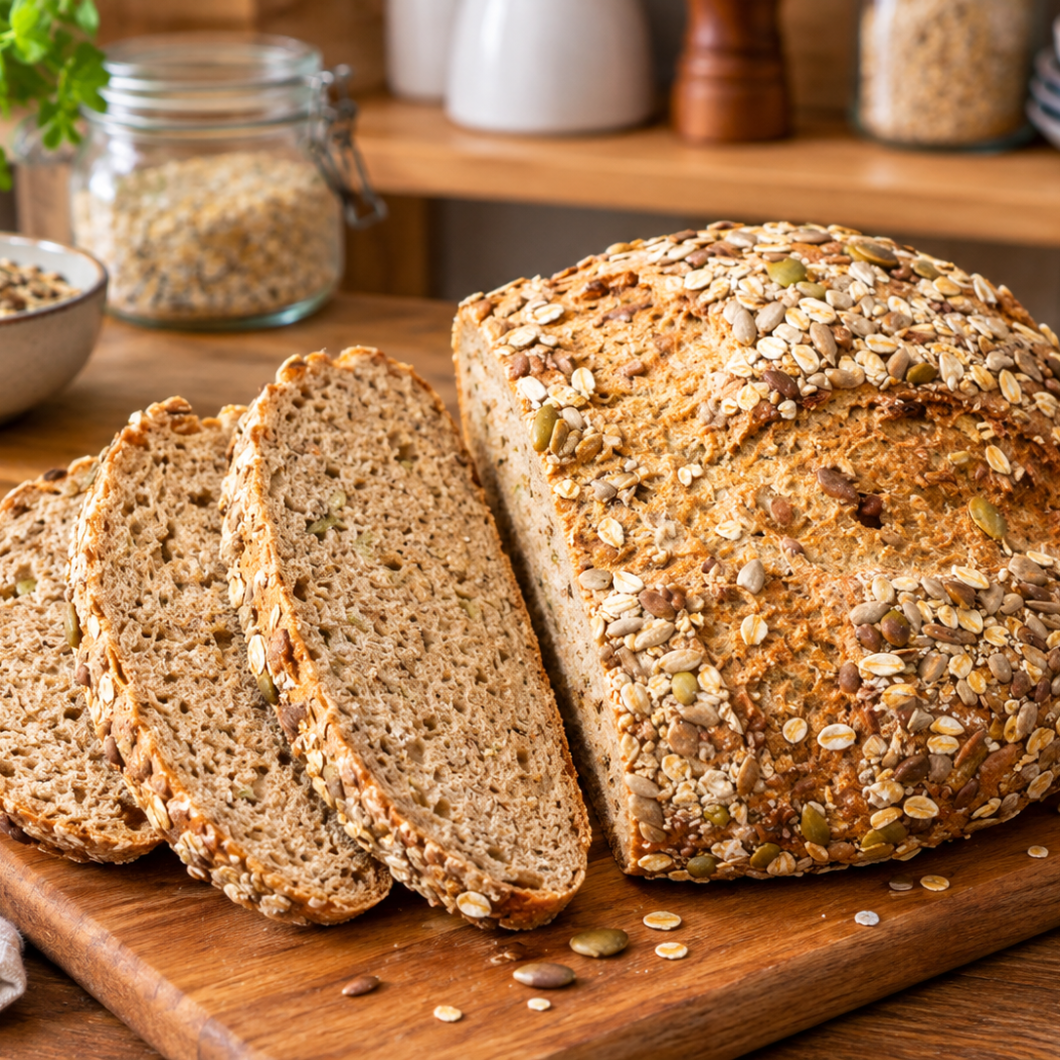
Homemade seeded bread can look just as inviting as a loaf from a local bakery. The seeds covering the outside create an attractive textured crust, while the sliced interior reveals a mixture of grains and an airy crumb. Serving the loaf on a wooden cutting board gives it a traditional homemade appearance that works beautifully for breakfast tables, brunch spreads, and food photography.
Versatile for Everyday Meals
This bread is easy to incorporate into different meals throughout the day. Serve a slice with scrambled eggs in the morning, prepare a sandwich for lunch, or toast it as an afternoon snack. It also pairs well with creamy soups, fresh salads, roasted vegetables, and cheese. Its hearty flavor makes it suitable for both simple meals and more elaborate serving ideas.
What Makes Seeded Whole Grain Bread Special?
Seeded whole grain bread stands out because of its combination of texture, flavor, and visual appeal. Instead of having a plain crust and uniform interior, this bread contains a mixture of seeds and grains that provide small bursts of crunch in every bite. The contrast between the crust and the soft center makes it especially satisfying when freshly sliced or lightly toasted.
Whole grains and seeds are commonly included in balanced eating patterns because they can contribute dietary fiber, healthy fats, protein, vitamins, and minerals. However, the nutritional value of the finished loaf depends on the specific flour, seed quantities, and other ingredients used. Choosing whole grain flour and a variety of seeds can help create a more nutrient-rich bread than recipes made entirely with refined flour.
Another appealing feature is its versatility. You can enjoy seeded bread with sweet ingredients such as honey, fruit preserves, or nut butter, or pair it with savory toppings such as hummus, sliced tomatoes, cheese, and avocado. This flexibility makes it a practical option for households that enjoy homemade baked goods.
Ingredients That Add Flavor and Texture
Seeds and Grains
The seeds are an important part of this bread because they contribute crunch, flavor, and an attractive appearance. Sunflower seeds have a mild, nutty taste, while pumpkin seeds provide a slightly earthy flavor. Flaxseeds add a subtle nuttiness and are often used in whole grain baking. Oats can contribute a pleasant texture and help create the rustic look associated with traditional seeded loaves.
Using a variety of seeds creates a more interesting loaf than relying on a single type. Some seeds can be mixed into the dough, while others can be added to the outside before baking. The seeds on the crust become lightly toasted in the oven, enhancing their aroma and providing a delicate crunch.
Flour and Other Bread Ingredients
The flour forms the foundation of the bread and influences its texture, structure, and flavor. Whole wheat flour generally produces a heartier loaf with a deeper flavor, while other flour varieties may create a lighter crumb. The exact result depends on the recipe and the proportions of the ingredients.
Yeast, liquid, salt, and any other ingredients included in the original recipe also play important roles. Yeast helps the dough rise in recipes designed for yeast fermentation, while salt enhances flavor. The liquid helps bring the dough together and affects its consistency. For the best results, measure each ingredient carefully and follow the quantities specified in the recipe.
Is Seeded Whole Grain Bread Healthy?
Seeded whole grain bread can be a useful addition to a balanced diet, particularly when it contains whole grain flour and a variety of seeds. Whole grains provide fiber and other nutrients, while seeds contribute unsaturated fats, plant-based protein, and minerals. These ingredients can make the bread a satisfying choice for breakfast, lunch, or a snack.
The nutritional content varies depending on the ingredients and serving size. Some recipes contain added sugar, oil, or refined flour, so it is helpful to review the complete ingredient list before describing a loaf as especially healthy. Pairing a slice with eggs, vegetables, beans, or another protein source can help create a more balanced meal.
It is also important to distinguish whole grain bread from gluten-free bread. Traditional wheat-based seeded bread contains gluten, even when it includes nutritious seeds and whole grains. To make a gluten-free version, the recipe must use suitable gluten-free ingredients and avoid cross-contact with gluten-containing foods during preparation.
How to Make Seeded Whole Grain Bread
Prepare the Ingredients
Begin by gathering all the ingredients and measuring them according to the original recipe. Preparing everything before starting makes the baking process easier and helps prevent mistakes. Check that the seeds are fresh and that the flour is suitable for the recipe. If the instructions call for specific preparation, such as soaking seeds or activating yeast, complete those steps before mixing the dough.
Mix the Dough
Combine the ingredients in the order specified by the recipe. Mix until the ingredients form a consistent dough, paying attention to its texture. Whole grain dough can feel different from dough made with refined white flour because the bran and grains absorb liquid differently. Avoid adding extra flour or liquid without checking the recipe’s guidance, as changing the proportions can affect the final loaf.
Knead and Allow the Dough to Rise
If the recipe uses yeast, knead the dough as directed until it develops the required structure. Place it in a suitable bowl and allow it to rise under the conditions specified in the instructions. Rising time can vary with room temperature, yeast activity, and the flour used. Follow the original recipe rather than relying only on the clock, since the dough’s appearance and volume can help indicate when it is ready.
Shape and Add the Seeds
Once the dough is ready, shape it according to the recipe and prepare the outside for the seed topping if required. Distribute the seeds evenly so that the loaf has an attractive appearance and a consistent texture. Press them gently onto the surface when needed to help them adhere. Transfer the shaped loaf to the appropriate baking pan or prepared baking surface.
Bake Until Golden Brown
Bake the loaf at the temperature and for the duration specified in the recipe. During baking, the crust develops its golden color and the seeds become fragrant. Avoid cutting the bread immediately after removing it from the oven. Allowing it to cool gives the interior time to settle, making the loaf easier to slice and helping preserve its texture.
Tips for Better Homemade Seeded Bread
Measure Ingredients Carefully
Accurate measurements are important for consistent baking results. Too much flour can make the bread dense, while too much liquid may leave the dough difficult to shape. Use the quantities listed in the recipe and make adjustments only when the instructions recommend them.
Use Fresh Seeds
Fresh seeds provide better flavor and aroma. Seeds that have been stored for too long or exposed to heat can develop an unpleasant taste. Keep unused seeds in airtight containers in a cool place, following the storage instructions for each variety.
Allow the Bread to Cool
Cooling is an important final step. Cutting a hot loaf can compress the crumb and release moisture before the interior has fully settled. Place the baked bread on a cooling rack and let it cool sufficiently before slicing.
Store the Loaf Properly
Store the cooled bread in a suitable bread bag or airtight container to help maintain its quality. For longer storage, slice the loaf and freeze individual portions in a freezer-safe bag. Frozen slices can be thawed as needed or toasted directly when appropriate.
What to Serve with Seeded Whole Grain Bread
Seeded bread pairs well with a wide range of toppings and meals. For breakfast, serve it toasted with butter, scrambled eggs, avocado, or nut butter. For lunch, use it to prepare sandwiches with cheese, chicken, eggs, or fresh vegetables. Its nutty flavor also complements hummus, cottage cheese, and other savory spreads.
At dinner, serve slices alongside vegetable soup, lentil soup, salads, or roasted vegetables. The bread can also be placed in a bread basket as part of a family meal. For a simple snack, enjoy a slice with olive oil or a favorite spread. These serving ideas make the loaf useful for different occasions without requiring complicated preparation.
Frequently Asked Questions
Can I Make Seeded Bread Ahead of Time?
Yes. Once the loaf has cooled completely, store it properly and slice it when needed. Freezing individual slices is especially convenient because you can take out only the amount required for a meal.
Why Is My Seeded Bread Dense?
Dense bread can result from incorrect measurements, insufficient rising, unsuitable flour proportions, or problems with yeast activity. Follow the recipe carefully and allow the dough to rise as directed. Whole grain bread may naturally be denser than white bread, depending on the flour used.
Can I Change the Seeds?
Different seeds can often be substituted, but the result may vary in flavor and texture. Before changing the ingredients, check whether the recipe depends on a particular seed for moisture or structure. Keep substitutions reasonable to maintain the intended consistency.
Is This Recipe Gluten-Free?
A seeded appearance does not mean the bread is gluten-free. If the recipe contains wheat, barley, or rye, it is not gluten-free. A gluten-free version requires suitable alternative ingredients and careful preparation to avoid cross-contact.
Gluten-Free Seeded Bread
 Recipe by admin1
A rustic no-knead seeded bread made with bread flour, whole wheat flour, oats, pumpkin seeds, sunflower seeds, and sesame seeds.
1
servings15
minutes840
minutes14
hours15
minutesIngredients
2 cups (10 oz/284 g) bread flour
1 cup (5 oz/142 g) whole wheat flour
1 cup (3 oz/85 g) plus 1 tablespoon old-fashioned oats
¼ cup (1¼ oz/35 g) plus 1 tablespoon pumpkin seeds
¼ cup (1¼ oz/35 g) plus 1 tablespoon sunflower seeds
¼ cup (1¼ oz/35 g) plus 1 tablespoon sesame seeds
2 teaspoons instant yeast
1½ teaspoons salt
1½ cups (12 fl oz/360 ml) lukewarm water
2 tablespoons honey
Directions
- Mix the dry ingredients:
Combine the bread flour, whole wheat flour, 1 cup of oats, ¼ cup each of pumpkin seeds, sunflower seeds, and sesame seeds, instant yeast, and salt in a large bow. - Prepare the dough:
Mix the lukewarm water and honey in a jug. Pour into the dry ingredients and stir with a wooden spoon, then use your hands to form a sticky dough. - Let the dough rise:
Transfer the dough to a lightly oiled bowl. Cover and leave at room temperature for 12–18 hours. - Fold and shape:
Fold the dough over itself approximately four times. Turn it onto a lightly floured surface and shape it into a smooth ball. - Prepare for the second rise:
Line a Dutch oven with parchment paper and place the dough inside. Cover and let rise for 1½–2 hours, until approximately doubled in size. - Preheat the oven:
Towards the end of the second rise, preheat the oven to 425°F (220°C). - Add the topping:
Lightly dampen the dough surface with water. Sprinkle the remaining tablespoon of oats and one tablespoon each of pumpkin seeds, sunflower seeds, and sesame seeds over the top. Press gently to help them stick. - Score the loaf:
Use a razor or sharp, thin knife to cut a large X across the top of the dough. - Bake covered:
Bake with the Dutch oven lid on for 20 minutes at 425°F (220°C). - Finish baking uncovered:
Lower the temperature to 400°F (200°C), remove the lid, and bake for another 25 minutes, until golden brown and hollow-sounding when tapped. - Cool and serve:
Let the bread cool completely before slicing.