Vanilla pastry cream is one of the most useful dessert fillings to keep in a home baking collection. It is smooth, creamy, rich, and versatile enough to be used in many different desserts. I make this filling whenever I need something that can bring a simple cake, pastry, or dessert together with a soft and luxurious texture.
This recipe creates a generous amount of vanilla cream that can be used for one large cake filling, around 12 to 16 cream puffs, 12 eclairs, one large fruit tart, or 6 to 8 dessert servings. The texture is thick enough to hold between cake layers and inside pastries while remaining smooth and easy to spread.
The beauty of this recipe comes from the balance of ingredients. Whole milk creates a creamy base, egg yolks add richness and color, cornstarch provides structure, butter gives a silky finish, and vanilla creates the classic flavor that makes this cream so popular.
The Secret Behind a Smooth Vanilla Cream
A good vanilla pastry cream should have a creamy texture without feeling too heavy. It should be rich but balanced, sweet but not overpowering, and firm enough to use as a filling without becoming stiff.
Each ingredient has an important role. Whole milk provides the foundation, while egg yolks help create a smooth and luxurious consistency. Cornstarch stabilizes the cream and allows it to hold its shape. Butter is added at the end to create shine and a soft mouthfeel.
The vanilla flavor is the main feature of this recipe. Pure vanilla extract gives a warm and familiar taste, while vanilla bean seeds can be added for a deeper bakery-style aroma.
Choosing the Right Ingredients
Why Whole Milk Makes a Difference
Whole milk is important because it contains enough fat to create a creamy texture. Using low-fat milk can make the pastry cream thinner and less rich.
Skim milk is not recommended because it does not contain enough fat to create the smooth consistency needed for dessert fillings.
For an extra-rich version, 1 cup of the milk can be replaced with heavy cream. This creates a more luxurious texture that works especially well for celebration cakes and special desserts.
The Importance of Egg Yolks
Egg yolks are responsible for the richness, color, and smooth texture of the cream. They contain natural emulsifiers that help create a silky consistency.
This recipe uses six large egg yolks, which provide excellent richness while keeping the texture light enough for different types of desserts.
Why Cornstarch Is Added
Cornstarch helps transform the milk mixture into a thick and stable cream. It provides:
- Smooth texture
- Proper thickness
- Stability
- Protection against curdling
Without cornstarch, the cream would not have enough structure to work well as a pastry filling.
Adding Butter at the Right Time
Butter is added after cooking because high heat can affect its fresh flavor. Adding it while the cream is still hot allows it to melt smoothly into the mixture.
This final addition creates:
- A glossy appearance
- Rich flavor
- Smooth mouthfeel
- Silky texture
Preparing the Kitchen Before Starting
Before cooking, I prepare everything so the process moves smoothly. Pastry cream requires constant attention while thickening, so having ingredients and equipment ready makes a big difference.
I measure all ingredients, cut the butter into small cubes, and keep a clean bowl with a fine-mesh strainer nearby.
The equipment needed includes:
- Large saucepan
- Medium mixing bowl
- Whisk
- Fine-mesh strainer
- Heatproof spatula
- Plastic wrap
- Measuring cups
- Measuring spoons
- Kitchen scale (optional but recommended)
Heating the Milk Mixture
I begin by pouring the milk into a large saucepan. Half of the sugar and the salt are added to the milk before heating.
If using a vanilla bean, I split it lengthwise, scrape out the seeds, and add both the seeds and the pod to the milk. This allows the vanilla flavor to slowly infuse into the mixture.
The milk is heated over medium heat until it becomes steaming and small bubbles appear around the edges.
The milk should not be boiled aggressively. Gentle heating helps maintain a smooth texture and prevents problems when combining it with the egg mixture.
The ideal temperature is about 180°F to 190°F (82°C to 88°C).
Once heated, I remove the saucepan from the heat and allow the vanilla bean to steep for about 10 minutes before removing the pod.
Preparing the Egg Mixture
While the milk is heating, I prepare the egg mixture.
The egg yolks and remaining sugar are placed in a medium bowl and whisked for about one minute. The mixture should become lighter in color.
Next, cornstarch is added and whisked until completely smooth.
The final mixture should look like a thick, pale-yellow paste with no visible lumps.
Tempering the Eggs for a Smooth Result
Tempering is one of the most important steps because it prevents the egg yolks from cooking too quickly.
I slowly add about one cup of the hot milk into the egg mixture while whisking constantly. This gently warms the eggs instead of exposing them directly to high heat.
After mixing, another cup of hot milk is added and whisked again until everything is smooth and combined.
The egg mixture should now be warm, thinner, and ready to be cooked.
Cooking the Vanilla Cream
The tempered egg mixture is poured back into the saucepan with the remaining milk.
I whisk immediately and place the pan over medium heat.
During this stage, constant whisking is essential. The bottom and corners of the pan need extra attention because that is where the mixture can thicken first.
After several minutes, the cream begins to change. It becomes thicker, smoother, and more glossy.
Signs that the cream is ready include:
- Small bubbles appearing
- More resistance while whisking
- A thick coating on the whisk
- A shiny appearance
Once the cream thickens, I continue cooking for another one to two minutes. This allows the cornstarch to fully cook and prevents a starchy taste.
The finished cream should hold soft peaks and have a smooth, luxurious texture.
Straining the Cream for Perfect Smoothness
After cooking, I pour the hot cream through a fine-mesh strainer into a clean bowl.
This step removes any tiny lumps, cooked egg pieces, or remaining vanilla bean fibers.
Straining may seem like an extra step, but it creates the smooth texture that makes pastry cream feel professional and bakery-quality.
Adding Butter and Vanilla
While the cream is still hot, I add the butter cubes and stir until completely melted.
Then the vanilla extract is added and mixed thoroughly.
At this point, the cream becomes richer, shinier, and more fragrant.
Cooling and Chilling the Pastry Cream
The finished cream is transferred into a shallow container and spread evenly.
Plastic wrap is placed directly on the surface of the cream. This prevents a skin from forming while it cools.
The cream is allowed to cool at room temperature for 20 to 30 minutes before being moved to the refrigerator.
It should chill for at least four hours. Overnight chilling gives the best flavor and texture.
Preparing the Cream Before Filling Desserts
After chilling, the pastry cream becomes firm. This is normal and shows that it has properly set.
Before using it, I gently whisk the cream until it becomes smooth and spreadable again.
The texture should be silky and velvety.
It is important not to overmix because excessive whisking can loosen the structure of the cream.
Ways to Customize Vanilla Pastry Cream
Extra-Rich Vanilla Cream
For a more luxurious version, add:
- 1 additional egg yolk
- 1/2 cup (120 ml) heavy cream
- 1 extra tablespoon butter
This version is ideal for wedding cakes, premium pastries, and special desserts.
Light and Airy Vanilla Cream
For a lighter mousse-like texture, prepare and chill the vanilla cream completely.
Whip:
- 1 cup (240 ml) cold heavy cream
until medium peaks form.
Fold the whipped cream into the chilled vanilla cream.
The result is a softer and airier filling that works beautifully for layered desserts.
Chocolate Vanilla Cream
Reduce milk by 1/2 cup.
Add:
- 170 g (6 oz) finely chopped dark chocolate
Add chocolate immediately after cooking and stir until melted. Then add butter and vanilla.
Coffee Vanilla Cream
Dissolve:
- 2 tablespoons instant espresso powder
into the hot milk before cooking.
This creates a rich coffee and vanilla flavor.
Honey Vanilla Cream
Replace:
- 1/4 cup sugar
with:
- 1/4 cup honey
This creates a delicate floral sweetness.
Fruit Vanilla Cream
After chilling, fold in:
- Strawberry puree
- Mango puree
- Peach puree
- Raspberry puree
Use approximately 1/2 cup puree per 2 cups cream.
Common Problems and Solutions
Cream Becomes Lumpy
This can happen because of uneven heating or insufficient whisking.
Strain the cream immediately. If needed, blend briefly with an immersion blender.
Cream Is Too Thin
This usually happens when the cream has not cooked long enough.
Return it to the heat and continue cooking until it reaches the correct thickness.
Cream Is Too Thick
Overcooking or too much cornstarch can make the cream too firm.
Whisk in a small amount of cold milk until the texture becomes smoother.
Cream Has a Starchy Taste
This means the cornstarch was not cooked completely.
Continue cooking for one to two minutes after thickening.
Skin Forms on the Surface
This happens when the cream is exposed to air.
Always place plastic wrap directly against the surface while cooling.
Storage and Serving Ideas
Vanilla pastry cream can be stored in an airtight container in the refrigerator for up to four days.
Keep it covered at all times.
Freezing is not recommended because the texture can become grainy after thawing.
This cream can be used for:
- Layer cakes
- Cupcakes
- Cream puffs
- Eclairs
- Donuts
- Danish pastries
- Fruit tarts
- Trifles
- Parfaits
- Napoleons
- Mille-feuille
- Dessert cups
- Pancake fillings
- Crepe fillings
- Waffle toppings
It can also be served with fresh berries, toasted nuts, shaved chocolate, caramel sauce, or cinnamon.
Final Tips for the Best Homemade Vanilla Cream
For the best results, use pure vanilla extract, measure ingredients carefully, and cook the cream gently while whisking constantly.
Straining the cream creates the smoothest texture, while adding butter at the end gives it a beautiful shine.
Allowing the cream to chill completely helps develop the deepest vanilla flavor and gives it the perfect consistency for filling desserts.
When made carefully, this homemade vanilla pastry cream has a rich vanilla aroma, glossy finish, and smooth texture that can easily compete with professional bakery filling
Use whole milk for the creamiest texture. Low-fat milk may produce a thinner result.
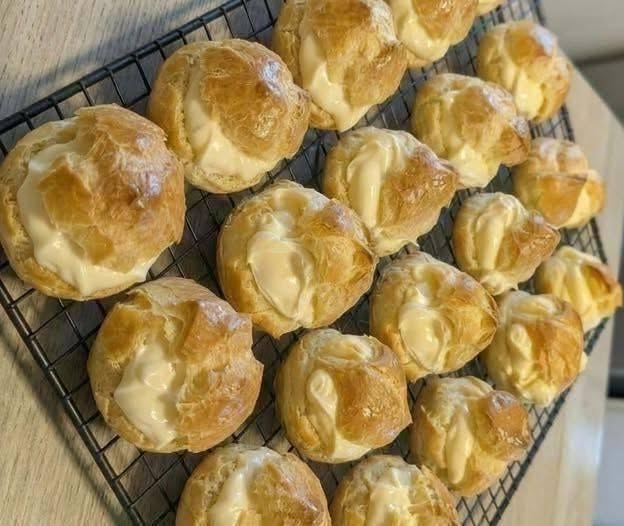
Homemade Bakery Style Vanilla Cream puffs
This homemade vanilla pastry cream is a smooth, rich, and creamy filling with a deep vanilla flavor. It has a silky texture that works perfectly for cakes, cream puffs, eclairs, fruit tarts, layered desserts, and many other pastries. The combination of egg yolks, whole milk, cornstarch, butter, and vanilla creates a stable filling with a glossy finish and luxurious texture.
8
servings15
minutes15
minutes220
kcalIngredients
1 large cake filling
12-16 pcs cream puffs
12 pcs eclairs
1 large fruit tart
4 cups (960 ml) whole milk
6 large egg yolks
3/4 cup (150 g) granulated sugar
1/2 cup (60 g) cornstarch
4 tbspn (57)g unsalted butter
1/2 teaspoon fine salt
Directions
- Prepare all ingredients before starting. Measure everything, cut the butter into small cubes, and keep a clean bowl with a fine-mesh strainer ready.
- Pour the milk into a large saucepan. Add half of the sugar and the salt. If using a vanilla bean, add the scraped seeds and pod to the milk.
- Heat the milk over medium heat until steaming and small bubbles appear around the edges. Do not boil aggressively. If using a vanilla bean, allow it to steep for about 10 minutes after heating, then remove the pod.
- In a medium bowl, whisk the egg yolks and remaining sugar for about 1 minute until the mixture becomes lighter in color
- Add cornstarch to the egg mixture and whisk until completely smooth with no lumps.
- Slowly add about 1 cup of the hot milk into the egg mixture while whisking constantly. Add another cup of hot milk and whisk again until combined.
- Pour the tempered egg mixture back into the saucepan with the remaining milk. Whisk immediately.
- Cook over medium heat while whisking constantly. Pay attention to the bottom and corners of the pan to prevent sticking
- Continue cooking until the mixture thickens, becomes glossy, and coats the whisk. Once thickened, cook for another 1 to 2 minutes to fully cook the cornstarch.
- Pour the hot cream through a fine-mesh strainer into a clean bowl to remove any lumps or small egg particles.
- Add butter cubes while the cream is still hot. Stir until melted and smooth.
- Transfer the cream to a shallow container. Place plastic wrap directly on the surface to prevent skin formation.
- Transfer the cream to a shallow container. Place plastic wrap directly on the surface to prevent skin formation..
- Before using, gently whisk the chilled pastry cream until smooth and spreadable. Avoid overmixing.
Notes
- Use whole milk for the creamiest texture. Low-fat milk may produce a thinner result.
- Pure vanilla extract gives the best flavor. Adding vanilla bean seeds creates a deeper vanilla taste
- Straining the cream is recommended for the smoothest professional-style texture
- Add butter while the cream is hot so it melts evenly and creates a silky finish.
- Keep plastic wrap directly on the surface during storage to prevent a skin from forming
- Store in an airtight container in the refrigerator for up to 4 days
- Freezing is not recommended because the texture may become grainy after thawing.
- For a lighter version, fold chilled vanilla cream with whipped heavy cream.
Nutrition Facts
- Serving Size: 8 g
- Total number of serves: 8
- Calories: 220kcal
- Fat: 0g
- Saturated Fat: 7g
- Cholesterol: 170mg
- Sodium: 110mg
- Carbohydrates: 25g
- Sugar: 16g
- Protein: 5g
- Calcium: 120mg
- Iron: 0.5mg