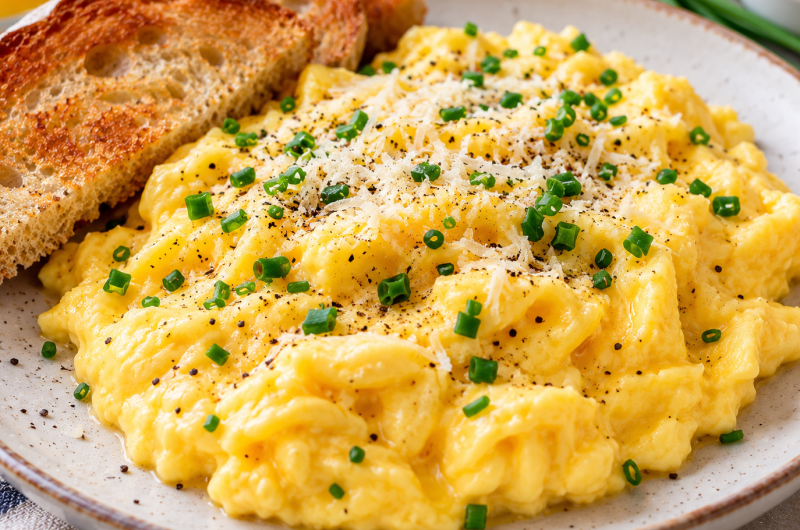
Healthy Creamy Soft Scrambled Eggs are a simple breakfast made with fresh eggs, butter, a small amount of cream or full-fat milk, and gentle heat. Unlike traditional scrambled eggs that are cooked until firm and dry, this method produces eggs that remain soft, glossy, moist, and almost custard-like. The key is not a complicated ingredient list but careful temperature control, slow movement, and removing the eggs from the pan while they are still slightly loose. Pasted text
This creamy scrambled eggs recipe is particularly useful when you want a quick protein-rich breakfast without spending a long time in the kitchen. Four large eggs make two generous servings, while butter contributes richness and helps produce delicate curds. Heavy cream or full-fat milk is used in a small quantity, and optional chives, Parmesan, and black pepper can provide extra flavor without changing the basic cooking technique.
Why These Soft Scrambled Eggs Are Different
The defining feature of soft scrambled eggs is their texture. Instead of large, firm pieces of cooked egg, the goal is to create small and delicate curds surrounded by enough moisture to keep the mixture creamy. The eggs should hold together on a spoon but remain soft enough to gently slump rather than sitting in a firm, dry mound.
Achieving this texture depends mainly on controlling heat. Egg proteins set rapidly at high temperatures, which can quickly transform soft eggs into dry or rubbery pieces. Low heat provides more control and gives you time to move the eggs gradually as they thicken. The finished eggs should therefore look slightly underdone when they leave the pan because residual heat continues cooking them afterward. Pasted text
A Quick High-Protein Breakfast
Eggs naturally provide high-quality protein, making creamy scrambled eggs a useful choice for breakfast or a light meal. The recipe is also quick enough for busy mornings because the actual cooking takes only several minutes. Most of the technique involves staying near the stove and watching the texture rather than performing complicated preparation.
Although the title describes these as healthy creamy scrambled eggs, portion size and accompaniments still matter. Butter, heavy cream, cream cheese, mascarpone, crème fraîche, and Parmesan all increase richness. The basic four-egg version uses two tablespoons of butter and only one tablespoon of cream or full-fat milk, while the source also provides a richer five-egg variation for occasions when a more luxurious texture is preferred.
Ingredients for Creamy Scrambled Eggs
The basic recipe uses four large eggs, two tablespoons of cold unsalted butter, one tablespoon of heavy cream or full-fat milk, ¼ teaspoon of fine salt, and optional black pepper, fresh chives, and finely grated Parmesan. These familiar ingredients work together to create a breakfast that tastes rich without requiring a complicated sauce or lengthy preparation. Pasted text
There is also an especially luxurious version using five eggs, three tablespoons of cold unsalted butter, one tablespoon of heavy cream, ¼ teaspoon of salt, and one tablespoon of cream cheese, mascarpone, or crème fraîche. Because your original recipe presents this as a separate variation, both versions are preserved rather than replacing or altering the original ingredient quantities.
Why Low Heat Makes Better Scrambled Eggs
Low heat is arguably the most important element of this easy soft scrambled eggs recipe. When eggs are exposed to intense heat, their proteins tighten quickly. Moisture can then be forced from the curds, resulting in scrambled eggs that taste dry, grainy, tough, or rubbery instead of smooth and creamy.
Gentle cooking allows the eggs to thicken more gradually. This gives you time to scrape the bottom and sides of the pan and control how large the curds become. The process may require a little more patience than high-heat scrambling, but the difference in texture is significant. The eggs develop soft folds while remaining visibly moist and glossy rather than becoming browned and firm.
Preparing the Eggs Correctly
Crack four large eggs into a clean bowl and check carefully for any pieces of shell. Add the salt and the tablespoon of heavy cream or full-fat milk if using. Beat gently with a fork or whisk until the whites and yolks are completely combined and the mixture has a smooth, even yellow appearance.
There is no need to whisk aggressively or create a large amount of foam. Excessive whisking introduces additional air, which can cause the eggs to puff temporarily during cooking before collapsing. For this recipe, the goal is a dense, creamy texture rather than fluffy scrambled eggs, so gentle mixing is sufficient. Pasted text
Optional Step for Extra-Smooth Eggs
For an exceptionally smooth restaurant-style result, the beaten eggs can be passed through a fine-mesh sieve before cooking. Straining removes thicker pieces of egg white and makes the uncooked mixture more uniform. This step is completely optional and is not necessary for everyday creamy scrambled eggs.
If you do use this technique, strain the eggs directly into a clean bowl and then proceed with the recipe normally. It can be particularly useful when you want very small, silky curds with a texture closer to a delicate custard rather than conventional scrambled eggs.
Choosing the Right Pan
A small or medium nonstick frying pan is particularly useful for this recipe because soft scrambled eggs retain considerable moisture. A nonstick surface makes it easier to move the delicate eggs around the pan without leaving a cooked layer attached to the bottom.
A flexible silicone spatula is equally helpful because it can follow the shape of the pan and gently scrape the bottom and sides. The source recipe also calls for a bowl, fork or whisk, and a plate or shallow serving bowl. Having everything ready before cooking is useful because the final stages happen quickly. Pasted text
Melting the Butter Slowly
Place the nonstick frying pan over low heat and add the cold unsalted butter. Let it melt gradually rather than allowing the pan to become extremely hot first. The butter should remain pale rather than turning brown. Browning is desirable in some recipes, but it indicates that the pan is hotter than needed for delicate scrambled eggs.
When roughly half the butter has melted, gently swirl the pan. The remaining solid butter will continue melting as it moves through the warm pan. Starting with cold butter provides another degree of temperature control and helps create the rich, tender consistency that distinguishes creamy scrambled eggs from quickly cooked versions.
Adding the Eggs to the Pan
Pour the beaten egg mixture into the pan once the butter has mostly melted. Leave the eggs untouched for approximately five to ten seconds. You should begin to see slight thickening around the edges while the center remains liquid. This indicates that cooking has started without the pan being excessively hot.
Take the silicone spatula and gently push the eggs from one side of the pan toward the other. Pause briefly and allow uncooked liquid egg to flow into the exposed portion of the pan. Push again and continue repeating this slow process. Avoid aggressively stirring or chopping the mixture because gentle movement creates softer, more delicate curds. Pasted text
Creating Small, Creamy Egg Curds
If you prefer very small curds, use short strokes and small circular movements with the spatula instead of sweeping the eggs into large folds. Stir almost continuously while maintaining very low heat. This method resembles the technique often associated with French-style scrambled eggs and creates a particularly smooth consistency.
The slower the eggs cook, the easier it is to control their final texture. However, low heat does not mean that the pan should remain barely warm. If the mixture shows no signs of thickening after an unusually long time, increase the temperature slightly. Conversely, if the eggs begin setting almost immediately, lower the heat before they become overcooked. Pasted text
How to Know When Scrambled Eggs Are Ready
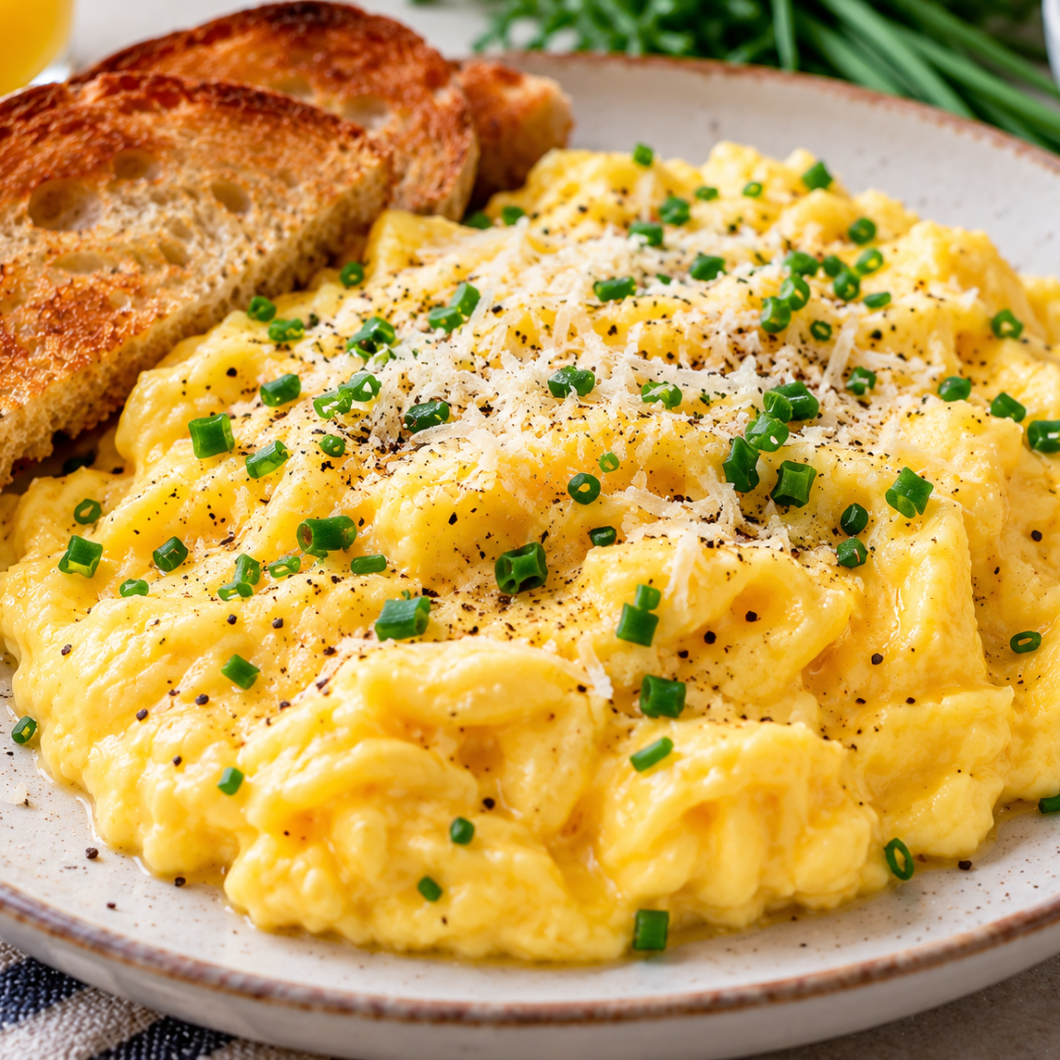
Perfect creamy scrambled eggs should look soft, glossy, moist, delicate, and slightly loose. The curds should be tender rather than firm, and the mixture should be warm throughout without appearing browned. When the spatula moves through the pan, the eggs should form soft folds rather than separating into dry chunks.
The eggs should not look completely cooked while they are still over the heat. Waiting until every visible trace of moisture disappears usually means they have gone too far. Remove the pan when the eggs look almost finished but remain slightly wet because their own heat and the heat retained by the pan continue cooking them for a short period. Pasted text
Why Cold Butter Improves the Texture
Butter contributes more than flavor. Its fat helps produce a richer mouthfeel and softer curds. Cold butter can also help moderate the temperature, which is useful when you are trying to prevent delicate eggs from cooking too rapidly.
For an exceptionally creamy finish, the source suggests adding another small piece of cold butter near the end. When the eggs have thickened but remain very soft, add the butter and continue stirring gently until it melts into the mixture. It should become incorporated into the eggs rather than forming a separate oily layer. Pasted text
Optional Creamy Finish
For an especially luxurious breakfast, one tablespoon of crème fraîche, mascarpone, cream cheese, or heavy cream can be incorporated during the final moments. Each option changes the finished flavor slightly. Mascarpone provides considerable richness, while crème fraîche contributes a mild tang that balances the butter and eggs.
If using cream cheese, soften it first so that it blends more smoothly. Whatever option you choose, do not continue cooking for a long time after adding it. Stir gently just until incorporated, then remove the eggs from the pan. The goal is to preserve the soft texture rather than cooking away the additional moisture. Pasted text
Removing the Eggs at the Right Moment
Timing matters enormously during the final minute. As soon as the eggs become thick, glossy, and softly formed, turn off the stove and immediately move the pan away from the hot burner. This is particularly important on electric or ceramic stovetops that retain heat after they have been switched off.
Give the eggs one or two gentle final folds and then stop stirring. Leaving them in the hot pan unnecessarily will continue tightening the proteins. Transfer them promptly to a warm plate or shallow serving bowl so that their creamy texture is preserved as closely as possible.
Serving Creamy Soft Scrambled Eggs
Soft scrambled eggs are best served immediately. Their texture changes as they sit because residual heat continues setting the proteins. Finish the eggs with freshly ground black pepper if desired, followed by finely chopped chives or a small amount of finely grated Parmesan.
Warm toast is a natural accompaniment. The contrast between crisp bread and creamy eggs works especially well because the toast provides structure while the eggs remain soft. The source also suggests sourdough, brioche, English muffins, croissants, avocado toast, grilled tomatoes, sautéed mushrooms, crispy potatoes, and smoked salmon as possible serving ideas. Pasted text
Why Cream Is Optional
Creamy scrambled eggs do not actually require cream. Proper temperature control, butter, and careful timing can create a creamy consistency using eggs alone. Heavy cream or full-fat milk simply adds a little additional fat and liquid, creating a richer and somewhat softer result.
The amount should remain controlled. The source uses only one tablespoon with four eggs, which is enough to influence texture without turning the mixture watery. Adding considerably more dairy can dilute the eggs and make it harder to achieve the soft but cohesive consistency intended by this recipe. Pasted text
Common Mistakes When Making Soft Scrambled Eggs
The most common mistake is using too much heat. When breakfast needs to be ready quickly, it can be tempting to turn up the burner, but eggs respond rapidly to temperature. A pan that is too hot can take the eggs from liquid to dry before you have time to control the curds.
Another mistake is waiting until the eggs appear fully cooked before removing them. Soft scrambled eggs should leave the stove while still glossy and slightly loose. Stirring too aggressively, making very large curds, using excessive cream, leaving the eggs unattended, and keeping finished eggs in the hot pan can also interfere with the desired creamy consistency. Pasted text
Restaurant-Style Creamy Scrambled Eggs
For the richer version, the original recipe uses five large eggs, three tablespoons of cold unsalted butter, one tablespoon of heavy cream, ¼ teaspoon fine salt, and one tablespoon of cream cheese, mascarpone, or crème fraîche. Black pepper and fresh chives can be added as finishing ingredients.
The technique remains focused on low heat. Half of the butter goes into a cold nonstick pan, and the eggs are added before the pan becomes hot. Slow stirring creates tiny curds. The remaining cold butter is incorporated gradually as the eggs thicken, and the creamy finishing ingredient is folded through after the heat is turned off. Pasted text
The Perfect Creaminess Test
Before serving, place a spoonful of scrambled eggs on a spoon and tilt it slightly. Properly cooked soft scrambled eggs should gently slump rather than remaining in a rigid lump. They should feel silky and tender when eaten, without rubbery resistance or dry pieces.
At the same time, creamy does not mean raw or watery. There should not be a puddle of uncooked egg liquid around the curds. The ideal consistency lies somewhere between conventional scrambled eggs and a very soft savory custard, which is the distinctive quality this low-temperature cooking method is designed to achieve. Pasted text
Notes for Perfect Soft Scrambled Eggs
Use fresh eggs and keep the cooking temperature low. Melt the butter gently rather than browning it, and move the eggs slowly with a flexible spatula. Smaller movements produce smaller curds, while larger sweeping movements create larger folds. Neither approach requires aggressive stirring.
Most importantly, take the eggs off the heat before they look completely finished. They should still be glossy, soft, and slightly loose. Residual heat will continue cooking them after they leave the burner. Serve immediately rather than allowing the eggs to sit in the pan, as those final seconds can make the difference between silky scrambled eggs and dry ones. Pasted text
Healthy Creamy Soft Scrambled Eggs
Soft, glossy, and creamy scrambled eggs cooked slowly over low heat with butter and a small amount of cream or full-fat milk.
2
servings2
minutes6
minutes320
kcal8
minutesIngredients
4 large eggs
2 tablespoons cold unsalted butter
1 tablespoon heavy cream or full-fat milk
¼ teaspoon fine salt, plus more to taste
⅛ teaspoon freshly ground black pepper, optional
1 teaspoon finely chopped fresh chives, optional
1 teaspoon finely grated Parmesan cheese, optional
Directions
- Crack the eggs into a bowl. Add the salt and cream or milk, then whisk gently until the whites and yolks are fully combined.
- Place a small or medium nonstick frying pan over low heat. Add the cold butter and allow it to melt slowly without browning.
- Pour the beaten eggs into the pan and leave them untouched for about 5–10 seconds.
- Using a silicone spatula, gently push the eggs across the pan. Pause briefly so the uncooked egg can flow into the exposed area.
- Continue cooking slowly over low heat, gently moving and scraping the eggs to create small, tender curds.
- When the eggs become thicker but remain glossy, moist, and slightly loose, turn off the heat.
- For an extra-creamy finish, incorporate the optional finishing dairy from the luxurious version as specified.
- Immediately move the pan away from the hot burner. Give the eggs one or two gentle final folds.
- Transfer the scrambled eggs to a warm serving plate without leaving them in the hot pan.
- Finish with optional black pepper, fresh chives, or Parmesan and serve immediately.
Nutrition Facts
2 servings per container
- Amount Per ServingCalories320
- % Daily Value *
- Total Fat
28g
36%
- Total Carbohydrate
2g
1%
- Protein 14g 29%
* The % Daily Value tells you how much a nutrient in a serving of food contributes to a daily diet. 2,000 calories a day is used for general nutrition advice.