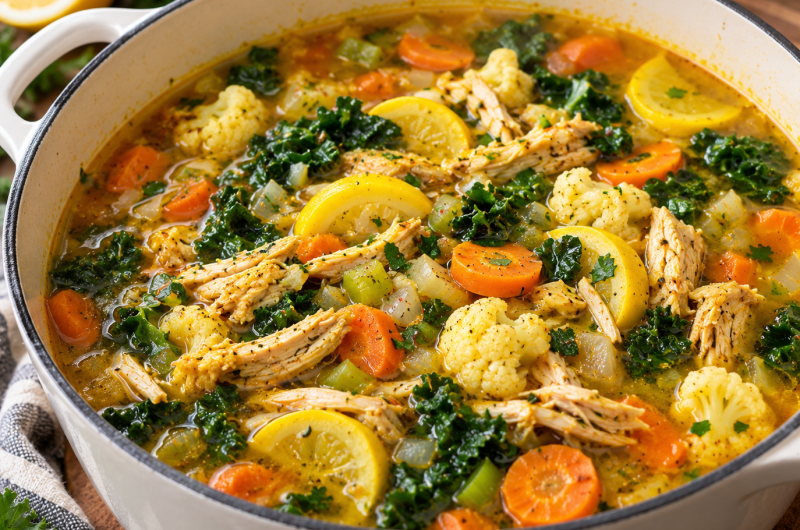
This Anti-Inflammatory Vegetable Soup is a warm, nourishing one-pot meal filled with colorful vegetables, aromatic seasonings, chicken bone broth, baby kale, and fresh lemon juice. Turmeric and cumin give the broth its inviting golden color and earthy flavor, while onion, celery, carrots, garlic, yellow squash, and cauliflower create a satisfying mixture of textures. Optional chicken thighs turn the vegetable soup into a more substantial, protein-rich meal without making the preparation complicated.
One of the strongest features of this healthy vegetable soup recipe is its simplicity. Everything comes together in a single soup pot through basic sautéing and simmering. There are no complicated cooking techniques, and most of the preparation involves chopping vegetables before allowing them to cook gently in the broth. With 15 minutes of preparation, approximately 35 minutes of cooking, and a short five-minute rest, this comforting homemade soup can be ready in less than an hour.
Why You Make This Soup
This easy vegetable soup combines everyday produce with warming spices in a flavorful broth. Instead of relying on heavy cream, cheese, or complicated sauces, the recipe builds flavor by sautéing vegetables in olive oil and seasoning them with fresh garlic, turmeric, cumin, and salt. Freshly squeezed lemon juice is added after cooking, providing a bright finish that balances the deeper savory flavors of the soup.
Another advantage is that the recipe can work as either a vegetable-focused soup or a heartier chicken vegetable soup. The original ingredients list includes 1.5 pounds of chicken thighs as an optional addition. When included, the chicken cooks directly in the broth and absorbs the flavors of the vegetables and seasonings. Without the chicken, the soup remains packed with vegetables, although the original recipe still calls for chicken bone broth as its liquid base.
A Colorful Combination of Vegetables
A good homemade vegetable soup needs more than broth and seasoning; it needs a combination of vegetables that provide flavor, texture, and substance. This recipe uses onion, celery, carrots, garlic, yellow squash, cauliflower, and baby kale. Each vegetable cooks slightly differently, which prevents the finished soup from having one uniform texture and makes every spoonful more interesting.
The onion, celery, and carrots provide familiar savory flavors associated with comforting homemade soups. Yellow squash adds a softer texture, while cauliflower provides slightly firmer pieces that make the soup feel more substantial. Baby kale is added near the end rather than simmered for the entire cooking time. This allows the leafy greens to wilt into the broth while retaining more of their texture and vibrant appearance.
Turmeric and Cumin for Warm, Earthy Flavor
Turmeric is an important ingredient in this Anti-Inflammatory Vegetable Soup, giving the broth a recognizable golden-yellow appearance and warm, earthy character. The recipe uses one teaspoon, which is enough to distribute its flavor throughout six cups of chicken bone broth without allowing it to completely overpower the vegetables. Turmeric also contains curcumin, a compound widely studied for its anti-inflammatory properties, although this soup should be viewed as nourishing food rather than a treatment for inflammation or disease.
Cumin complements turmeric particularly well because it contributes another layer of earthy, warm flavor. The recipe uses one teaspoon of cumin alongside one teaspoon of turmeric. Sautéing these spices briefly with the vegetables allows their aromas to develop before the broth is added. Together, they transform an otherwise simple vegetable and chicken broth into something more aromatic and distinctive.
Building Flavor With Onion, Celery, Carrots, and Garlic
The beginning of the cooking process has a major influence on the final flavor. Heat two tablespoons of olive oil in a large soup pot over medium-high heat. Once the oil is hot, the vegetables can begin cooking. The original instructions start by sautéing the onion, celery, and garlic until the onion becomes soft and translucent, which takes approximately five minutes.
This initial sauté is worth giving enough time because the vegetables develop a sweeter, more rounded flavor as they soften. Rather than immediately covering everything with broth, allowing these ingredients to cook in olive oil creates a stronger foundation. Garlic contributes its characteristic savory aroma, while celery and onion bring depth to the broth. The carrots join during the following stage with the squash, cauliflower, and spices.
Adding the Remaining Vegetables and Spices
After the onion, celery, and garlic have softened, add the yellow squash, cauliflower, carrots, turmeric, cumin, and salt. Continue sautéing the mixture for another five minutes. Stir regularly so the spices spread across the vegetables instead of remaining concentrated in one part of the pot. The turmeric will quickly give the vegetables a warm golden coating.
This second sautéing stage also gives the firmer vegetables a head start before the liquid is introduced. The carrots and cauliflower need more cooking than baby kale, which is why the kale is reserved for the end. Layering the ingredients according to how long they need to cook helps create a finished soup where the vegetables are tender without every ingredient becoming overly soft.
Why Chicken Bone Broth Is Used
The recipe specifically calls for six cups of chicken bone broth rather than ordinary chicken broth. Bone broth gives the soup a rich savory base and generally contains protein and gelatin derived from prolonged cooking of bones and connective tissues. The exact nutritional profile can vary considerably between brands and homemade versions, so it is worth checking the package when nutrition or sodium intake matters to you.
Once the vegetables and spices have sautéed, pour the six cups of chicken bone broth into the pot. Stir gently to loosen any flavorful seasoning or vegetable pieces from the bottom. At this point, the soup has its complete liquid base and can begin the longer simmering stage that allows the individual flavors to blend together.
Adding Chicken for a Heartier Soup
The original recipe includes 1.5 pounds of chicken thighs as an optional ingredient. Adding them changes the soup from a primarily vegetable-based dish into a more filling chicken and vegetable soup. Chicken thighs work particularly well for simmering because they generally remain moist and tender during longer cooking compared with very lean cuts.
Add the chicken thighs after pouring in the bone broth, making sure the chicken remains submerged while cooking. Bring the soup to a boil and then reduce the heat to a steady simmer. Cook for approximately 30 minutes, or until the chicken is thoroughly cooked. For food safety, poultry should reach an internal temperature of 165°F (74°C) at its thickest point.
Creating a Flavorful One-Pot Soup
One-pot recipes are useful because ingredients can develop flavor together while also keeping preparation and cleanup manageable. This easy Anti-Inflammatory Vegetable Soup follows that approach from beginning to end. The vegetables are sautéed in the same pot that later holds the broth, chicken, kale, and lemon juice, so there is no need to prepare several separate components.
Cooking everything in one pot also helps preserve the flavors developed during sautéing. Any browned or seasoned bits on the bottom of the pot can become incorporated into the broth when the liquid is added. As the soup simmers, the chicken, vegetables, turmeric, cumin, and garlic contribute their individual flavors to the same broth, creating a more cohesive finished dish.
Simmering the Soup Properly
Once the chicken bone broth and optional chicken thighs have been added, bring the soup to a boil. After it reaches a boil, reduce the heat and maintain a gentle simmer for approximately 30 minutes. A steady simmer is preferable to an aggressive rolling boil because it cooks the ingredients more gently while still allowing their flavors to develop.
If you are using chicken thighs, keep them submerged in the broth as much as possible so they cook evenly. Once fully cooked, they can be removed and handled according to preference, including shredding them before returning the meat to the soup. The original recipe emphasizes ensuring that the chicken remains immersed and cooks completely during this stage.
Adding Baby Kale at the Right Time
Baby kale does not need the same long cooking time as carrots, cauliflower, or chicken. For that reason, the three cups of chopped baby kale are stirred into the soup only toward the end. Cook the kale for approximately three to five minutes, or until it has wilted to the tenderness you prefer.
Adding kale late also creates a pleasant contrast between the darker leafy greens and the golden broth. If kale were simmered for the entire 30-minute cooking period, it could become excessively soft. The short cooking time allows it to wilt sufficiently while still remaining recognizable among the other vegetables. Stir it through the hot broth so the leaves cook evenly.
Fresh Lemon Creates a Bright Finish
The juice of one freshly squeezed lemon is the final major ingredient in this soup. Lemon is intentionally added after the pot has been removed from the heat. Its sharp acidity brightens the deeper flavors of bone broth, cumin, turmeric, garlic, and cooked vegetables, creating a fresher and more balanced finish.
After squeezing the lemon juice into the soup, stir thoroughly and taste the broth. The recipe already contains 1.5 teaspoons of salt, or salt to taste, so this is a good point to determine whether the overall seasoning is balanced. Avoid automatically adding additional salt before tasting because the sodium content of chicken bone broth can vary considerably from one product to another.
Let the Soup Rest Before Serving
Although the soup is essentially finished after the lemon juice is added, the original recipe includes a five-minute resting period. This short rest allows the flavors to settle and gives the soup a little time to cool from its simmering temperature before it is transferred into serving bowls.
A five-minute rest is especially useful if chicken has been included because the soup can be extremely hot immediately after simmering. Once rested, stir the pot again so the vegetables, greens, chicken, and broth are evenly distributed. Ladle generous portions into deep bowls, making sure each serving contains a good mixture of the different vegetables.
Texture and Flavor of the Finished Soup
The finished Anti-Inflammatory Vegetable Soup has several complementary textures rather than a completely smooth consistency. The carrots and cauliflower provide substance, the yellow squash becomes softer, and the baby kale adds tender ribbons of leafy greens. If chicken thighs are included, they add another satisfying texture and make each serving more filling.
The flavor is savory, earthy, and gently bright rather than heavily spicy. Turmeric and cumin provide warmth without introducing significant heat, while garlic, onion, and celery create the familiar depth expected from homemade vegetable soup. The lemon juice cuts through the richness of the bone broth and olive oil, preventing the soup from tasting too heavy.
A Nourishing Soup for Cooler Weather
Warm vegetable soups are particularly appealing during fall and winter, but this recipe is light enough to prepare at other times of year as well. Yellow squash, cauliflower, carrots, celery, kale, and lemon create a colorful mixture that does not depend on heavy dairy ingredients for richness.
The original recipe identifies winter, spring, and fall as especially suitable seasons. Because the ingredients are commonly available throughout much of the year, however, there is no reason to limit it strictly to colder months. It can be useful whenever you want a vegetable-packed lunch or dinner that can be prepared in one pot.
Is This Really an Anti-Inflammatory Soup?
The term “anti-inflammatory” is commonly used for recipes containing foods such as vegetables, olive oil, leafy greens, garlic, and turmeric. Turmeric is particularly notable because its naturally occurring curcumin compounds have been researched for their potential effects on inflammatory pathways. Vegetables and leafy greens also contribute vitamins, minerals, fiber, and various plant compounds.
However, no individual soup can prevent or cure inflammation-related medical conditions. The most accurate way to view this recipe is as a nutrient-rich vegetable soup containing several ingredients commonly associated with balanced dietary patterns. Eating a varied diet consistently matters much more than relying on a single “detox” or “healing” recipe, so claims that this soup can medically detox the body or treat disease should be avoided.
Making the Soup With or Without Chicken
The chicken thighs are explicitly optional in the original recipe, giving you some flexibility depending on the type of meal you want. Including 1.5 pounds of chicken thighs makes the soup more protein-focused and substantial. Without the chicken, the vegetables remain the main feature while the chicken bone broth continues providing the savory liquid base.
It is important to note that simply leaving out the chicken thighs does not make the recipe vegetarian because the ingredient list still includes chicken bone broth. A vegetarian version would require changing the broth, but because the requirement here is to preserve the original ingredients, the recipe card keeps chicken bone broth exactly as specified rather than replacing it.
How to Serve Anti-Inflammatory Vegetable Soup
This soup can be served as a complete light meal, particularly when prepared with the optional chicken thighs. Divide it between six bowls and include plenty of broth and vegetables in each serving. The bright lemon finish means the soup needs very little additional garnish to taste fresh and balanced.
For the best experience, serve it warm shortly after the five-minute resting period. Stir before ladling because heavier ingredients can settle toward the bottom of the pot. If chicken is included, distribute it evenly among the servings so each bowl receives a similar balance of protein, vegetables, leafy greens, and golden broth.
Storing Leftover Vegetable Soup
Leftover Anti-Inflammatory Vegetable Soup can be stored in the refrigerator for up to four days, according to the source recipe. Allow leftovers to cool appropriately before transferring them to airtight food-storage containers and refrigerating them promptly. Keeping the soup properly covered also prevents it from absorbing odors from other refrigerated foods.
When reheating, warm only the amount you plan to eat and heat it thoroughly. The vegetables may become slightly softer after storage and reheating, but the flavors can become more integrated after sitting in the broth. Stir well during reheating so the chicken and vegetables warm evenly throughout the portion.
Freezing Anti-Inflammatory Vegetable Soup
This recipe can also be frozen, making it convenient for future meals. Portioning the cooled soup into suitable freezer containers allows you to thaw only what you need rather than repeatedly reheating the entire batch. Leave appropriate space in the container because liquids expand when frozen.
After thawing, reheat the soup thoroughly before serving. Some vegetables may have a softer texture after freezing, particularly yellow squash, but this generally does not prevent the soup from being enjoyable. Stirring well during reheating helps redistribute the broth, spices, vegetables, kale, and optional chicken.
Notes for the Best Results
Do not rush the first two sautéing stages. Softening the aromatic vegetables and briefly cooking the remaining vegetables with turmeric and cumin helps develop a fuller flavor before the broth is introduced. Keep the heat controlled and stir regularly so the garlic and spices do not burn on the bottom of the pot.
Add the baby kale only near the end so it does not become excessively soft. Fresh lemon juice should also be added after removing the soup from the heat. If chicken thighs are included, confirm they are fully cooked before serving. Finally, taste the soup before adjusting the salt because bone broth can already contain a substantial amount of sodium.
Why This Easy Vegetable Soup Works for Meal Prep
With six servings from one pot, this healthy vegetable soup is well suited to advance meal preparation. Most of the work occurs during the first 15 minutes when the vegetables are washed, chopped, sliced, and minced. After the broth is added, the soup mainly needs gentle simmering rather than constant attention.
Preparing a larger pot also means leftovers are available for convenient lunches or dinners. Because the soup stores in the refrigerator for several days and can also be frozen, individual portions can be prepared ahead. This makes the recipe especially practical for anyone who wants a vegetable-rich homemade meal available without cooking from scratch every day.
A Simple and Comforting Homemade Soup
This Anti-Inflammatory Vegetable Soup Recipe succeeds because it combines straightforward preparation with a varied collection of ingredients. Onion, celery, carrots, garlic, squash, cauliflower, and kale provide the vegetable base, while turmeric and cumin add warmth. Chicken bone broth supplies the savory liquid, and optional chicken thighs make the meal more filling.
Fresh lemon juice completes the soup with acidity and brightness, preventing the cooked vegetables and broth from tasting flat. The entire recipe requires only one pot and less than an hour from preparation through resting. Whether served immediately or saved for later, it offers a simple way to enjoy a warm, vegetable-packed homemade soup without complicated cooking techniques.
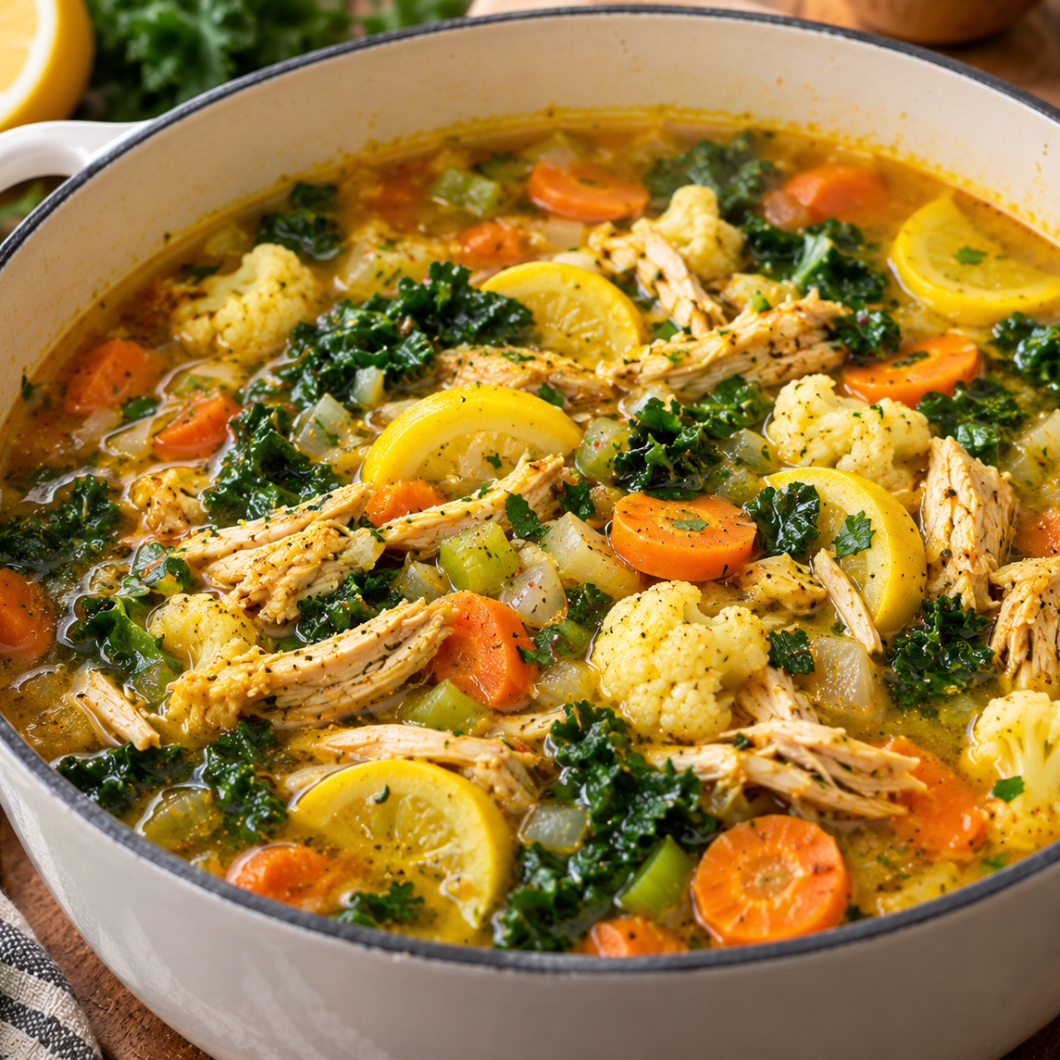
Anti-Inflammatory Vegetable Soup Recipe
A comforting one-pot vegetable soup made with colorful vegetables, chicken bone broth, turmeric, cumin, baby kale, and fresh lemon juice.
6
servings15
minutes35
minutes180
kcal05
minutes55
minutesIngredients
2 tbsp olive oil
1 onion, diced
4 celery stalks, sliced thinly
4 carrots, chopped or sliced
4 garlic cloves, minced
1 yellow squash, sliced or chopped
1 cup cauliflower, cut into smaller pieces
1 tsp turmeric
1.5 tsp salt, or to taste
1 tsp cumin
6 cups chicken bone broth
1.5 lbs chicken thighs, optional for added protein
3 cups baby kale, chopped
1 lemon, freshly juiced
Directions
- Heat 2 tablespoons of olive oil in a large soup pot over medium-high heat.
- Add the diced onion, thinly sliced celery, and minced garlic. Sauté for about 5 minutes, until the onion becomes soft and translucent.
- Add the yellow squash, cauliflower, carrots, turmeric, cumin, and salt. Stir well and sauté for another 5 minutes.
- Pour in the chicken bone broth. Add the chicken thighs if using, keeping them submerged in the liquid.
- Bring the soup to a boil. Reduce the heat and simmer for about 30 minutes, or until the chicken is completely cooked.
- If desired, remove the cooked chicken, shred it into bite-sized pieces, and return it to the soup.
- Stir in the chopped baby kale. Cook for 3–5 minutes, or until the kale reaches your preferred tenderness.
- Remove the soup from the heat. Add the freshly squeezed lemon juice and stir thoroughly.
- Taste and adjust the seasoning if necessary.
- Let the soup rest for 5 minutes before serving.
Nutrition Facts
6 servings per container
- Amount Per ServingCalories180
- % Daily Value *
- Total Fat
9g
12%
- Total Carbohydrate
14g
6%
- Protein 12g 24%
* The % Daily Value tells you how much a nutrient in a serving of food contributes to a daily diet. 2,000 calories a day is used for general nutrition advice.