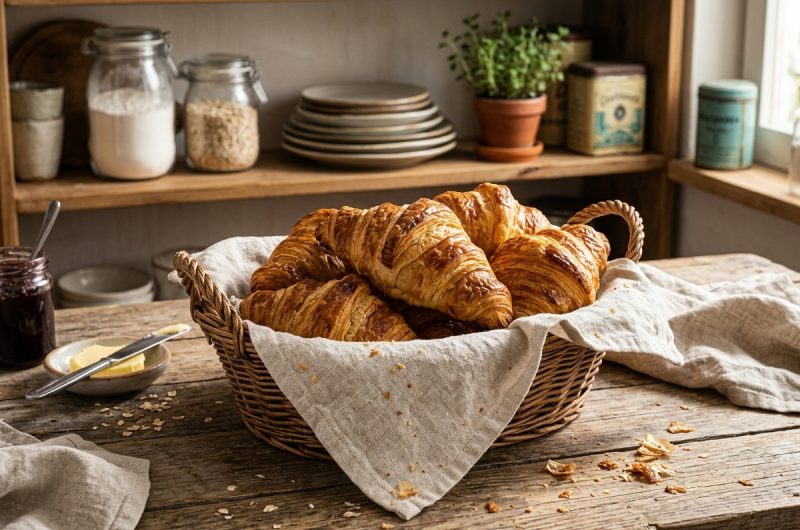
Homemade butter croissants are golden, crispy pastries with delicate layers and a soft, buttery center. They are perfect for breakfast, brunch, or an afternoon snack with coffee or tea. This homemade butter croissant recipe uses simple baking ingredients and a traditional lamination technique to create delicious pastries from scratch. Although croissants require several preparation steps, you can make them at home without leaving the dough to rest overnight.
The secret to flaky croissants is layering butter between yeast dough and rolling it several times. During baking, the butter and dough create separate layers that produce a crisp exterior and a light, tender interior. With careful handling, proper chilling, and enough proofing time, you can enjoy fresh homemade croissants that taste wonderful straight from the oven.
What Is a Croissant?
A croissant is a crescent-shaped pastry associated with French baking and influenced by Austrian pastry traditions. It is made with yeast-leavened dough that is layered with butter through a process known as lamination. Repeated rolling and folding create thin layers that separate during baking, giving croissants their recognizable flaky texture.
Unlike ordinary bread rolls, croissants contain butter throughout their layers, creating a rich flavor and delicate crumb. Yeast helps the dough rise, while steam separates the layers in the oven. The finished pastries should have a golden surface, a slightly crisp crust, and a soft interior. Keeping the butter and dough at the correct temperature is essential for achieving these results.
Why You Will Love This Homemade Croissant Recipe
This recipe is ideal for anyone who wants to learn how to make butter croissants at home. It uses familiar ingredients such as all-purpose flour, yeast, sugar, salt, water, and butter. A rolling pin, parchment paper, mixing bowl, and baking tray are enough to get started.
Another benefit is that the recipe does not require overnight refrigeration. The dough rests for shorter periods between folds, allowing you to prepare the croissants on the same day. Although the process takes several hours, most of that time involves resting, chilling, and proofing rather than active work.
Homemade croissants are also easy to serve in different ways. Enjoy them plain, spread with strawberry jam, or filled with chocolate spread or peanut butter. For a savory option, use them to make sandwiches with cheese, vegetables, pesto, or ham.
Ingredients for Homemade Butter Croissants
The ingredients work together to create a dough that rises well and develops a flaky texture. Warm water activates the yeast, while sugar adds sweetness and supports fermentation. Active dry yeast gives the dough its rise, and all-purpose flour provides the structure needed to hold the butter layers.
Salt balances the flavor, and six tablespoons of room-temperature butter make the dough tender. The additional two sticks of butter are used to create the butter slab for lamination. An egg mixed with water provides a golden finish, although milk or heavy cream can be used as an alternative egg wash.
Measure everything before starting. The butter mixed into the dough should be at room temperature, while the butter slab needs to remain cold but flexible. This difference helps the butter stay in distinct layers instead of blending into the dough during rolling.
How to Make Croissant Dough
Activate the Yeast
Combine the warm water and sugar in a large mixing bowl. Stir until the sugar dissolves, then sprinkle the active dry yeast over the surface. Leave the mixture undisturbed for about 10 minutes to allow the yeast to activate. The water should feel comfortably warm rather than hot, as excessive heat can damage the yeast.
Mix and Knead the Dough
Add the room-temperature butter and salt to the yeast mixture. Gradually add the flour, mixing until the ingredients form a dough. Knead for eight to ten minutes until the dough becomes semi-smooth and starts pulling away from the sides of the bowl. Cover it and leave it in a warm place for approximately one hour, or until doubled in size.
Chill the Dough
Transfer the risen dough to a lightly floured surface and gently press out the excess air. Shape it into a rectangle and fold it into thirds, bringing one end toward the center and folding the other end over it. Place the dough on a parchment-lined tray, cover it, and refrigerate for one hour or until thoroughly chilled.
Chilling helps the dough become easier to roll and keeps the butter firm during lamination. Do not skip this stage, because warm dough can make the butter difficult to handle and reduce the quality of the finished layers.
How to Prepare the Butter Slab
Place the two sticks of butter between folded sheets of parchment paper. Arrange the butter pieces with a little space between them, then gently press and roll them into an eight-by-eight-inch square. Try to keep the thickness even so the butter distributes consistently throughout the pastry.
Refrigerate the butter slab until it is cold but pliable. Butter that is too soft can squeeze out through the dough, while butter that is too hard may crack during rolling. The ideal consistency allows the butter to bend slightly while maintaining its shape.
How to Laminate Croissant Dough
Enclose the Butter
Roll the chilled dough into a rectangle slightly wider than the butter slab and approximately twice as long. Place the butter on one half of the dough, leaving about one inch around the edges. Fold the other half over the butter and gently press the edges to enclose it.
Complete the First Fold
Roll the dough into a rectangle approximately eight by sixteen inches, using gentle and even pressure. Fold it into thirds, similar to folding a letter. Place the folded dough on a tray, cover it, and refrigerate for 30 minutes.
Repeat the Folding Process
Remove the dough from the refrigerator and roll it into a rectangle again. Fold it into thirds, cover it, and refrigerate for another 15 minutes. These folds distribute the butter throughout the dough and help develop the flaky layers associated with croissants.
Roll the dough into a rectangle once more, fold it in half, and gently roll it to approximately half an inch thick. Cut the pastry lengthwise into two portions. Keep one portion refrigerated while working with the other to prevent the butter from becoming too soft.
How to Shape Homemade Croissants
Cut the Dough into Triangles
Roll one portion of the laminated dough into a rectangle approximately one-quarter inch thick. Using a sharp knife or pastry cutter, cut it diagonally into six to eight triangles. Each triangle should have a wide base and a pointed tip to create the traditional croissant shape.
Roll the Croissants
Starting at the wide end of each triangle, roll the dough toward the pointed tip. Keep the roll snug without pressing too firmly on the layers. Finish with the pointed tip underneath so the croissant stays in shape during baking.
Place the shaped croissants on parchment-lined baking sheets, leaving enough space between them to expand. Handle the dough gently to preserve the layers created during lamination. Repeat with the remaining dough, keeping it chilled whenever necessary.
How to Proof and Bake Croissants
Whisk the egg with one tablespoon of water to prepare the egg wash. Brush a thin layer over the shaped croissants. If you prefer not to use egg, substitute two tablespoons of milk or heavy cream. Let the pastries rise for 45 to 60 minutes, or until visibly puffier.
Preheat the oven to 400°F. Brush the croissants again with egg wash and bake for approximately 25 minutes, or until they are puffed and golden brown. Avoid opening the oven repeatedly during baking, as sudden temperature changes can affect their rise.
Transfer the baked croissants to a wire rack and allow them to cool before serving. Properly baked croissants should have a crisp exterior, a soft interior, and a rich buttery aroma. Baking time may vary depending on the size of the pastries and your oven.
Tips for Perfectly Flaky Croissants
Keep the Butter Cold
Cold butter is essential for successful lamination. If it becomes too soft, it can blend into the dough instead of forming separate layers. Refrigerate the pastry whenever the butter begins to soften, and avoid rushing through the rolling process.
Roll the Dough Gently
Use steady pressure with the rolling pin and maintain an even rectangular shape. If the dough resists stretching, allow it to rest briefly in the refrigerator instead of forcing it. Gentle handling helps prevent butter from leaking and protects the delicate layers.
Work in a Cool Kitchen
A cool kitchen makes croissant preparation easier, especially for beginners. Warm conditions can soften the butter quickly and make the dough sticky. Use a light dusting of flour to prevent sticking, but avoid adding too much because excess flour can make the pastry dry.
Adjust the Salt When Needed
The recipe uses unsalted butter, but salted butter can also work. If you use salted butter, reduce the added salt to one teaspoon. This simple adjustment helps maintain a balanced flavor without making the croissants excessively salty.
How to Serve Homemade Butter Croissants
Freshly baked butter croissants are delicious on their own, particularly when their exterior is still crisp. Serve them with coffee, tea, hot chocolate, or milk for a simple breakfast. They also pair well with fresh fruit, yogurt, and cheese when preparing a brunch platter.
For a sweet variation, slice the croissants horizontally and add strawberry jam, chocolate spread, or peanut butter. Almonds and cinnamon sugar can also provide extra flavor. These additions complement the buttery pastry without changing the original dough recipe.
Croissants are equally suitable for savory sandwiches. Fill them with vegetables, pesto, sun-dried tomatoes, ham, or cheese. Add moist fillings shortly before serving to help prevent the pastry from becoming soggy.
Croissants vs. Puff Pastry
Croissants and puff pastry both contain layers of dough and butter, but their preparation differs. Croissant dough contains yeast, which helps the pastry rise and creates a soft, airy interior. Traditional puff pastry does not contain yeast and relies mainly on steam to separate its layers during baking.
Croissants generally have a bread-like interior surrounded by flaky layers, while puff pastry tends to be crisp throughout. Both are useful in baking, but croissants are especially popular for breakfast, brunch, and sandwiches.
How to Freeze Homemade Croissants
Freezing Baked Croissants
Allow baked croissants to cool completely before placing them in a freezer-safe bag or airtight container. Store them in the freezer for up to two months. When ready to serve, thaw them for approximately one hour at room temperature and reheat until warm and crisp.
Freezing Unbaked Croissants
Arrange shaped croissants on a parchment-lined baking sheet and freeze for several hours until firm. Transfer them to freezer bags and store for up to two months. When ready to bake, place them on a lined baking sheet, cover loosely with plastic wrap, and allow approximately four to five hours for thawing and proofing. They should become visibly puffier before baking.
Frequently Asked Questions
Why Are My Croissants Not Flaky?
Croissants may lack distinct layers if the butter becomes too warm, the dough is rolled unevenly, or the chilling periods are shortened. Keep the butter cold but flexible, and refrigerate the dough whenever it becomes difficult to handle.
Can I Make Croissants Without Overnight Resting?
Yes. This recipe uses shorter resting and chilling periods, allowing you to prepare the croissants on the same day. The dough still needs enough time to rise, chill, and proof before baking.
Can I Replace Egg Wash?
Yes. Two tablespoons of milk or heavy cream can be used instead of the egg-and-water mixture. The final color and shine may differ slightly, but these alternatives help the croissants brown during baking.
Can Croissants Be Made Ahead?
Yes. You can freeze baked croissants or shaped, unbaked pastries. Baked croissants can be thawed and reheated, while unbaked croissants need time to thaw and proof before baking.
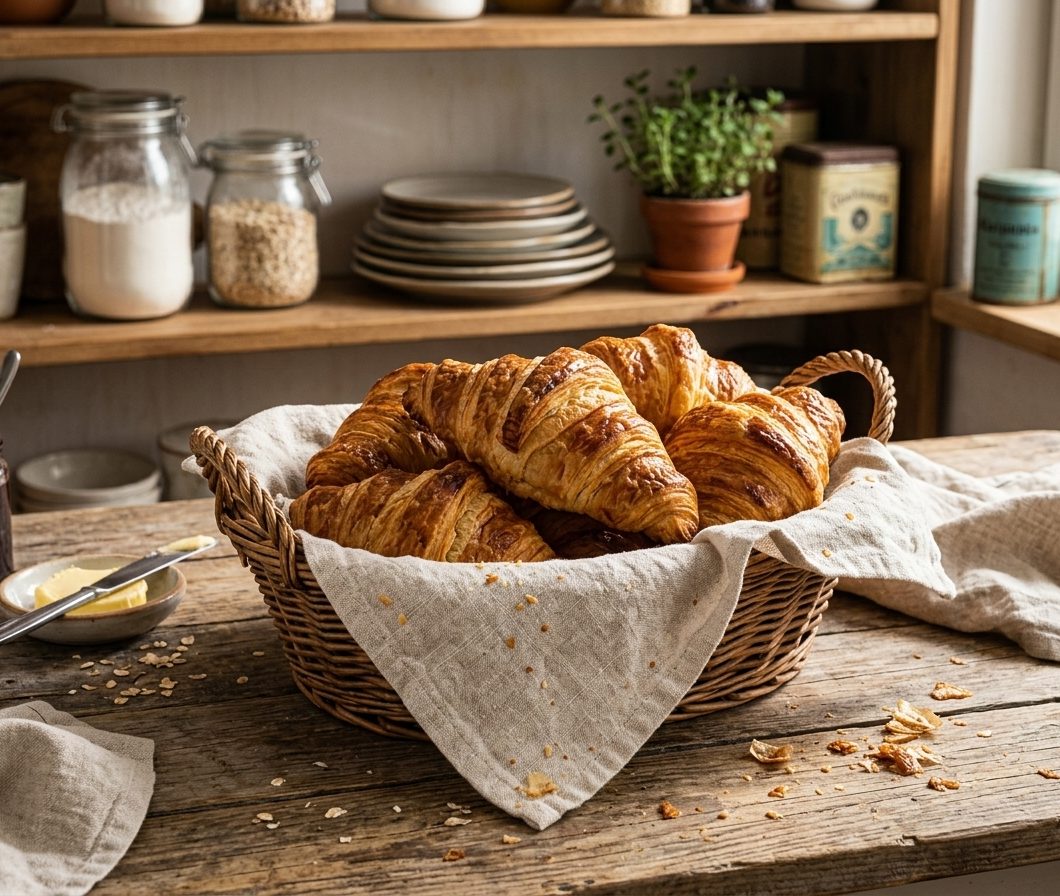
Classic Buttery Croissants
 Recipe by admin1
These homemade butter croissants have a golden, crispy exterior and soft, flaky layers with rich buttery flavor.
12
servings40
minutes25
minutes347
kcal210
minutes4
hours35
minutesIngredients
1 cup warm water
¼ cup sugar
2¼ teaspoons active dry yeast (1 packet)
3½ cups all-purpose flour
1¾ teaspoons salt
6 tablespoons butter, at room temperature
2 sticks (1 cup) butter, almost softened
1 egg mixed with 1 tablespoon water for egg wash, or 2 tablespoons milk or heavy cream as a substitute
Directions
- Activate the yeast:
Combine warm water and sugar in a bowl, stirring until the sugar dissolves. Sprinkle the active dry yeast over the mixture and leave it for 10 minutes. - Prepare the dough:
Add the room-temperature butter and salt. Gradually mix in the flour and knead for 8–10 minutes until the dough becomes semi-smooth and pulls away from the sides of the bowl. - Let the dough rise:
Cover the bowl and leave the dough in a warm place for approximately one hour, or until doubled in size. - Chill the dough:
Transfer the dough to a lightly floured surface, press out the excess air, and shape it into a rectangle. Fold it into thirds, cover it, and refrigerate for one hour or until thoroughly chilled. - Make the butter slab:
Place the two sticks of butter between folded parchment paper. Press and roll into an 8-by-8-inch square. Refrigerate until cold but flexible. - Enclose the butter:
Roll the chilled dough into a rectangle slightly wider than the butter slab and twice as long. Place the butter on one half, leaving about one inch around the edges, and fold the other half over it. - Complete the first fold:
Roll the dough into an approximately 8-by-16-inch rectangle. Fold it into thirds, cover, and refrigerate for 30 minutes. - Complete the second fold:
Roll the dough into a rectangle again and fold it into thirds. Cover and refrigerate for another 15 minutes. - Prepare the pastry:
Roll the dough into a rectangle, fold it in half, and gently roll it to approximately half an inch thick. Cut it lengthwise into two portions, keeping one portion refrigerated while working with the other. - Shape the croissants:
Roll one portion to approximately ¼ inch thick. Cut diagonally into 6–8 triangles. Starting at each wide end, roll toward the pointed tip, finishing with the seam underneath. Repeat with the remaining dough. - Proof the croissants:
Arrange the pastries on parchment-lined baking sheets. Whisk the egg with one tablespoon of water and brush the croissants lightly. Let them rise for 45–60 minutes, until visibly puffier. - Bake:
Preheat the oven to 400°F. Brush the croissants again with egg wash and bake for approximately 25 minutes, or until golden brown. - Cool and serve:
Transfer the baked croissants to a wire rack and let them cool before serving.
Nutrition Facts
- Calories: 347kcal
- Fat: 22g
- Carbohydrates: 33g
- Fiber: 2g
- Sugar: 4g
- Protein: 5g