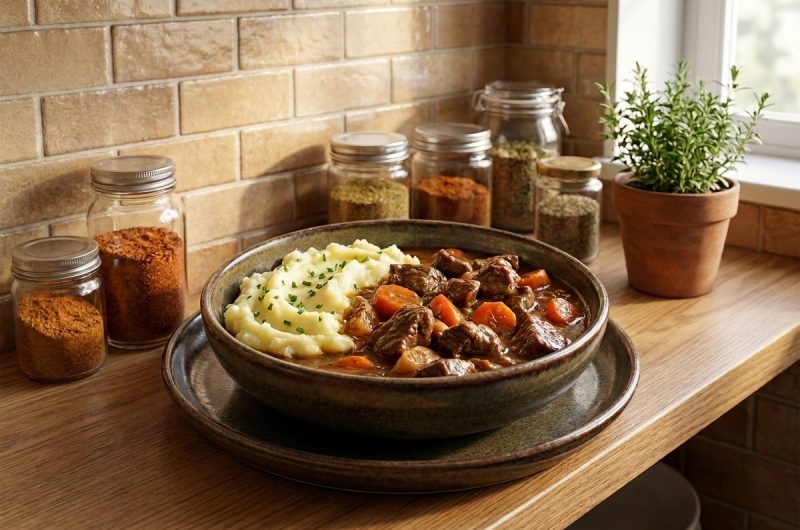
There are some meals that feel special because they bring warmth, comfort, and familiar flavors to the table. This beef stew with creamy mashed potatoes is one of those classic dishes that is simple, hearty, and satisfying. It is made with tender pieces of beef cooked slowly with vegetables, herbs, and a rich gravy until everything comes together into a deeply flavorful meal.
The secret to a good beef stew is patience. The beef needs enough time to cook gently so it becomes soft and tender, while the vegetables absorb the flavors from the broth and seasonings. Instead of rushing the process, the ingredients are layered step by step, allowing each part of the dish to add its own flavor.
Served over smooth and creamy mashed potatoes, the stew becomes a complete comfort meal. The rich gravy from the beef flows into the potatoes, creating a combination of textures and flavors that makes every bite satisfying.
Preparing the Beef for Maximum Flavor
The first step is preparing the beef properly before it goes into the pot. Beef chuck works especially well for this recipe because it becomes tender and flavorful during slow cooking.
Start by patting the beef cubes dry with paper towels. Removing extra moisture from the surface helps the beef brown properly when it touches the hot pan. If the meat is too wet, it can release moisture and steam instead of developing a deep golden crust.
In a large bowl, combine the all-purpose flour, salt, and black pepper. Add the beef cubes and toss them until each piece is evenly coated. The flour coating helps the beef develop a beautiful outer layer during browning, and it also contributes to the thick, rich texture of the stew later.
This small preparation step creates the foundation for the entire dish. A well-browned piece of beef adds much more flavor to the final stew compared with beef that is simply added directly into the broth.
Browning the Beef
Heat the olive oil in a large Dutch oven or heavy-bottomed pot over medium-high heat. The pot should be hot before adding the beef so the meat begins browning immediately.
Add the coated beef cubes in batches. Avoid adding too much meat at once because overcrowding the pot lowers the temperature and prevents proper browning. Give each piece enough space to develop color.
Brown the beef on all sides for about 3 to 4 minutes per batch. The goal is not to cook the beef completely at this stage but to create a flavorful crust on the outside.
Once each batch is browned, transfer the beef to a plate and continue cooking the remaining pieces. Taking the time to brown all the beef creates a deeper and richer flavor throughout the stew.
Creating the Flavor Base
After removing the beef, reduce the heat slightly and use the same pot to build the base of the stew. The browned pieces left behind from the beef are full of flavor and will become part of the sauce.
Add the diced onion to the pot and cook for about 5 minutes. Stir occasionally until the onion becomes soft and lightly golden. Cooking the onion slowly helps bring out its natural sweetness.
Next, add the sliced carrots and chopped celery. Cook them together for another 4 minutes, allowing the vegetables to soften slightly and absorb the flavors already present in the pot.
Add the minced garlic and cook for about 30 seconds. Garlic cooks quickly, so it only needs a short time to release its aroma without burning.
Now add the tomato paste and stir continuously for about 2 minutes. Cooking the tomato paste before adding liquid helps deepen its flavor and gives the stew a richer color and taste.
Bringing Everything Together
Once the vegetables and tomato paste have developed their flavors, it is time to bring the ingredients together.
Pour in a small amount of beef broth and use a wooden spoon to scrape the bottom of the pot. The browned bits stuck to the surface are packed with flavor, and dissolving them into the broth helps create a more flavorful stew.
Return the browned beef to the pot along with any juices collected on the plate. These juices add even more flavor to the cooking liquid.
Add the remaining beef broth, water, Worcestershire sauce, bay leaves, dried thyme, and dried rosemary. Stir everything together so the beef and vegetables are surrounded by the seasoned broth.
Slow Cooking the Stew
Bring the mixture to a gentle boil. Once it begins boiling, reduce the heat to low and cover the pot.
The stew should cook slowly for approximately 1½ to 2 hours. Slow simmering allows the beef fibers to break down gradually, creating tender pieces of meat that almost melt when eaten.
During cooking, stir the stew occasionally to ensure the ingredients cook evenly. The broth will gradually become richer as the beef, vegetables, and herbs release their flavors.
The beef is ready for the next step when it becomes tender and easy to cut with a fork.
Adding the Potatoes and Finishing the Stew
Once the beef has reached the desired tenderness, add the peeled and cut potato chunks directly into the stew.
Continue cooking for another 25 to 30 minutes until the potatoes become fork-tender. Adding the potatoes later in the cooking process helps them maintain their shape while still becoming soft enough to absorb the flavorful gravy.
Taste the stew and adjust the seasoning if needed.
For a thicker consistency, prepare the cornstarch mixture by combining cornstarch with water. Stir it into the stew and cook for an additional 5 minutes until the gravy reaches the preferred thickness.
Finally, add the frozen peas and cook for another 5 minutes. The peas add a fresh flavor and complete the combination of vegetables in the stew.
At this stage, the stew should have a rich texture with tender beef, soft vegetables, and a flavorful gravy.
Making Creamy Mashed Potatoes
While the stew is finishing, prepare the mashed potatoes.
Place the peeled and quartered potatoes in a large pot and cover them with cold water. Add a generous pinch of salt and bring the water to a boil.
Cook the potatoes for 15 to 20 minutes, or until they are very tender when pierced with a fork.
Drain the potatoes thoroughly. Allowing the potatoes to sit briefly in the warm pot helps remove extra moisture, which keeps the mashed potatoes smooth instead of watery.
Add the butter and begin mashing the potatoes. Slowly pour in the warm milk while continuing to mash until the potatoes become creamy and smooth.
Season with salt and black pepper according to taste.
For an extra smooth texture, mash the potatoes thoroughly or use a potato ricer to remove any lumps.
Serving the Meal
To serve, place a generous portion of creamy mashed potatoes into each bowl. Spoon the hot beef stew over the top, allowing the rich gravy to soak into the potatoes.
The combination of tender beef, flavorful vegetables, thick gravy, and creamy mashed potatoes creates a balanced and comforting meal.
This dish is perfect for a family dinner or any time a warm, filling meal is needed. The slow-cooked flavors make it a recipe that feels traditional and familiar, while the simple ingredients keep it easy to prepare.
Helpful Cooking Tips
- Use beef chuck for the best texture because it becomes tender during slow cooking.
- Make sure to brown the beef properly before simmering to build deeper flavor.
- Keep the stew at a gentle simmer rather than boiling strongly, as slow cooking helps the beef become tender.
- Preparing the stew a day ahead allows the flavors to develop even more.
- Warm the milk before adding it to the mashed potatoes to maintain a smooth and creamy texture.
- Check the seasoning near the end of cooking and adjust if needed.
Storing Leftovers
Store leftover stew in an airtight container in the refrigerator for up to 4 days. It can also be frozen for up to 3 months.
When frozen, thaw the stew overnight in the refrigerator and reheat gently on the stovetop.
Mashed potatoes are best when served fresh but can be refrigerated for up to 3 days. Reheat them with a small amount of milk to bring back their creamy texture.
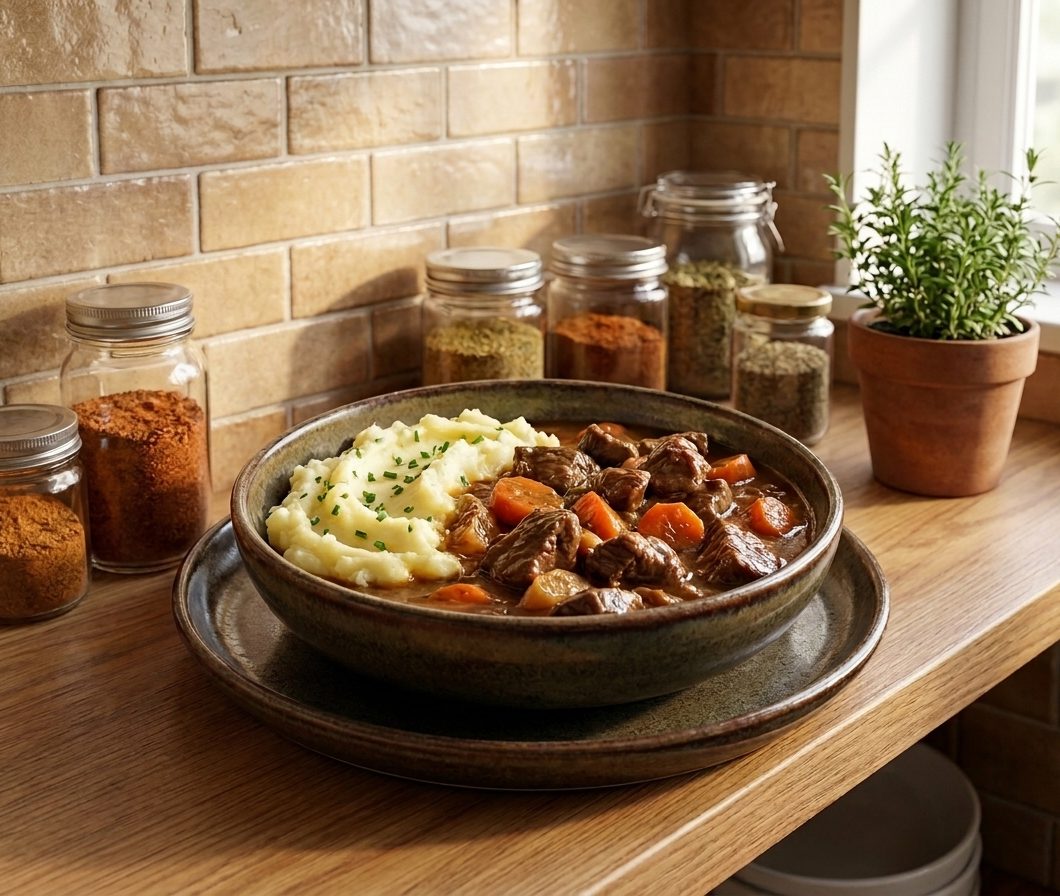
Healthy Beef Stew With Mashed Potatoes
A classic homemade beef stew made with tender beef chuck, vegetables, herbs, and rich gravy served over smooth and creamy mashed potatoes. This comforting meal combines slow-cooked flavors with a creamy potato base for a hearty family dinner
8
servings25
minutes3
hours620
kcal3
hours25
minutesIngredients
2 pounds 900g beef chuck, cut into 1½-inch cubes
2 tablespoons all purpose-flour
1 teaspoon salt
1/2 teaspoon black pepper
2 tablespoons olive oil
1 large diced onion
3 medium carrots, sliced into thick rounds
4 pieces celery stalks chopped
4 pieces cloves garlic, minced
2 tablespoons tomato paste
4 cups beef broth
1 cup water
1 tablespoon Worcestershire sauce
2 pieces bay leaves
1 teaspoon dried thyme
1 teaspoon dried rosemary
3 pieces medium potatoes, peeled and cut into chunks
1 cup frozen peas
1 tablespoon cornstarch mixed with 2 tablespoons water (optional for thickening)
- For the Mashed Potatoes
2 pounds potatoes, peeled and quartered
4 tablespoons butter
1/2 cup warm milk
salt to taste
black pepper to taste
Directions
- Pat the beef cubes dry with paper towels. Mix flour, salt, and black pepper in a bowl. Toss the beef cubes until evenly coated.
- Heat olive oil in a large Dutch oven or heavy-bottomed pot over medium-high heat. Brown the beef in batches for 3–4 minutes per side. Remove and set aside.
- Add onion to the same pot and cook for about 5 minutes until softened. Add carrots and celery and cook for another 4 minutes.
- Stir in garlic and cook for 30 seconds. Add tomato paste and cook for 2 minutes.
- Add a small amount of beef broth and scrape the bottom of the pot to loosen the browned bits. Return the beef to the pot.
- Add remaining beef broth, water, Worcestershire sauce, bay leaves, thyme, and rosemary. Bring to a gentle boil.
- Reduce heat to low, cover, and simmer for 1½ to 2 hours until the beef becomes tender
- Add potatoes and cook for another 25–30 minutes until fork-tender
- Add cornstarch slurry if a thicker stew is desired. Cook for 5 minutes, then add peas and cook for another 5 minutes.
- For mashed potatoes, boil potatoes in salted water for 15–20 minutes until tender. Drain well.
- Mash potatoes with butter and gradually add warm milk. Season with salt and black pepper
- Serve the beef stew over creamy mashed potatoes while hot.
Notes
- Reheat mashed potatoes with a splash of milk to restore creaminess.
- Brown the beef well for the best flavor.
- Keep the stew simmering gently for tender meat.
- The stew can be made one day ahead for deeper flavor.
- Store stew in the refrigerator for up to 4 days or freeze for up to 3 months.
Nutrition Facts
- Total number of serves: 8
- Calories: 620kcal
- Fat: 32g
- Saturated Fat: 13g
- Cholesterol: 125mg
- Sodium: 850mg
- Potassium: 1250mg
- Carbohydrates: 52g
- Fiber: 7g
- Sugar: 8g
- Protein: 42g
- Calcium: 80mg
- Iron: 5mg