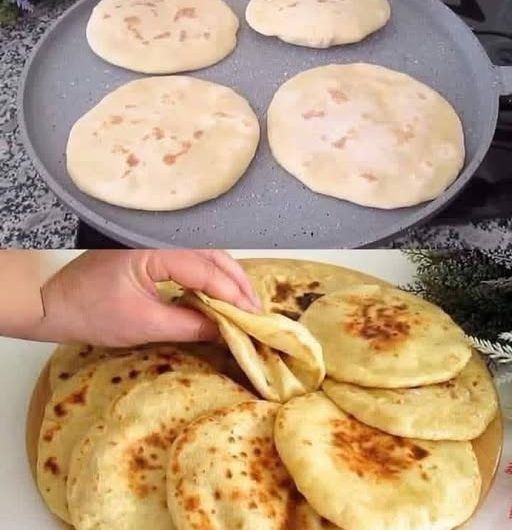
Air Fryer Flatbread is a quick and convenient way to make soft homemade flatbread without turning on a conventional oven or standing over a hot frying pan. This easy no-yeast flatbread uses a simple yogurt-based dough that comes together in minutes, making it particularly useful when you need fresh bread for lunch, dinner, dips, curries, wraps, or snacks. The air fryer provides concentrated heat that cooks the rolled dough quickly while creating lightly golden areas on the outside and keeping the center pleasantly soft.
For this version, the ingredient quantities are based on Good Food’s tested Easy Soft Flatbreads recipe: 300 grams self-raising flour, ½ teaspoon baking powder, 150 grams natural yogurt, 1 tablespoon vegetable oil, plus salt and water used to form the dough. The source recipe cooks the flatbreads in a hot frying pan; the air-fryer cooking instructions below are an adaptation specifically for this recipe. Good Food
Why Make Flatbread in an Air Fryer?
Cooking homemade flatbread in an air fryer offers several practical advantages. The compact cooking chamber heats quickly and circulates hot air directly around the dough, which can produce a lightly browned exterior without requiring a large oven. This makes an air fryer flatbread recipe particularly convenient when you want only a few pieces of bread and do not want to heat your entire kitchen.
The dough itself is also very straightforward. Unlike traditional yeast bread, there is no lengthy rising period. Baking powder works with the yogurt to help create a softer, slightly puffed texture. Good Food specifically describes this type of dough as a quick no-yeast alternative, which is one reason it adapts well to fast air-fryer cooking. Good Food
Easy No-Yeast Flatbread Dough
One of the best features of this homemade air fryer flatbread is that yeast is not required. Yeast breads can be excellent, but they normally need additional time for proofing before they can be shaped and cooked. This yogurt flatbread dough eliminates that waiting period, making it much better suited to a quick meal.
Self-raising flour already contains a raising agent, while the additional ½ teaspoon of baking powder provides extra lift. Natural yogurt contributes moisture and tenderness while also working well with the leavening ingredients. Vegetable oil adds richness and helps create a supple dough that can be rolled without becoming excessively dry.
Understanding the Main Ingredients
Self-raising flour provides the main structure of these easy air fryer flatbreads. The recipe uses 300 grams, plus a little extra for dusting while shaping. Because the flour already contains raising agents, it is particularly convenient for a no-yeast recipe where you want some puffing without waiting for fermentation.
Natural yogurt is equally important. The 150 grams of yogurt adds moisture, softness, and a subtle tang that complements savory meals. A tablespoon of vegetable oil helps with tenderness, while baking powder encourages the dough to become lighter during cooking. The combination produces a simple dough using ingredients that are readily available in many kitchens.
How Yogurt Helps Create Soft Flatbread
Yogurt performs more than one function in homemade flatbread. First, it contributes moisture, which helps transform the dry flour into a soft dough. It also contributes richness and acidity, helping create the tender texture associated with yogurt-based flatbreads.
The result is quite different from a basic flour-and-water dough. Yogurt makes the bread feel more substantial and tender while still allowing it to remain flexible enough for dipping or wrapping around food. Because there is no yeast fermentation, yogurt also contributes additional flavor to what is otherwise a very simple dough.
Good Food notes that baking powder and natural yogurt help its no-yeast flatbread dough rise quickly, eliminating the need to wait hours for yeast fermentation. Good Food
Preparing Air Fryer Flatbread Dough
Begin by placing the self-raising flour and baking powder in a large mixing bowl. Add one teaspoon of salt, then mix the dry ingredients so everything is evenly distributed. This prevents the salt or baking powder from becoming concentrated in one section of the dough.
Add the natural yogurt and vegetable oil, followed by two tablespoons of water. Mix the ingredients until they begin forming a rough dough. Depending on the flour and yogurt, the texture may initially appear slightly uneven. Continue bringing everything together until no large areas of dry flour remain.
The dough should be soft enough to knead comfortably without becoming excessively sticky. If needed, a very light dusting of flour can make handling easier, but avoid adding unnecessary amounts because excessive flour can produce a drier finished flatbread.
Kneading the Dough
Transfer the rough dough to a lightly floured work surface. Knead it for a few minutes until it becomes smoother and more uniform. This does not require the long kneading associated with some yeast breads. The purpose is simply to bring the ingredients together and develop enough structure for easy rolling.
Press the dough gently forward, fold it back, rotate it, and repeat. You should notice the rough surface gradually becoming smoother. If the dough sticks slightly, use only enough additional flour to make it manageable rather than heavily coating the work surface.
Once the dough feels relatively smooth, it is ready to divide. Because there is no yeast, there is no need for a long proofing stage before shaping. This is what makes the recipe particularly convenient for quick homemade bread.
Dividing the Flatbread Dough
The original base recipe produces four large or six to eight smaller flatbreads. For air-fryer cooking, smaller pieces can be particularly convenient because they fit more easily inside a typical basket. The exact size you choose should therefore take the dimensions of your particular air fryer into account. Good Food
Divide the dough into similarly sized portions so they cook at roughly the same speed. Shape each piece gently into a ball and keep the remaining pieces covered while rolling one at a time. This helps prevent the exposed surfaces from becoming dry.
If your air fryer has a compact basket, six to eight smaller pieces will usually be easier to manage than four very large flatbreads. Do not force a piece of dough into a basket when it cannot lie reasonably flat.
Rolling the Flatbreads
Place one dough portion on a lightly floured surface and flatten it gently with your fingers. Use a rolling pin to roll it into a rough oval or circle. Homemade flatbread does not need to have perfectly symmetrical edges, so concentrate on producing relatively even thickness instead of a perfect shape.
Avoid rolling the dough paper-thin. A little thickness allows the bread to puff and helps the inside remain tender during the intense air-fryer cooking process. At the same time, an extremely thick piece may brown outside before the middle cooks properly.
Keep the thickness reasonably consistent from the center to the edges. Uneven areas can cook at different speeds, producing dry edges and an undercooked center. A few rustic irregularities are completely normal and give homemade flatbread its characteristic appearance.
Preheating the Air Fryer
Preheating is useful because flatbread benefits from immediate exposure to strong heat. Set the air fryer to approximately 375°F (190°C) and allow it to preheat for a few minutes. Air fryers differ considerably in size, fan strength, heating element position, and temperature accuracy, so consider this temperature a practical starting point.
A hot cooking chamber helps the outside of the dough begin setting quickly. This supports puffing and can create attractive golden areas while limiting the amount of time the bread spends cooking and losing moisture.
If your air fryer is particularly powerful, monitor the first piece closely. Once you know how quickly one flatbread cooks in your machine, adjusting the remaining batches becomes straightforward.
How to Cook Flatbread in the Air Fryer
Place one rolled flatbread in the preheated air fryer basket, or add more only if they can fit without overlapping. Air fry at approximately 375°F (190°C) for about 3 minutes, then carefully turn the flatbread and continue cooking for another 2–3 minutes.
Look for light puffing and golden-brown patches rather than waiting for the entire surface to become dark. A soft flatbread should remain flexible. Cooking it too long can remove excessive moisture and produce a crisp bread instead of the tender texture intended by this recipe.
Because this is an air-fryer adaptation of a pan-cooked source recipe, exact timing will vary by appliance. Good Food’s original version takes approximately 1–2 minutes per side in a very hot pan, demonstrating that this dough is designed to cook quickly. Good Food
How to Tell When Air Fryer Flatbread Is Ready
The finished flatbread should show some golden coloring on both sides, and portions of the dough may puff during cooking. The center should appear cooked rather than raw or gummy, while the overall bread should still bend relatively easily after being removed from the basket.
Do not judge doneness only by deep browning. An air fryer can continue drying the dough rapidly after it has already cooked through. If you wait for every part of the surface to become heavily browned, the flatbread may lose the softness that makes it useful alongside curries and dips.
Use the first flatbread as a test piece. If it browns too quickly, slightly reduce the temperature or cooking time for subsequent batches. If it remains pale and doughy, add a little more time.
Keeping Air Fryer Flatbread Soft
Fresh flatbread begins losing moisture when exposed to air, so keeping the cooked pieces covered is one of the easiest ways to preserve their softness. Transfer each finished flatbread to a clean kitchen towel and cover it while the remaining portions cook.
Stacking warm flatbreads together under the towel also allows a small amount of steam to circulate between them. This helps soften their surfaces and prevents them from becoming unnecessarily crisp as they cool.
For an even richer finish, the original Good Food recipe recommends brushing the cooked flatbreads with melted ghee or butter. This step adds flavor and can also make the surface feel softer. Good Food
Optional Flatbread Flavorings
The source recipe includes several optional flavor additions: cumin seeds, chopped garlic, chopped coriander, and chopped chillies. These ingredients can transform the same basic dough into several different variations without changing its fundamental preparation. Good Food
For flavored flatbread, the original technique involves rolling the dough, brushing it with a little melted butter or ghee, adding the chosen flavoring, folding the dough over itself, and rolling it again. This distributes the seasoning through layers rather than leaving everything loose on the surface.
When adapting that approach for an air fryer, make sure loose ingredients are well attached to the dough. Strong circulating air can move lightweight toppings around the basket, so ingredients incorporated into the dough are generally easier to manage.
Garlic Air Fryer Flatbread
Garlic is an especially useful optional flavor for flatbread served alongside curries, grilled chicken, soups, or dips. Finely chopped garlic can be incorporated using the folding method described in the source recipe, creating small pockets of savory flavor throughout the bread.
After cooking, brushing the warm bread with melted butter or ghee can enhance the garlic flavor and create a softer finish. Serve it immediately while warm for the best texture.
Remember that garlic is an optional addition in the source recipe rather than part of the basic ingredient list. If you want plain air fryer flatbread, simply leave it out and follow the same dough and cooking process.
What to Serve With Air Fryer Flatbread
Homemade air fryer flatbread is versatile enough to accompany many meals. Good Food suggests serving this style of flatbread with curries, kebabs, souvlaki, hummus, tzatziki, and other dips. Its relatively mild flavor makes it particularly good for scooping up sauces or serving alongside strongly seasoned dishes. Good Food
You can also use the flatbread as a simple lunch base. Add cooked chicken, vegetables, salad, or another filling and fold the bread around it. Smaller flatbreads work well as part of a grazing platter, while larger pieces can function more like naan or pita alongside a main meal.
Serving the bread warm is ideal. If the rest of your meal is not ready, keep the finished flatbreads wrapped in a clean towel until serving time.
Can Air Fryer Flatbread Be Made Ahead?
Yes. The dough is quick enough to prepare shortly before serving, but cooked flatbreads can also be stored when necessary. Allow them to cool before placing them in an appropriate airtight container or food-safe bag.
When you want to serve them again, briefly reheating the flatbreads can restore some of their softness. Avoid prolonged reheating because the circulating air that makes an air fryer effective can also dry bread when it remains inside too long.
If preparing a large batch, separating the breads before freezing can make individual portions easier to remove later. Good Food recommends parchment between flatbreads when freezing so they do not stick together. Good Food
Freezing Homemade Flatbread
Flatbread freezes particularly well when packaged correctly. Allow cooked pieces to cool completely, then stack them with sheets of baking parchment between individual breads. Place the stack in an airtight freezer-safe bag or container and protect it well from exposure to air.
The parchment separators make it possible to remove only the number you need without thawing the entire batch. Once thawed, the bread can be warmed briefly before serving.
The original recipe also notes that flatbreads can be frozen, with careful wrapping recommended to reduce freezer burn. That makes this recipe useful for batch preparation when you want homemade bread available for future meals. Good Food
Common Air Fryer Flatbread Problems
If the flatbread becomes hard or excessively crisp, it has probably cooked too long. Reduce the cooking time for the next batch and cover each bread immediately after removing it from the air fryer. Remember that the goal is a cooked, lightly golden bread rather than a cracker-like texture.
If the center remains doughy, the flatbread may have been rolled too thick or the cooking time may have been too short. Roll subsequent portions a little more evenly or increase the cooking time slightly.
If the bread browns dramatically on top before the bottom cooks, your air fryer’s upper heating element may be particularly strong. Turning the bread earlier or slightly lowering the temperature can produce more even results.
Notes for the Best Air Fryer Flatbread
Keep the dough soft and avoid adding excessive flour while kneading or rolling. A dry dough is more likely to produce dry bread. Roll each portion to an even thickness so the center and edges finish cooking at approximately the same time.
Preheat the air fryer and avoid overlapping the flatbreads in the basket. Cooking in batches may take a little longer overall, but each piece needs exposure to the circulating hot air for consistent results.
Most importantly, monitor the first batch closely. Air fryer models vary more than conventional oven recipes sometimes suggest. Once you establish the ideal time for your appliance, use it as the guide for the remaining flatbreads.
Why This Easy Air Fryer Flatbread Recipe Works
The combination of self-raising flour, additional baking powder, natural yogurt, oil, salt, and a small amount of water produces a simple dough that does not require yeast fermentation. This dramatically shortens preparation time while still allowing the bread to develop a tender, lightly puffed texture.
Air frying then provides a fast cooking method that is particularly convenient for small batches. Because the bread is relatively thin, it does not need the extended baking time associated with a loaf of bread.
The result is an easy homemade flatbread suitable for everyday meals. With a little practice adjusting the time to your particular air fryer, you can prepare warm bread without a conventional oven or frying pan.
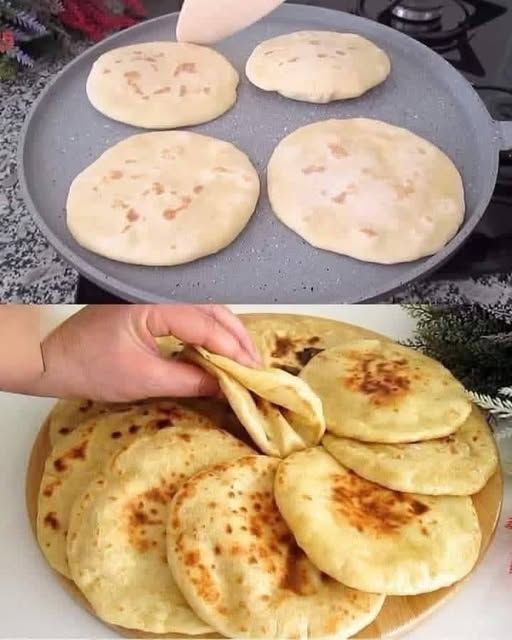
Air Fryer Galic Butter Flatbread
Soft and easy Air Fryer Flatbread made with self-raising flour and natural yogurt. This quick no-yeast flatbread requires only a few basic ingredients and cooks in minutes in the air fryer.
8
servings15
minutes5
minutes328
kcal20
minutesIngredients
300 g self-raising flour, plus extra for dusting
½ teaspoon baking powder
150 g natural yogurt
1 tablespoon vegetable oil
1 teaspoon salt
2 tablespoons water
Melted ghee or butter, for brushing
- Optional Flavorings
Cumin seeds
Chopped garlic cloves
Chopped coriander
Chopped chillies
Directions
- Add the self-raising flour, baking powder, and salt to a large mixing bowl.
- Add the natural yogurt, vegetable oil, and water. Mix until a rough dough forms.
- Transfer the dough to a lightly floured surface and knead for a few minutes until relatively smooth.
- Divide the dough into 4 portions for large flatbreads or 6–8 portions for smaller ones.
- Roll each portion into a rough oval or circle that will fit comfortably inside your air fryer basket.
- Preheat the air fryer to approximately 375°F (190°C).
- Place one flatbread in the basket, or more if your air fryer can accommodate them without overlapping.
- Air fry for approximately 3 minutes.
- Turn the flatbread and cook for another 2–3 minutes, or until cooked through with lightly golden areas.
- Remove immediately and keep covered with a clean kitchen towel while cooking the remaining flatbreads.
- Brush the warm flatbreads with melted ghee or butter before serving.
Nutrition Facts
8 servings per container
- Amount Per ServingCalories328
- % Daily Value *
- Total Fat
5g
7%
- Total Carbohydrate
60g
22%
- Protein 9g 18%
* The % Daily Value tells you how much a nutrient in a serving of food contributes to a daily diet. 2,000 calories a day is used for general nutrition advice.