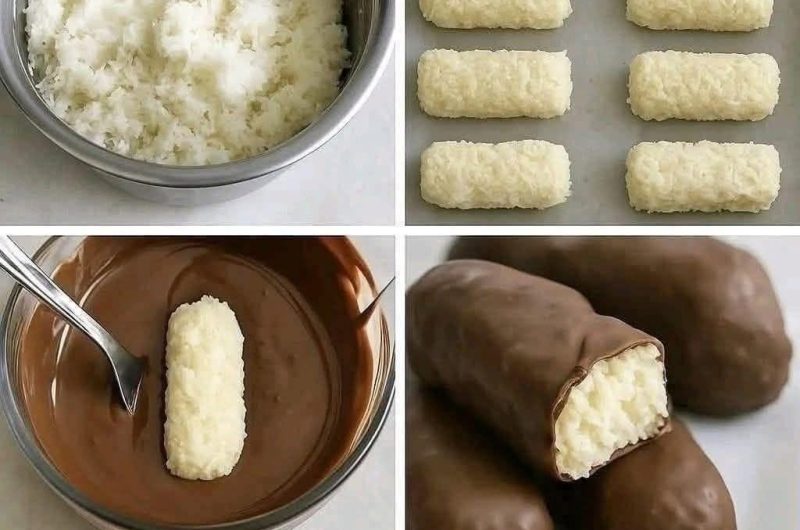
These sugar-free coconut chocolate bars are easy to make at home with a creamy coconut center and a smooth chocolate coating. The filling combines unsweetened shredded coconut, full-fat coconut cream, coconut oil, powdered sweetener, vanilla, and a little salt.
The bars are shaped by hand, chilled until firm, and then dipped in melted sugar-free dark chocolate. For an extra-thick chocolate shell, they can be dipped twice.
The recipe is simple, but a few small details help give the bars the right texture. Finely shredded coconut creates a smoother center, while powdered sweetener blends more easily into the mixture. Most importantly, the coconut bars should be frozen before dipping so they stay firm when covered with chocolate.
What Makes These Coconut Chocolate Bars Easy?
There is no complicated baking involved. The coconut filling is mixed in one bowl, shaped into bars, chilled in the freezer, and coated with chocolate.
The recipe also gives you two choices for the chocolate coating. You can use 120 g (about 4 oz) of sugar-free dark chocolate, or make a homemade chocolate coating with cocoa butter and unsweetened cocoa powder.
Both options work well with the coconut filling.
Making the Coconut Filling
Start with a medium mixing bowl. Add the unsweetened shredded coconut, powdered erythritol or powdered monk fruit sweetener, and salt.
Stir the ingredients together thoroughly. This helps distribute the sweetener and salt evenly throughout the coconut before adding the wet ingredients.
Next, add the full-fat coconut cream and melted coconut oil. Mix everything with a silicone spatula or spoon until the mixture becomes thick and sticky.
The coconut mixture should hold together when pressed. It should be moist enough to form a compact shape, but it should not feel wet or loose.
Add the vanilla extract if using it. Although optional, vanilla helps round out the flavor of the coconut filling.
Check the Coconut Mixture
The right texture is important before shaping the bars.
The mixture should be:
- Moist but not wet
- Compact when pressed
- Easy to shape
- Not crumbly
If the mixture feels too dry, add 1 tablespoon of coconut cream at a time. Mix again after each addition until the filling holds together.
If the mixture feels too wet, add a small amount of shredded coconut.
Powdered sweetener is recommended because granulated sweetener may not dissolve properly and can leave the filling with a gritty texture.
Shaping the Coconut Bars
Once the filling has reached the right consistency, line a baking sheet or flat tray with parchment paper.
Divide the coconut mixture into equal portions. Shape each portion into a rectangular bar using your hands.
Press each bar firmly as you shape it. This helps keep the coconut center compact and prevents air pockets from forming.
For evenly sized bars, aim for approximately:
- 8–9 cm long
- 2–3 cm wide
- 1.5 cm thick
Place each shaped bar on the parchment-lined tray.
The bars do not need to look perfectly identical. The main goal is to make each one firm and compact so it can be coated easily later.
Why the Bars Need to Be Frozen
After shaping, place the tray in the freezer for 30–45 minutes.
This is an important part of the recipe. The coconut bars need to become firm before they are dipped into the melted chocolate.
If the filling is too soft, it can fall apart during coating. Chilling the bars makes them much easier to handle and helps them keep their rectangular shape.
While the bars are in the freezer, prepare the chocolate coating.
Choosing the Chocolate Coating
There are two ways to make the chocolate coating.
The first option is to use 120 g (about 4 oz) of sugar-free dark chocolate. Chocolate sweetened with erythritol or stevia works for this recipe. If preferred, 85–95% cocoa chocolate can also be used for a very low-sweetness coating.
The second option is to make a homemade chocolate coating using cocoa butter, unsweetened cocoa powder, powdered sweetener, vanilla extract, and salt.
Choose whichever option is more convenient.
Melting Store-Bought Chocolate
If using sugar-free dark chocolate, place it in a small saucepan or microwave-safe bowl.
Melt it gently using a double boiler or microwave.
For microwave melting, use 20-second intervals and stir frequently. Continue until the chocolate is smooth.
Let the melted chocolate cool slightly before dipping the bars. It should remain fluid enough to coat the coconut bars but should not be hot.
Making Homemade Chocolate
For the homemade chocolate option, gently melt the cocoa butter over low heat.
Once melted, remove it from the heat.
Whisk in the unsweetened cocoa powder, powdered sweetener, vanilla extract, and salt.
Continue stirring until the mixture becomes completely smooth and glossy.
Allow the chocolate to cool slightly. It should be fluid enough for dipping without being hot.
Coating the Coconut Bars
Remove the chilled coconut bars from the freezer.
Use a fork or dipping tool to pick up one bar. Place it into the melted chocolate and turn it carefully until all sides are covered.
Lift the bar from the chocolate and allow the excess coating to drip away.
Place the coated bar back onto the parchment-lined tray.
Continue with the remaining bars.
Work gently during this step. The chilled coconut center is firm, but it can still break if handled too roughly.
How to Get a Thicker Chocolate Shell
For a thicker chocolate coating, let the first layer set in the refrigerator for 10 minutes.
After the first layer has firmed up, dip the bars into the melted chocolate again.
This second coating creates a thicker chocolate shell around the coconut center.
Once coated again, place the bars back on the parchment-lined tray.
Setting the Chocolate
Place the chocolate-covered coconut bars in the refrigerator for 15–20 minutes.
Wait until the chocolate is completely set before serving.
Once the coating has hardened, the bars are ready to eat.
The finished texture should have a firm chocolate exterior and a moist, compact coconut center.
How to Store Coconut Chocolate Bars
Store the finished bars in an airtight container in the refrigerator for up to 7 days.
The bars can also be stored in the freezer for up to 2 months.
If eating the bars from the freezer, let them sit at room temperature for about 5 minutes before eating. This gives them a little time to soften.
Easy Texture Adjustments
The basic recipe can be adjusted if a different coconut-center texture is preferred.
For a softer center, add 1–2 extra tablespoons of coconut cream.
For a firmer and chewier bar, add 1 additional tablespoon of coconut oil.
For a stronger coconut flavor, add 1/4 teaspoon of coconut extract.
For sweeter bars, increase the powdered sweetener by 1 tablespoon.
These adjustments make it easy to change the texture or sweetness while keeping the preparation straightforward.
Tips for Better Coconut Bars
Use Finely Shredded Coconut
Finely shredded coconut creates a smoother, more classic texture. Coarse shredded coconut will give the bars a rougher bite.
Use Powdered Sweetener
Powdered erythritol or powdered monk fruit sweetener is important for a smooth filling. Granulated sweetener may not dissolve properly and can make the coconut mixture feel gritty.
Do Not Skip the Freezer Step
The coconut bars need to be firm before dipping. Freezing them for 30–45 minutes makes the coating process much easier.
Let the Chocolate Cool Slightly
The chocolate should be fluid but not hot when the bars are dipped. This helps keep the chilled coconut filling firm.
Final Thoughts
These homemade sugar-free coconut chocolate bars are simple to prepare and require no complicated baking steps. The coconut filling comes together quickly, and the freezer does most of the work before the chocolate coating is added.
For the best result, use finely shredded coconut, powdered sweetener, thick full-fat coconut cream, and make sure the shaped bars are properly chilled before dipping.
Once the chocolate has completely set, the bars are ready to enjoy. Keep them refrigerated for up to 7 days or freeze them for longer storage.
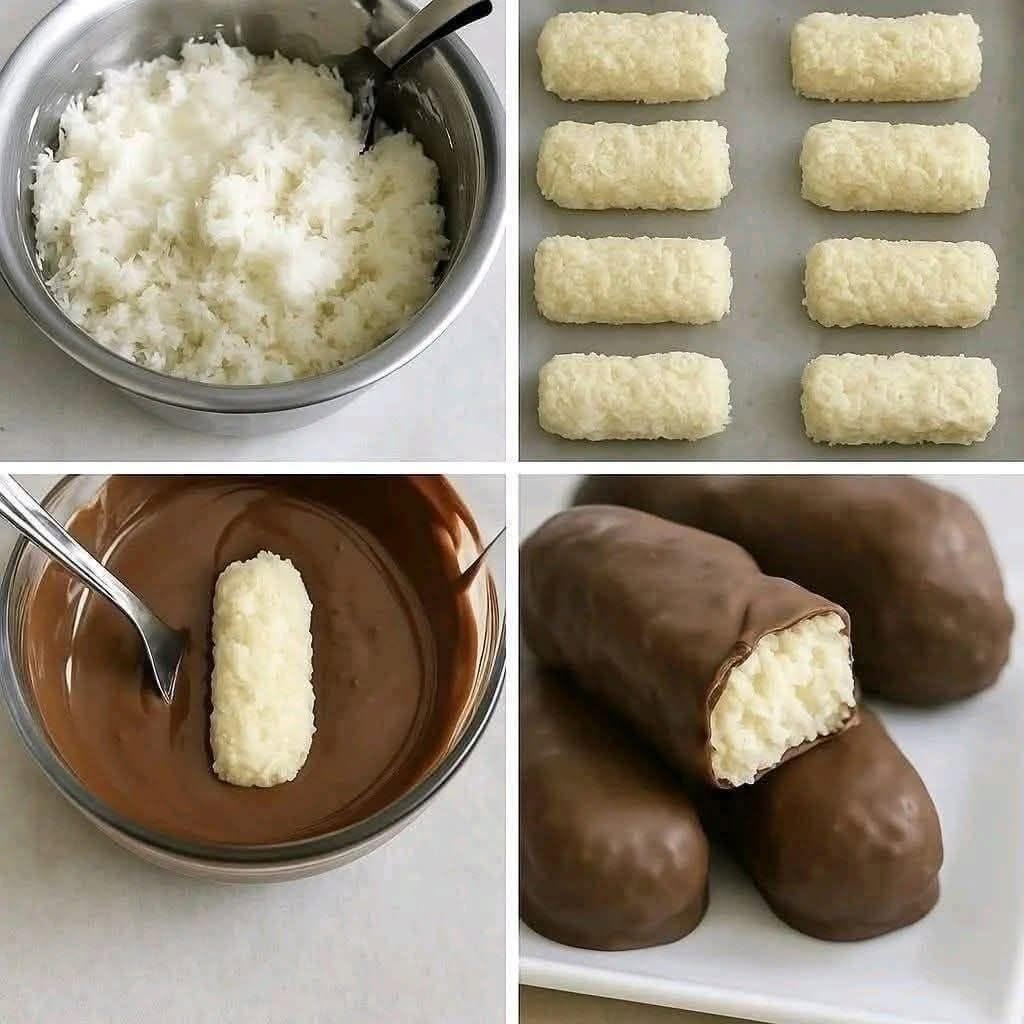
Keto Bounty Bars (Sugar free)
12
servings20
minutes200
kcalIngredients
coconut Filling
2 cups unsweetened shredded coconut
1/2 cup full-fat coconut cream
1/4 cup powdered erythritol or powdered monk fruit sweetener
2 tablespoons melted coconut oil
1 teaspoon vanilla extract
1/8 teaspoon salt
- chocolate coating
120 g (about 4 oz) sugar-free dark chocolate
- or homemade chocolate
1/3 cup cocoa butter
1/4 cup unsweetened cocoa powder
2–3 tablespoons powdered sweetener
1/2 teaspoon vanilla extract
pinch of salt
Directions
- Combine the shredded coconut, powdered sweetener, and salt in a medium bowl.
- Add the coconut cream and melted coconut oil. Mix until thick, sticky, and easy to shape.
- Add the vanilla extract if using
- If the mixture is too dry, add 1 tablespoon of coconut cream at a time. If it is too wet, add a small amount of shredded coconut.
- Line a baking sheet or flat tray with parchment paper.
- Divide the mixture into 12 equal portions and shape each into a rectangular bar
- Freeze the bars for 30–45 minutes.
- If using store-bought chocolate, melt it gently in a double boiler or microwave using 20-second intervals, stirring frequently.
- If making homemade chocolate, melt the cocoa butter over low heat. Remove from the heat and whisk in the cocoa powder, powdered sweetener, vanilla, and salt until smooth and glossy.
- Let the chocolate cool slightly while keeping it fluid.
- Dip each chilled coconut bar into the melted chocolate using a fork or dipping tool.
- Allow excess chocolate to drip off, then place each bar on parchment paper.
- For a thicker coating, refrigerate the first chocolate layer for 10 minutes and dip the bars again.
- Refrigerate the coated bars for 15–20 minutes, or until the chocolate is completely set.
Notes
- Finely shredded coconut gives the filling a smoother texture.
- Use powdered sweetener to help prevent a gritty texture.
- The coconut bars must be firm before dipping.
- Store refrigerated in an airtight container for up to 7 days.
- Freeze for up to 2 months
- Let frozen bars sit at room temperature for 5 minutes before eating.
- For a softer center, add 1–2 extra tablespoons of coconut cream.
- For a firmer, chewier bar, add 1 additional tablespoon of coconut oil.
- For stronger coconut flavor, add 1/4 teaspoon coconut extract.
- For sweeter bars, increase powdered sweetener by 1 tablespoon.
Nutrition Facts
- Serving Size: 35 g
- Total number of serves: 12
- Calories: 200kcal
- Carbohydrates: 6g
- Protein: 2g




)