Ingredients
Eggs
- 2 to 3 large eggs
Use fresh eggs at room temperature if possible for better texture and even cooking. - 1 tablespoon water or milk (optional)
Adds lightness and softness to the eggs. - Salt, to taste
- Black pepper, to taste
Vegetables
- ½ cup mushrooms, sliced
Button, cremini, or baby bella mushrooms work well. - ½ cup cherry tomatoes or 1 medium tomato, chopped
Tomatoes should be ripe but not overly soft. - 1 cup fresh spinach
Wash thoroughly and dry well.
Cooking Fat
- 1 to 2 teaspoons olive oil, butter, or a combination of both
Equipment Needed
- Non-stick or well-seasoned skillet (20–24 cm / 8–10 inches)
- Mixing bowl
- Fork or whisk
- Cutting board
- Sharp knife
- Spatula
Step 1: Preparing the Vegetables
Mushrooms
- Clean mushrooms by wiping gently with a damp cloth or paper towel.
- Slice evenly to ensure uniform cooking.
- Avoid washing mushrooms directly under water, as they absorb moisture easily.
Tomatoes
- If using cherry tomatoes, cut them in halves or quarters.
- If using a whole tomato, remove excess seeds if very juicy.
- Chop into small, even pieces to prevent excess moisture in the omelette.
Spinach
- Rinse spinach thoroughly.
- Dry completely using a towel or salad spinner.
- Remove thick stems if present.
Proper vegetable preparation prevents sogginess and ensures balanced texture.
Step 2: Cooking the Vegetables
Heat the skillet over medium heat.
- Add the cooking fat and allow it to heat evenly.
- Add mushrooms first.
- Cook mushrooms for 3–5 minutes, stirring occasionally, until they release moisture and begin to brown.
- Add tomatoes and cook for 1–2 minutes, just until slightly softened.
- Add spinach last.
- Stir gently until spinach wilts completely, about 30–60 seconds.
- Season lightly with salt and pepper.
- Transfer vegetables to a plate and set aside.
This step is essential. Cooking vegetables separately prevents excess water from leaking into the eggs.
Step 3: Preparing the Egg Mixture
Crack eggs into a mixing bowl.
- Add salt and black pepper.
- Add water or milk if using.
- Whisk gently with a fork until yolks and whites are just combined.
- Avoid over-whisking, which can make the omelette tough.
The mixture should look uniform but not frothy.
Step 4: Heating the Pan for the Omelette
Return the skillet to the stove over medium-low heat.
- Add a small amount of cooking fat.
- Swirl the pan to coat evenly.
- Allow the fat to heat gently without browning.
Correct pan temperature is crucial. Too hot and the eggs will seize; too cool and they will spread without setting.
Step 5: Cooking the Omelette Base
- Pour the egg mixture into the pan.
- Tilt the pan gently to spread the eggs evenly.
- Let the eggs sit undisturbed for 20–30 seconds.
- As the edges begin to set, gently push them toward the center using a spatula.
- Tilt the pan to allow uncooked egg to flow outward.
Continue this process until the eggs are mostly set but still slightly moist on top.
Step 6: Adding the Vegetables
- Spoon the cooked vegetables evenly over one half of the omelette.
- Avoid piling too high, which can cause tearing.
- Let cook for another 20–30 seconds so the filling warms through.
Step 7: Folding the Omelette
- Using a spatula, gently lift the empty side of the omelette.
- Fold it over the vegetable-filled side.
- Press lightly to seal.
Lower the heat if needed and cook for another 30–60 seconds, depending on desired doneness.
Step 8: Final Cooking and Texture Check
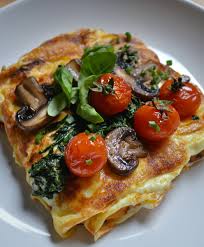
The omelette should be:
- Lightly golden on the outside
- Soft and tender inside
- Fully set but not dry
If necessary, cover the pan briefly to trap steam and finish cooking gently.
Step 9: Serving
Slide the omelette carefully onto a plate.
Allow it to rest for about 30 seconds before cutting. This helps the structure set and improves texture.
Flavor and Texture Notes
- Mushrooms add earthiness and umami.
- Tomatoes bring acidity and moisture.
- Spinach provides freshness and balance.
- Eggs should remain creamy rather than rubbery.
If the omelette tastes flat, adjust seasoning next time or season the vegetables slightly more.