Ingredients
For the pastry crust (pâte brisée)
All-purpose flour – 250 g (about 2 cups)
Unsalted butter, very cold – 125 g (½ cup), cut into small cubes
Salt – ½ teaspoon
Cold water – 4 to 6 tablespoons
For the filling
Bacon or lardons – 200 g (about 7 oz)
Eggs – 4 large
Heavy cream – 300 ml (1¼ cups)
Whole milk – 100 ml (about ½ cup)
Gruyère or Emmental cheese – 150 g (about 1½ cups), grated
Salt – to taste
Black pepper – to taste
Freshly grated nutmeg – a small pinch (optional but traditional)
Equipment Needed
9 to 10 inch tart pan with removable bottom
Rolling pin
Mixing bowls
Whisk
Frying pan
Baking sheet
Parchment paper
Pie weights or dried beans
Step 1: Making the pastry dough
In a large bowl, combine the flour and salt. Add the cold butter cubes. Using your fingertips, gently rub the butter into the flour until the mixture resembles coarse crumbs. The butter should still be visible in small pieces; this helps create a flaky crust.
Add cold water one tablespoon at a time, mixing gently with your hand or a fork. Stop as soon as the dough begins to come together. Do not overwork the dough, as this can make it tough.
Form the dough into a flat disk, wrap it in plastic wrap, and refrigerate for at least 30 minutes. Chilling relaxes the gluten and makes rolling easier.
Step 2: Preparing the crust
Preheat the oven to 180°C (350°F).
On a lightly floured surface, roll out the chilled dough into a circle slightly larger than your tart pan. Carefully lift the dough and place it into the pan, pressing it gently into the corners. Trim excess dough from the edges.
Prick the bottom of the crust with a fork to prevent bubbling. Line the crust with parchment paper and fill it with pie weights or dried beans.
Bake the crust for 15 minutes. Remove the parchment and weights, then return the crust to the oven for another 5 to 7 minutes until lightly golden. This step is called blind baking and helps prevent a soggy bottom.
Set the crust aside to cool slightly.
Step 3: Preparing the filling
Cut the bacon into small pieces if not already prepared. Place it in a frying pan over medium heat and cook until lightly browned but not overly crisp. Remove the bacon and drain on paper towels to remove excess fat.
In a large bowl, crack the eggs and whisk them gently. Add the cream and milk, whisking until smooth. The mixture should be well blended but not frothy.
Add the grated cheese, cooked bacon, salt, black pepper, and nutmeg if using. Stir gently to distribute the ingredients evenly.
Taste the mixture carefully and adjust seasoning. Remember that bacon and cheese are already salty, so go lightly with added salt.
Step 4: Assembling the quiche
Place the partially baked crust on a baking sheet for stability. Pour the filling slowly into the crust. Make sure the bacon and cheese are evenly distributed.
Fill the crust nearly to the top, but do not overfill, as the custard will puff slightly during baking.
Step 5: Baking the quiche
Bake the quiche in the preheated oven at 180°C (350°F) for 35 to 45 minutes.
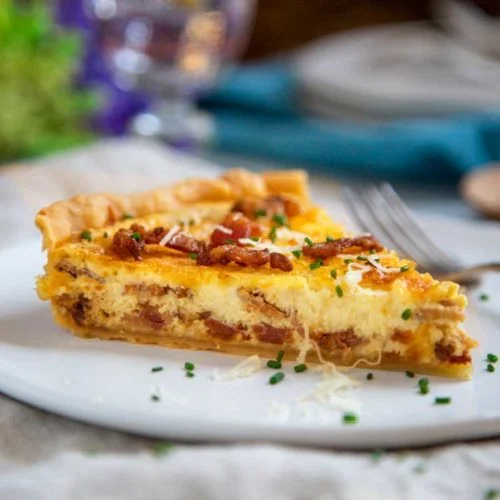
The quiche is done when the center is just set. It should jiggle slightly when gently shaken but not appear liquid. The top should be lightly golden, and a knife inserted near the center should come out mostly clean.
If the crust edges brown too quickly, cover them loosely with foil during the last part of baking.
Step 6: Resting and serving
Remove the quiche from the oven and allow it to rest for at least 10 to 15 minutes before slicing. This resting time allows the custard to fully set and makes cleaner slices.
Serve warm or at room temperature. Quiche Lorraine pairs well with a simple green salad dressed with a light vinaigrette.
Tips for best results
Use very cold butter for the crust to ensure flakiness.
Do not overwhisk the eggs; too much air can cause cracks.
Blind baking the crust is essential for a crisp base.
Let the quiche cool slightly before cutting for the best texture.