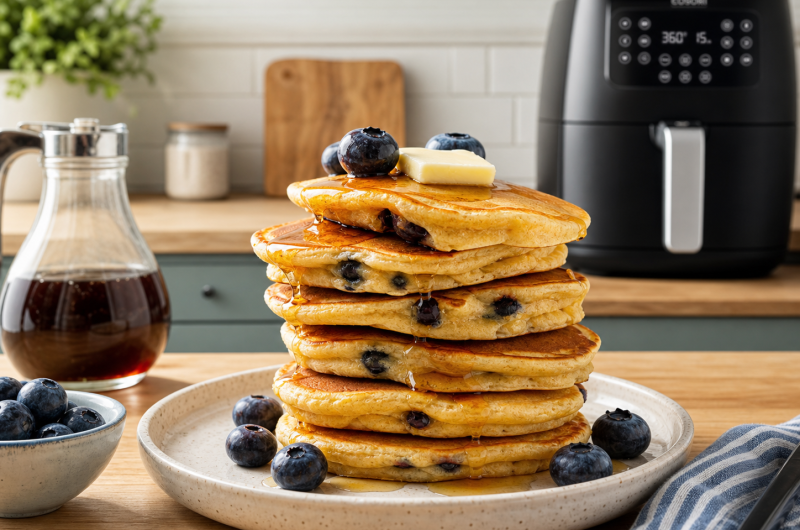
Blueberry cottage cheese pancakes are a simple breakfast option when you want something soft, fluffy, and a little more filling than regular pancakes. Cottage cheese adds extra protein to the batter while keeping the pancakes tender. Fresh blueberries or frozen blueberries can be folded into the mixture for juicy bursts of fruit throughout each pancake.
These pancakes are made with basic ingredients and do not require a complicated cooking method. The cottage cheese, eggs, milk or water, vanilla, baking powder, and seasonings are blended until smooth. The blended mixture is then combined with flour before the blueberries are added. This gives the batter an even texture without noticeable pieces of cottage cheese.
Why Make Cottage Cheese Pancakes?
Traditional pancakes are usually made with flour, eggs, and a liquid such as milk. Adding cottage cheese gives this breakfast recipe a different texture and increases the amount of protein in each serving. The result is a pancake that is soft inside while still developing lightly cooked edges on the pan.
Cottage cheese is also useful because it blends easily with the wet ingredients. Instead of leaving large curds throughout the pancakes, blending creates a smooth base for the batter. This makes the finished pancakes suitable even for people who do not normally enjoy the texture of cottage cheese.
Protein in Blueberry Pancakes
Each serving of these blueberry cottage cheese pancakes provides 12 grams of protein according to the supplied nutritional information. The protein comes mainly from the cottage cheese and eggs used in the batter. This makes the recipe a useful choice when you want to include more protein in your morning meal.
The recipe is divided into four servings, with three pancakes listed as one serving. Protein needs vary from person to person, so the pancakes can be served with other breakfast foods according to your preferences. Fruit, yogurt, or another protein-rich side can also be added if desired.
Using Fresh or Frozen Blueberries
Both fresh and frozen blueberries can be used in this pancake recipe. There is no need to thaw frozen berries before adding them to the batter. They can be folded into the mixture while still frozen and will warm as the pancakes cook.
Fresh blueberries provide the same fruity flavor and can be added directly to the finished batter. Whichever type you use, fold the berries gently so they stay intact as much as possible. Mixing too roughly can break the fruit and turn the batter purple.
Making the Pancake Batter
The batter starts with the flour placed in a medium bowl. The remaining ingredients are blended separately until smooth. Keeping the flour outside the blender helps prevent overmixing and gives you better control over the final consistency.
The blended mixture is poured into the flour and gently stirred with a rubber spatula. Use large circular movements and stop mixing once the ingredients are just combined. Pancake batter does not need to be perfectly smooth, and mixing it for too long can affect the texture of the cooked pancakes.
Why Blend the Cottage Cheese?
Blending the cottage cheese is one of the main steps that gives these pancakes their smooth texture. Cottage cheese naturally contains small curds, but blending breaks them down and combines them with the eggs and other wet ingredients.
The blender also makes the preparation quick. Instead of mixing each wet ingredient separately, the cottage cheese, eggs, vanilla, liquid, baking powder, salt, and optional sugar can all be blended together. The mixture is then ready to combine with the flour.
Choosing Water or Milk
The recipe allows either ¼ cup of water or milk. Both options provide the liquid needed to create the pancake batter. Milk can add a slightly richer taste, while water keeps the ingredient list simple and still works with the other ingredients.
Use whichever option you already have available. There is no need to change the quantity when switching between the two. The goal is to maintain the consistency needed for pouring approximately ¼ cup of batter for each pancake.
The Role of Eggs
The two large eggs help bind the ingredients and contribute to the structure of the pancakes. They also work with the cottage cheese to provide part of the protein listed in the nutritional information.
Adding the eggs to the blender makes it easy to combine them completely with the cottage cheese and other liquid ingredients. Blend until the mixture looks evenly combined before adding it to the flour.
Adding Vanilla and Sugar
Vanilla extract gives the pancakes a gentle sweet flavor that works well with blueberries. The recipe uses one teaspoon, which is enough to add flavor without making the pancakes taste strongly of vanilla.
The two teaspoons of sugar are optional. If you prefer a less sweet pancake or plan to use a sweet topping, you can leave the sugar out. The blueberries still provide natural sweetness, especially when they are ripe.
Using Aluminum-Free Baking Powder
The recipe specifically calls for aluminum-free baking powder. Baking powder helps the pancakes rise during cooking and contributes to their light texture. Using the listed type keeps the ingredient choice consistent with the original recipe.
Since this recipe contains two teaspoons of baking powder, its flavor can be noticeable if the baking powder has a strong aftertaste. Measuring it accurately also helps keep the balance of the batter consistent.
Getting the Batter Ready
Once the blended ingredients have been added to the flour, use a rubber spatula to bring everything together. Large, gentle circular movements are enough. Avoid trying to make the mixture completely silky because a little unevenness in pancake batter is normal.
Add the blueberries only after the flour and liquid have been combined. Fold them in carefully so the berries remain distributed throughout the batter. This also makes it easier to ensure each pancake receives a good amount of blueberries.
Heating the Pan
A non-stick griddle or large pan works well for cooking these pancakes. Heat it over medium-high heat before adding the batter. If you are using an electric griddle, a temperature between 300°F and 350°F is suitable.
The cooking surface should be hot before the batter is added. A properly heated pan helps the pancakes begin cooking immediately and gives the edges enough heat to set. If the pan is too cool, the pancakes can spread and take longer to cook.
Greasing the Cooking Surface
Before adding the batter, grease the hot pan, use cooking spray, or melt butter across the surface. This helps prevent the pancakes from sticking and makes flipping easier.
You do not need to use a large amount of fat. A light coating across the cooking area is enough. If you are cooking several batches, check the pan between batches and add more grease if the surface begins to look dry.
Portioning the Pancakes
Use about ¼ cup of batter for each pancake. Pour the batter onto the greased cooking surface and make sure each portion contains some blueberries. Leaving enough space between pancakes makes flipping easier.
Try to keep the portions similar in size so they finish cooking at roughly the same time. If one pancake is much larger than the others, it may need additional cooking time while the smaller ones are already ready.
Knowing When to Flip
The first side usually takes about two minutes. Watch the edges as they begin to look more defined, and look for bubbles forming across the surface. These are useful signs that the pancake is ready to turn.
Slide a spatula underneath and flip the pancake carefully. Cook the second side for another one to two minutes. The exact timing can vary slightly depending on the pan, heat level, and size of the pancakes.
Do Not Press the Pancakes
Once the pancakes have been flipped, resist the temptation to press them down with your spatula. Pressing can force the air out of the pancake and create a denser texture.
It can also push partially cooked batter out from the sides. Allow the pancake to finish cooking naturally on the second side. This helps preserve the soft, fluffy texture that makes these cottage cheese pancakes enjoyable.
Cooking the Remaining Batter
Remove each finished pancake from the pan and place it on a plate or keep it warm while the remaining batter cooks. Continue using approximately ¼ cup of batter for each pancake.
If the pan becomes too hot during later batches, reduce the heat slightly. Blueberries contain natural sugars that can brown quickly when they touch a very hot cooking surface. Moderate control of the heat helps prevent overly dark spots.
Keeping Pancakes Warm
If you are preparing the whole batch before serving, keep the cooked pancakes warm while you finish the remaining batter. Avoid stacking them too tightly if you want to maintain their texture.
Once all the pancakes are cooked, serve them together with your preferred toppings and syrup. They can be enjoyed as a simple breakfast or combined with fruit and other breakfast foods for a larger meal.
Serving Blueberry Cottage Cheese Pancakes
These pancakes can be served as they are or topped with your favorite syrup and breakfast toppings. Their blueberry flavor means they already have plenty of fruit throughout the batter, so even a simple topping works well.
For a fresh presentation, arrange three pancakes per serving and add toppings just before eating. The recipe’s nutritional information is based on three pancakes per serving, so keeping the portions consistent makes the nutrition estimate easier to follow.
Making the Recipe Ahead
These pancakes can be cooked in advance and stored for later. This makes them useful for busy mornings when you do not have time to prepare a full breakfast from scratch.
Allow the cooked pancakes to cool before storing them. Keep them in a suitable airtight container or freezer-safe storage method. When you are ready to eat them, reheat only the amount you need.
Freezing the Pancakes
Cooked blueberry cottage cheese pancakes can be frozen for up to three months. Freezing is a convenient way to keep extra portions available for quick breakfasts.
Once frozen, the pancakes can be reheated in a microwave or toaster. The supplied recipe suggests microwaving them for 30 seconds to 1 minute or warming them in a toaster oven or toaster. Reheating time may vary depending on the appliance and number of pancakes.
Reheating for Breakfast
For a quick serving, place the frozen or chilled pancakes in the microwave and heat for 30 seconds to 1 minute. Check them after the first 30 seconds and continue heating if necessary.
A toaster or toaster oven can also bring back some of the lightly cooked edges. This method is useful when you prefer a little more surface texture instead of the softer result from microwave reheating.
Avoiding a Dense Texture
Overmixing is one of the easiest ways to make pancakes heavier than intended. Once the blended mixture has been combined with the flour, stir only until the ingredients come together.
Another important step is avoiding pressure after flipping. Let the pancakes cook on their own instead of flattening them with a spatula. Gentle mixing and careful cooking help maintain a soft center.
Making Even Pancakes
Consistent portions make it easier to cook the entire batch evenly. Using roughly ¼ cup of batter for each pancake gives you similar sizes and helps keep the cooking time close from one pancake to another.
Make sure the blueberries are distributed through the batter rather than settling at the bottom of the bowl. A gentle fold before each new batch can help keep the fruit spread evenly without overworking the batter.
Storing Leftovers
Any pancakes that will not be eaten immediately should be cooled and stored properly. Keeping them covered helps prevent them from drying out in the refrigerator or freezer.
For longer storage, freezing is the better option. The recipe states that cooked pancakes can remain frozen for up to three months. Labeling the storage container with the date can make it easier to keep track of how long they have been frozen.
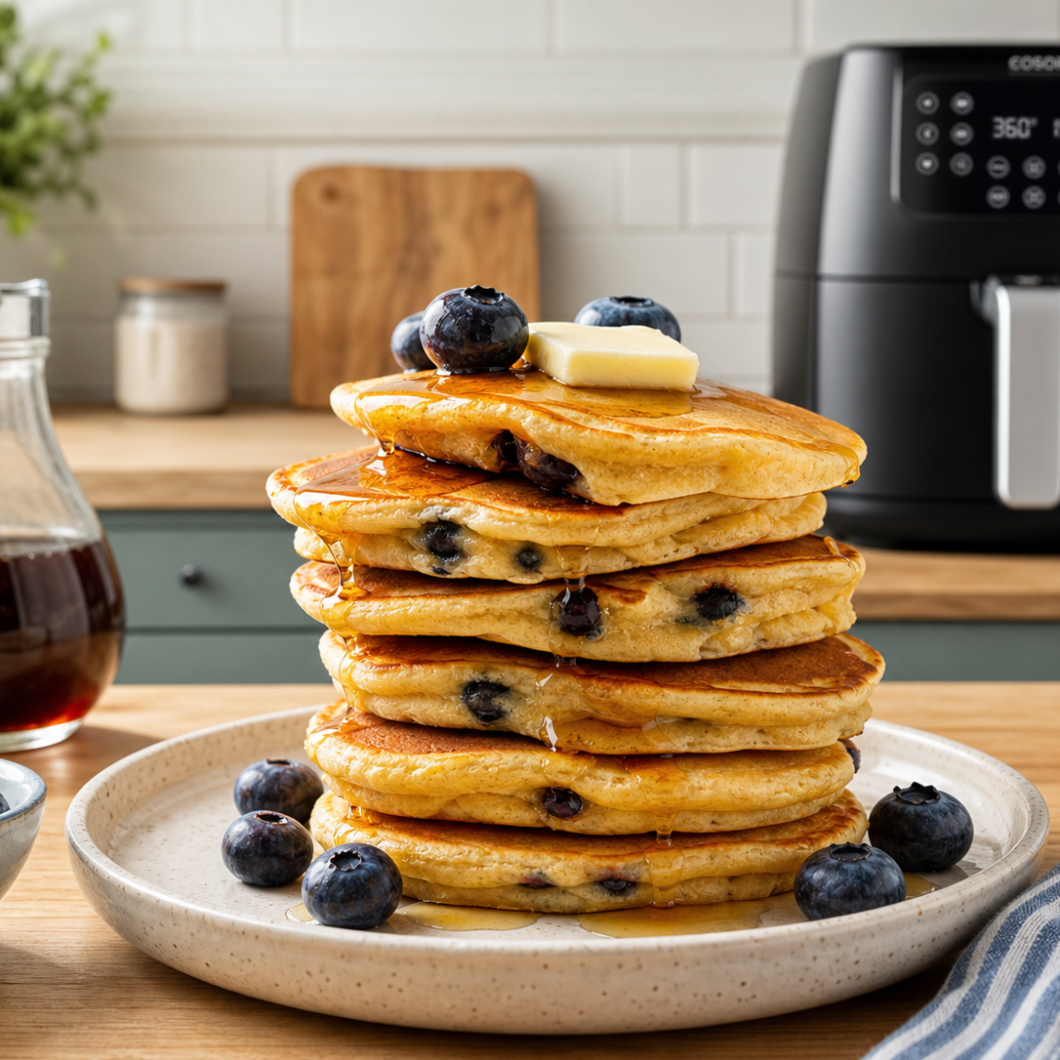
High Protein Blueberry Cottage Cheese Pancakes
Soft and fluffy pancakes made with cottage cheese, eggs, vanilla, and blueberries. The cottage cheese is blended into the batter for a smooth texture, while fresh or frozen blueberries add juicy fruit throughout each pancake. Each serving provides 12 grams of protein.
4
servings5
minutes10
minutes190
kcal15
minutesIngredients
¾ cup all-purpose flour
1 cup cottage cheese
2 large eggs
1 teaspoon vanilla extract
2 teaspoons sugar, optional
¼ cup water or milk
2 teaspoons aluminum-free baking powder
¼ teaspoon salt
1 cup blueberries, fresh or frozen
Directions
- Place the flour in a medium bowl. Add the cottage cheese, eggs, optional sugar, vanilla, water or milk, baking powder, and salt to a blender. Blend for 30 seconds to 1 minute until smooth.
- Pour the blended mixture into the bowl with the flour. Gently stir with a rubber spatula using large circular movements until just combined. Fold in the blueberries without overmixing.
- Warm a non-stick griddle or large pan over medium-high heat. Grease the surface, use cooking spray, or melt butter on it. For an electric griddle, use 300°F to 350°F.
- Pour about ¼ cup of batter for each pancake, making sure blueberries are included. Cook for about 2 minutes, until the edges look defined and bubbles appear. Flip and cook for another 1 to 2 minutes.
- Do not press the pancakes after flipping. Remove them when cooked and keep them warm while preparing the remaining batter. Arrange the pancakes on plates and add your preferred toppings or syrup. Serve warm.
Nutrition Facts
- Calories: 190kcal
- Fat: 3g
- Cholesterol: 84mg
- Sodium: 566mg
- Carbohydrates: 28g
- Protein: 12g