A Simple Ribeye Dinner at Home
Garlic butter ribeye steak is a simple way to turn a good cut of beef into a rich and satisfying homemade meal. Ribeye is especially suited to this style of cooking because the marbling throughout the steak helps keep it juicy and flavorful as it cooks. Instead of using a complicated list of seasonings or a long cooking process, this recipe uses a few familiar ingredients and lets the steak remain the main focus.
The process starts with a short marinade made from Worcestershire sauce, onion powder, garlic salt, and black pepper. The steaks are then cooked in a very hot griddle pan before being moved to a cast-iron skillet and topped with homemade garlic butter. A short trip into a hot oven melts the butter over the steaks, allowing the garlic and parsley to spread across the surface.
The recipe is straightforward enough for a regular home kitchen. There is no need for special equipment beyond a griddle pan or cast-iron skillet, and the garlic butter takes only a few minutes to prepare.
Getting the Ribeye Ready
Begin with two boneless cowboy ribeye steaks. Place them in a shallow dish or on a plate where they can be seasoned easily.
Sprinkle the onion powder, garlic salt, and black pepper over the steaks. Pour the Worcestershire sauce over them, making sure the seasoning and sauce reach both sides. Turn the steaks over as needed so that the marinade coats the meat evenly.
Once the steaks are seasoned, leave them to marinate for at least 30 minutes.
This short marinating period gives the Worcestershire sauce and seasonings time to work into the surface of the steaks. There is no need to add additional seasonings or ingredients. The combination already provides the flavor called for in this recipe.
While the steaks are marinating, this is a good time to prepare the garlic butter. Having it ready before the steaks are cooked makes the final part of the recipe much easier.
Preparing the Garlic Butter
The garlic butter is made separately from the steaks and can be prepared while the meat is marinating.
Start with one softened stick of butter. Place it in a bowl and add the minced garlic, fresh parsley, and salt. Stir everything together until the ingredients are evenly mixed through the butter.
The butter should be soft enough to stir easily, but it does not need to be melted. Once everything is combined, place the bowl in the refrigerator for at least 15 minutes.
Chilling the butter gives it a firmer texture. This makes it easier to place on the steaks after they have been cooked.
The garlic butter is one of the final flavors added to the ribeye, so there is no need to use it during the initial marinating or pan-cooking stage. It is kept aside until the steaks are cooked.
Preparing the Cooking Pan
When the steaks have finished marinating, it is time to heat the pan.
A griddle pan works well for this recipe, but a cast-iron skillet can be used if you do not have a griddle pan. Add vegetable oil and butter to the cooking surface and heat it over high heat.
The pan needs to become very hot before the steaks are added. One easy indication that the pan is ready is when the oil begins to smoke.
This hot cooking surface is important because the steaks need to start cooking as soon as they touch the pan. Avoid adding the ribeyes while the pan is still warming up. Waiting until the oil begins smoking ensures that the pan has reached the high heat needed for cooking the steaks.
Once the pan is hot, have the marinated steaks nearby and ready to cook.
Cooking the Ribeye
Carefully place the marinated ribeyes onto the hot griddle pan.
The steaks should begin cooking immediately. Leave them undisturbed while the first side cooks. For medium doneness, the recipe calls for approximately 5 minutes on the first side.
After about 5 minutes, turn each steak over. Cook the second side for another 5 minutes.
The exact cooking time can depend on the thickness of the ribeyes and the heat of the pan, so the 5-minute timing should be used as a guide. The original recipe uses this timing to reach medium doneness, with an internal temperature of about 150°F.
The important thing is not to keep cooking the steaks longer than necessary. Ribeye contains marbling that gives it plenty of flavor and moisture, but overcooking can change the texture and make the meat less tender.
Once the steaks have cooked on both sides, they are ready for the garlic butter and oven step.
Moving the Steaks to the Skillet
After the ribeyes have finished cooking on the griddle pan, transfer them to a cast-iron skillet.
Place the steaks in the skillet with enough room for them to sit comfortably. Then remove the prepared garlic butter from the refrigerator.
Place the garlic butter directly on top of the cooked steaks.
At this stage, the butter is still firm from being chilled. The heat from the steaks and the oven will soften and melt it during the final cooking step.
The garlic butter contains minced garlic, fresh parsley, and salt, so once it melts, those ingredients will spread over the surface of the steaks.
Finishing the Steaks in the Oven
Before placing the skillet in the oven, make sure the oven has been heated to 425°F.
Put the cast-iron skillet with the steaks and garlic butter into the oven. Let the steaks cook for about 5 minutes, or until the garlic butter has completely melted.
The purpose of this step is primarily to melt the garlic butter over the steaks. The ribeyes have already been cooked in the hot pan, so they do not need a long additional cooking period in the oven.
Keep an eye on the steaks during this stage. Adding more oven time than necessary can cause the ribeyes to become more cooked than intended.
Once the garlic butter has melted, remove the skillet from the oven.
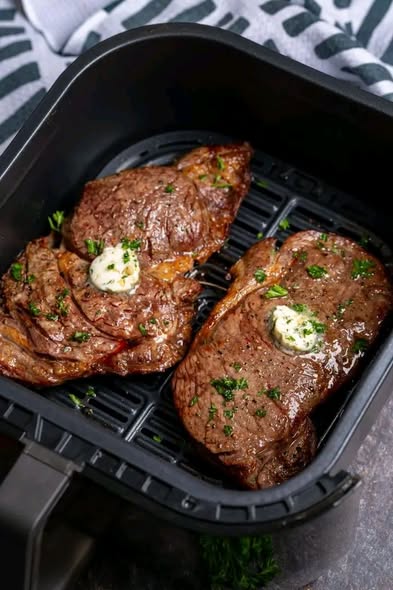
The butter should be soft and melted over the steaks, with the garlic and parsley distributed across the surface.
Giving the Steaks Time to Rest
The steaks should not be sliced immediately after coming out of the oven.
Let them rest for 10 minutes before cutting into them.
This resting period is part of the cooking process and gives the steaks time to settle after being exposed to high heat. It also allows the melted garlic butter to remain with the meat instead of immediately running away when the steaks are cut.
While the steaks are resting, there is no need to add anything else. Simply leave them undisturbed until the 10 minutes are complete.
After the resting time, the ribeyes can be sliced and served.
Slicing and Serving
Once the steaks have rested, slice them according to your preference and arrange them for serving.
The finished ribeye has several layers of flavor. The initial seasoning brings onion powder, garlic salt, black pepper, and Worcestershire sauce to the meat. The hot pan cooks the steaks and develops the outside, while the garlic butter adds another layer of buttery garlic and parsley flavor at the end.
This recipe is intended to be served with your favorite side dish. You can keep the sides simple so the ribeye remains the main part of the meal.
The steak is best served soon after resting, while the garlic butter is still melted and warm.
Why the Cooking Order Matters
Each part of the method has a specific place in the process.
The steaks are marinated first because the Worcestershire sauce and seasonings need time to flavor the meat. The garlic butter is prepared separately and chilled so it is ready to use later. The pan is heated only after the marinating period because the steaks should go onto a very hot cooking surface.
The ribeyes are cooked on both sides before being moved to the cast-iron skillet. This gives the steaks their main cooking time before the garlic butter is added.
The oven is saved for the final stage. Instead of cooking the steaks from start to finish in the oven, the hot oven is used briefly to melt the garlic butter over the already-cooked ribeyes.
Finally, the steaks rest for 10 minutes before being sliced.
Following the order makes the recipe easy to manage and helps prevent unnecessary cooking.
Tips for a Good Result
The pan should be properly heated before the steaks go in. The original method specifically calls for heating the oil until it starts smoking, which indicates that the cooking surface is hot enough.
Keep the ingredient quantities the same as listed. There is no need to add extra seasoning because the recipe has already been balanced around the onion powder, garlic salt, black pepper, and Worcestershire sauce.
The garlic butter should be chilled for at least 15 minutes after mixing. This gives it enough time to firm up before it is placed on the hot steaks.
Pay attention to the steaks during both the pan-cooking and oven stages. The recipe gives 5 minutes per side as the guide for medium doneness, followed by approximately 5 minutes in the 425°F oven. Since steaks can differ in thickness, avoid automatically extending the cooking time.
Most importantly, give the steaks the full 10-minute resting period after they come out of the oven. This is the final step before slicing and serving.
Bringing Everything Together
This garlic butter ribeye comes together with a simple sequence: marinate the steaks, prepare the butter, heat the pan, cook the ribeyes, add the garlic butter, melt it in the oven, and let the steaks rest.
The ingredient list stays short, but each ingredient has a purpose. Worcestershire sauce adds flavor to the marinade, onion powder and garlic salt season the beef, and black pepper adds another layer of seasoning. The butter, garlic, parsley, and salt come together at the end to create the topping.
There is no complicated sauce to prepare and no long list of cooking steps to keep track of. Once the steaks have finished marinating, most of the work happens quickly.
After the final 10-minute rest, the ribeyes are ready to slice and serve with your favorite side dish.
For a homemade steak dinner, this method keeps things simple while making the most of a well-marbled ribeye. The hot pan cooks the steaks, the garlic butter finishes them, and the short oven step brings everything together.
Ribeye Garlic Steak
Boneless cowboy ribeye steaks seasoned with onion powder, garlic salt, black pepper, and Worcestershire sauce, cooked in a hot pan, then finished with homemade garlic and parsley butter.
4
servings10
minutes20
minutes850
kcal30
minutesIngredient
For the Ribeye
2 boneless cowboy ribeye steaks
1 tbsp onion powder
1 tbsp garlic salt
¼ cup Worcestershire sauce
1 tsp black pepper
Vegetable oil, for the pan
Butter or oil for pan
- For the Garlic Butter
1 stick butter, softened
1 tsp fresh parsley
1 tbsp minced garlic
1/2 teaspoon salt
Directions
- Season both ribeye steaks with onion powder, garlic salt, black pepper, and Worcestershire sauce.
- Marinate the steaks for at least 30 minutes.
- Mix the softened butter, parsley, minced garlic, and salt in a bowl. Refrigerate for at least 15 minutes.
- Add vegetable oil and butter to a griddle pan or cast-iron skillet and heat until the oil starts smoking.
- Place the steaks in the hot pan and cook for about 5 minutes per side for medium.
- Transfer the cooked steaks to a cast-iron skillet and top with the garlic butter
- Place the skillet in a 425°F oven for about 5 minutes, or until the butter has melted
- Remove the steaks from the oven and let them rest for 10 minutes.
- Slice and serve with your favorite side dish.
Notes
- A griddle pan or cast-iron skillet can be used for cooking the steaks.
- The original recipe uses approximately 5 minutes per side for medium doneness.
- Watch the oven step carefully so the steaks do not overcook.
- Keep the ingredient quantities exactly as listed for the intended flavor and yield.
Nutrition Facts
- Total number of serves: 4
- Calories: 850kcal
- Fat: 65g
- Saturated Fat: 30g
- Polyunsaturated Fat: 0.5g
- Cholesterol: 190mg
- Sodium: 1500mg
- Carbohydrates: 5g
- Sugar: 2g
- Protein: 55g