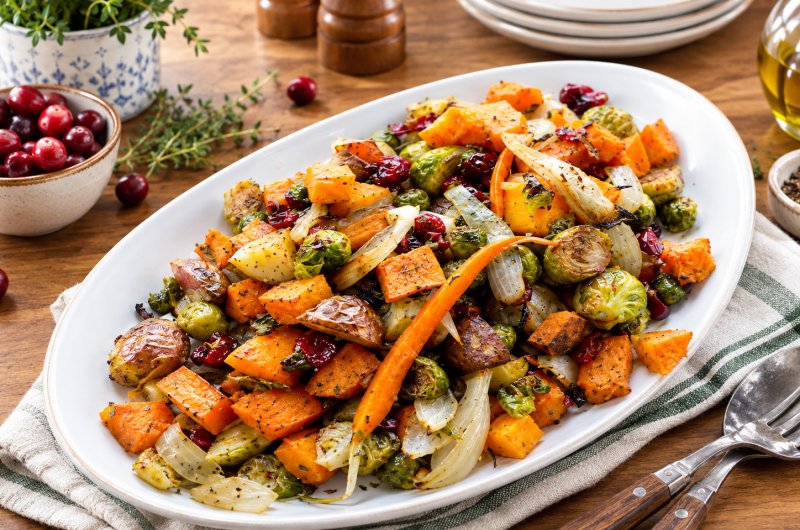
Roasted Vegetables with Cranberries and Herbs are a simple way to bring several seasonal vegetables together in one colorful dish. Butternut squash, red potatoes, carrots, onion, and Brussels sprouts are roasted until tender and lightly browned. Fresh herbs add a pleasant savory flavor, while cranberries bring a small amount of tartness to every serving.
A Holiday Vegetable Side Dish
This roasted vegetable recipe works especially well for Thanksgiving, Christmas, and other holiday meals. The different colors make the serving platter look inviting without requiring complicated preparation. The vegetables can also be served at a family dinner when you want something more interesting than a basic steamed vegetable side.
What Makes This Recipe Special
The vegetables are cooked in two batches because they need different amounts of time in the oven. Butternut squash, potatoes, carrots, and onion need longer to become tender, while Brussels sprouts cook more quickly. This approach helps each vegetable develop a better texture instead of allowing the smaller vegetables to become too soft.
Butternut Squash and Potatoes
Butternut squash becomes soft and creamy as it roasts, while the red potatoes develop tender centers with lightly browned edges. Cutting both into similar-sized cubes helps them cook at a similar rate. The natural sweetness of the squash also works well with the savory herbs and balsamic honey glaze.
Carrots and Yellow Onion
Carrots add color and a mild sweetness to the vegetable mixture. Cutting them into half moons on the diagonal gives them a shape that roasts well and fits naturally with the other ingredients. Yellow onion becomes softer and sweeter in the oven, with some edges developing a light roasted color.
Brussels Sprouts for Texture
Brussels sprouts provide a different texture from the softer squash and potatoes. Small sprouts can be left whole, while larger ones should be cut in half so they roast evenly. Their outer leaves become browned and slightly crisp while the inside remains tender enough to pierce with a fork.
Fresh Rosemary and Thyme
Rosemary and thyme give the vegetables a warm herbal flavor without making the dish heavy. Fresh herbs can be used as listed, while dried versions are included as alternatives. A little extra fresh rosemary and thyme can also be added after roasting for a fresh finish.
Preparing the Vegetables
Start by cutting the butternut squash, carrots, potatoes, and onion before seasoning them. Try to keep the squash and potatoes close to the stated size so they roast evenly. The onion should be sliced into wedges rather than small pieces, which allows it to remain noticeable after cooking.
Seasoning the First Tray
The first group of vegetables is tossed with rosemary, thyme, olive oil, salt, and fresh pepper. Make sure the seasoning is spread throughout the vegetables before they go onto the baking sheet. A large bowl gives enough room to mix everything without crushing the softer pieces.
Roasting the Main Vegetables
The oven should be preheated to 400°F before the vegetables are placed inside. Roasting at this temperature encourages browning while allowing the larger pieces to become tender. Stirring the vegetables occasionally helps expose different sides to the heat and prevents one area of the tray from browning too much.
Preparing the Brussels Sprouts
While the first tray is roasting, prepare the Brussels sprouts. Remove the ends and any yellow outer leaves, then cut larger sprouts in half. Smaller sprouts can remain whole. Toss them with the remaining olive oil, salt, and pepper before placing them on the second hot baking sheet.
Roasting Brussels Sprouts
The Brussels sprouts begin roasting after the first tray has already been cooking. This gives them enough time to brown without becoming overly soft. After about 15 minutes, garlic and cranberries are added, and the sprouts continue cooking until they are browned outside and tender inside.
Adding Garlic and Cranberries
Garlic adds a savory note that works naturally with roasted Brussels sprouts. Cranberries bring tartness and a little sweetness as they soften in the oven. Adding them later in the cooking process keeps the cranberries from becoming too dry or losing their shape completely.
Making the Balsamic Honey Glaze
The glaze is made with just two ingredients: balsamic vinegar and honey. Stir them together in a small bowl while the vegetables finish roasting. The balsamic vinegar adds acidity, while honey balances its sharper flavor with sweetness.
When to Add the Glaze
The balsamic honey mixture should be added when the first tray of vegetables is almost finished. Pour it over the hot vegetables and toss carefully with a spatula. Returning the tray to the oven for a few minutes allows the glaze to warm and coat the vegetables without requiring a long additional cooking time.
Combining the Roasted Vegetables
Once both trays are ready, the vegetables are combined in a large serving dish or platter. The roasted squash, potatoes, carrots, and onion create a soft and hearty base, while Brussels sprouts provide more bite. The cranberries stand out against the roasted vegetables and make the dish look festive.
How to Serve the Dish
These roasted vegetables can be served warm or at room temperature, making them practical for holiday meals where several dishes are served at once. Arrange them on a wide platter and scatter additional fresh rosemary and thyme over the top. A small amount of fresh pepper can also be added before serving.
Serving for a Holiday Dinner
For Thanksgiving or Christmas, this vegetable side dish pairs well with roasted meats, baked dishes, stuffing, and other traditional sides. The combination of sweet squash, earthy potatoes, browned Brussels sprouts, and tart cranberries gives the meal several different flavors and textures.
Making the Recipe for a Crowd
If you need to prepare a larger amount, avoid packing too many vegetables onto one baking sheet. Crowded vegetables release moisture and may steam instead of roast. Using separate pans, as directed in this recipe, gives the vegetables more room to brown properly.
Getting Better Browning
A hot baking sheet helps the vegetables begin roasting as soon as they touch the surface. This is why the two rimmed baking pans are placed in the oven while it preheats. Spread the vegetables into an even layer and leave enough space between pieces whenever possible.
Choosing Fresh Vegetables
Look for firm butternut squash, potatoes without soft spots, crisp carrots, and Brussels sprouts with compact green leaves. The quality of the vegetables affects both the texture and appearance of the finished dish. Fresh herbs should have a clean aroma and firm leaves.
Cutting the Vegetables Evenly
Uniform cutting is one of the easiest ways to improve a roasted vegetable recipe. Pieces that are much larger than others may remain firm while smaller pieces become very soft. Keeping the squash and potatoes close to ¾-inch cubes helps the main tray cook more evenly.
Fresh or Dried Herbs
The recipe gives measurements for both fresh and dried rosemary and thyme. Fresh herbs provide a more noticeable aroma, while dried herbs are convenient when fresh herbs are not available. Use the listed quantities rather than adding extra, since the vegetables also receive flavor from garlic, balsamic vinegar, and honey.
Adjusting the Cranberries
Cranberries are listed as optional, so the dish can be made without them if preferred. When included, they add a tart contrast to the sweeter roasted squash, carrots, and honey glaze. They also give the finished platter a bright color that works especially well for holiday entertaining.
Understanding the Balsamic Glaze
The balsamic and honey mixture should lightly coat the roasted vegetables rather than leave them swimming in sauce. Adding it near the end keeps the roasted texture intact. The short return to the oven allows the flavors to come together while preserving the browned edges.
Avoiding Overcooked Brussels Sprouts
Brussels sprouts should be checked toward the end of their cooking time. They are ready when the outside has browned, the center is tender enough to pierce with a fork, and the cranberries have started to soften. Cooking time can vary between ovens, so use the texture and appearance as a guide.
Preparing the Dish Ahead
Some preparation can be done before the meal begins. The vegetables can be cleaned and cut ahead of time and kept refrigerated until you are ready to cook. For the best roasted texture, the vegetables should be seasoned and placed on the hot baking sheets close to cooking time.
Serving at Room Temperature
This recipe does not have to be served straight from the oven. It can rest briefly before being transferred to a platter, which makes it useful when coordinating several holiday dishes. If served at room temperature, add the fresh herb garnish shortly before placing the dish on the table.
Storage and Leftovers
Store leftover roasted vegetables in a covered container in the refrigerator. Reheating them in an oven or air fryer can help bring back some of the roasted texture. A microwave will also warm them quickly, although the vegetables may become softer than when freshly roasted.
FAQs
Can I use dried herbs?
Yes. The ingredient list provides dried rosemary and dried thyme measurements as alternatives to fresh herbs. Keep the amounts listed in the recipe so the herb flavor remains balanced with the other ingredients.
Can the cranberries be left out?
Yes. Cranberries are optional in the original ingredient list. Leaving them out will give you a more traditional roasted vegetable side while keeping the rest of the recipe unchanged.
Why are two baking sheets used?
The two pans allow the vegetables to roast without being crowded and let the Brussels sprouts cook for a shorter period. This helps the larger vegetables become tender while the Brussels sprouts develop browned edges.
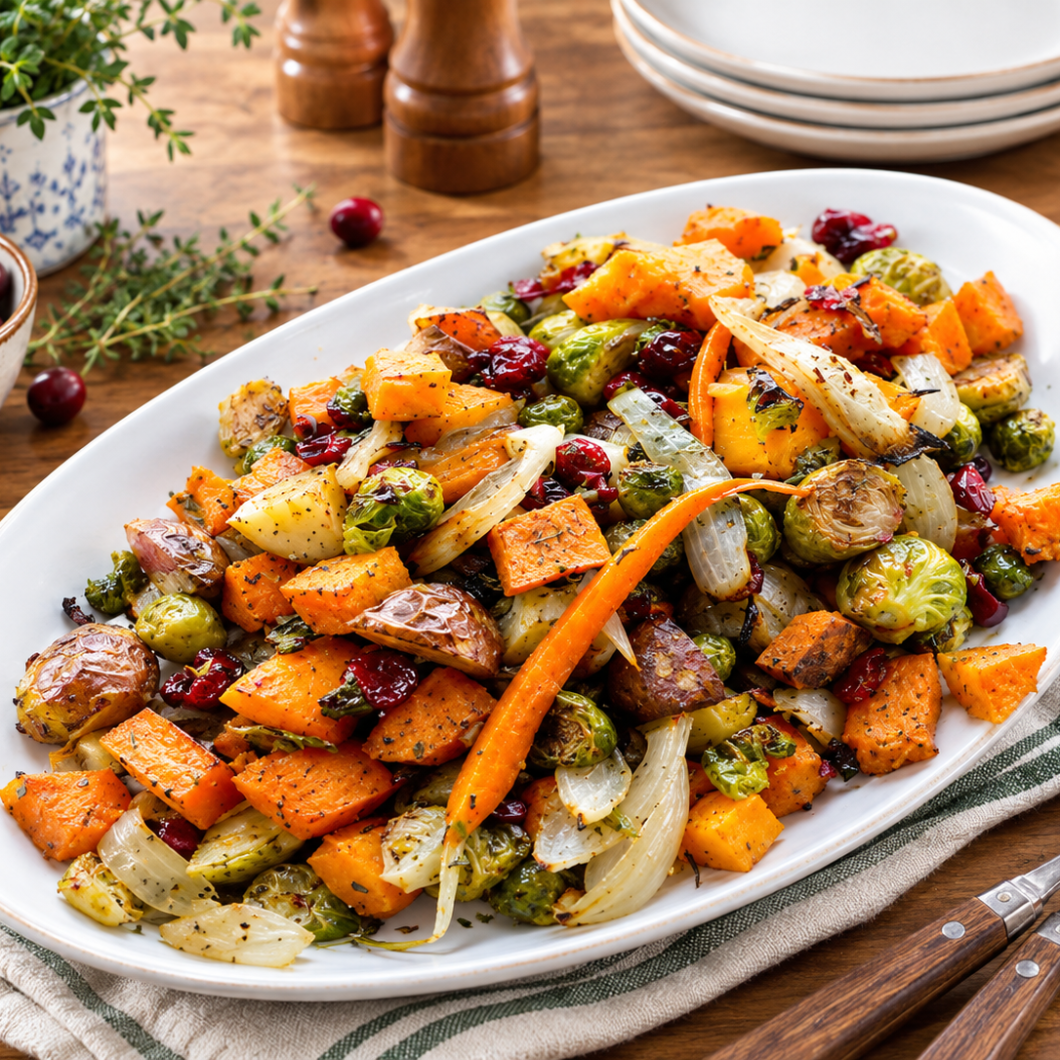
Healthy Roasted Vegetables with Cranberries & Herbs
The vegetables are roasted until tender and browned, then finished with balsamic vinegar, honey, garlic, and cranberries. This colorful vegetable side dish can be served warm or at room temperature.
6
servings20
minutes45
minutes225
kcal1
hour5
minutesIngredients
5 cups butternut squash, cut into ¾inch cubes (1 medium)
1 cup carrots cut into half moons, on the diagonal (about 2 carrots)
2 cups organic red potatoes, cut into ¾ inch cubes
3 sprigs fresh rosemary or 1 teaspoon dried rosemary
1 large yellow onion, sliced into ½” wide wedges
3-4 sprigs of fresh thyme or 1 ½ teaspoons dried thyme
1 teaspoon Celtic sea salt, divided
fresh pepper, to taste
4 tablespoons extra virgin olive oil, divided
2 cups Brussels sprouts, trimmed, if large cut in half, if small leave whole
2 cloves garlic, chopped
1 cup cranberries (optional)
2 tablespoons balsamic vinegar
1 tablespoon honey
Additional fresh rosemary and thyme leaves for garnish
Directions
- Preheat the oven to 400°F. Place two rimmed baking pans in the oven while it heats. In a large bowl, combine the butternut squash, carrots, red potatoes, and yellow onion. Add rosemary, thyme, 3 tablespoons olive oil, ¾ teaspoon salt, and fresh pepper, then toss well.
- Carefully transfer the seasoned vegetables to one hot baking sheet. Roast for 35–40 minutes, stirring occasionally so the pieces brown evenly. Cooking time can vary depending on the oven and the size of the vegetables.
- Trim the ends of the Brussels sprouts and remove any yellow outer leaves. Cut larger sprouts in half and leave smaller ones whole. Toss them with the remaining 1 tablespoon olive oil, ¼ teaspoon salt, and fresh pepper.
- Spread the Brussels sprouts on the second hot baking sheet and roast for about 15 minutes, until they begin to brown. Add the chopped garlic and cranberries, toss, and continue roasting for another 5–10 minutes. The sprouts should be browned outside and tender enough to pierce with a fork.
- Mix the balsamic vinegar and honey in a small bowl. When the first tray of vegetables is almost tender, pour the mixture over them and toss with a spatula. Return the tray to the oven for 3–4 minutes.
- Remove the roasted vegetables from the oven once tender. Combine them with the Brussels sprouts and sprinkle with additional fresh rosemary and thyme. Add a little salt and pepper if needed, then serve warm or at room temperature on a platter.
Notes
- The most important detail is to give each group of vegetables enough space on the baking sheets. The two-tray method also allows the Brussels sprouts to cook separately from the vegetables that require more time. Check the vegetables near the end because oven temperatures and vegetable sizes can change the cooking time.
Nutrition Facts
- Calories: 225kcal
- Fat: 9.8g
- Carbohydrates: 35.2g
- Fiber: 6.2g
- Sugar: 10.3g
- Protein: 3.8g