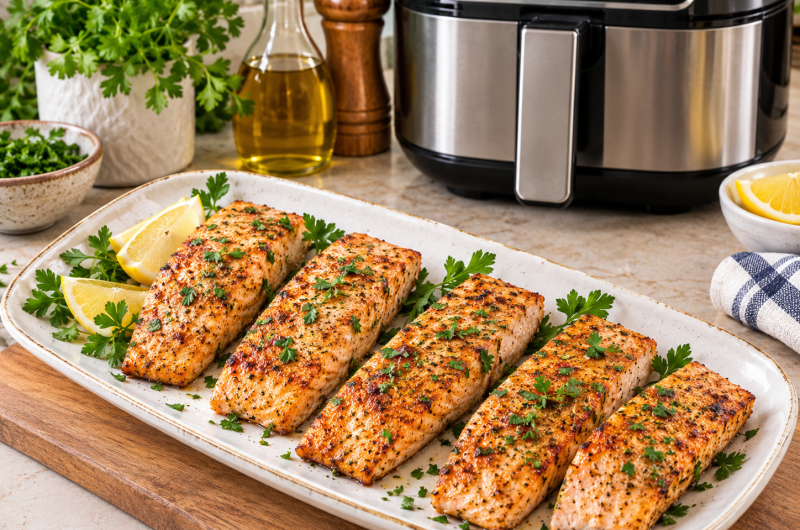
Air Fryer Salmon is a simple salmon recipe made with tender fillets and a creamy, sweet, and spicy bang bang sauce. The salmon cooks quickly at a high temperature, while the sauce adds a rich layer of flavor and a lightly golden finish. It is a practical choice when you need a fast main dish without using many ingredients.
This recipe uses one pound of salmon and a three-ingredient sauce made with mayo, sweet chili sauce, and sriracha. The balance of these ingredients creates a familiar bang bang flavor that is creamy, mildly sweet, and spicy. You can adjust the amount of sriracha according to how much heat you prefer.
Why Cook Salmon in the Air Fryer
The air fryer is a convenient way to cook salmon because it uses circulating hot air to cook the fish in a short amount of time. At 400 degrees Fahrenheit, salmon can be ready in around 9 to 11 minutes. The exact cooking time depends mainly on the thickness of the fillets.
Air frying can also give the salmon slightly browned or charred edges while keeping the center tender. Since the fish cooks quickly, it is important to check it during the final minutes. Thinner pieces may cook faster, while thicker salmon fillets can need the full cooking time.
The Three-Ingredient Bang Bang Sauce
The sauce is made by whisking together mayo, sweet chili sauce, and sriracha. Mayo gives the mixture its creamy texture, while sweet chili sauce adds sweetness and a mild chili flavor. Sriracha provides the spicy element and can be used in a smaller or larger amount based on personal preference.
This easy homemade bang bang sauce does not require cooking before it is added to the salmon. Once the ingredients are combined, the sauce can be divided into portions. Most of it is kept aside for serving, while the remaining portion is brushed onto the salmon before and during the air frying process.
Adjusting the Spice Level
The recipe uses 1 to 2 tablespoons of sriracha, giving you room to choose the heat level. Using the smaller amount creates a milder sauce, while using the full 2 tablespoons gives the salmon a stronger spicy flavor. The other sauce ingredients remain exactly the same.
This makes the recipe easy to prepare for different tastes without changing the main method. Whisk the sauce well so the mayo, sweet chili sauce, and sriracha are fully combined. A smooth sauce is easier to brush evenly over the salmon and also works well as a dipping sauce.
Preparing the Salmon Fillets
Start with one pound of salmon cut into 2 to 4 fillets. Larger fillets can be served whole or divided into smaller portions after cooking. Smaller pieces may cook more quickly, so the thickness and size of the salmon should be considered when checking for doneness.
Before placing the salmon in the air fryer, brush most of the reserved sauce portion over the top of the fillets. Keep a small amount of sauce aside for brushing during cooking. After adding the first layer of sauce, season the salmon with kosher salt.
Why the Salmon Goes Skin Side Down
Place the salmon fillets in the air fryer basket with the skin side down. This positioning keeps the seasoned and sauced surface facing upward, where it is exposed to the circulating heat. It also makes it easier to brush the remaining bang bang sauce over the top halfway through cooking.
Arrange the fillets with enough room around them for air to circulate. Avoid placing the pieces tightly together, especially if your air fryer basket is small. Good spacing helps the salmon cook more evenly and allows the edges to brown during the short cooking time.
Air Fryer Temperature and Cooking Time
Set the air fryer to 400 degrees Fahrenheit and cook the salmon for 9 to 11 minutes. The original recipe gives a range because salmon fillets can vary in thickness. A thick center-cut piece may need more time than a thinner piece cut from another part of the fish.
Check the salmon during the last few minutes rather than relying only on the timer. The outside should look cooked and the sauce should become deeper and more golden. The edges can also develop a slightly charred appearance, which adds extra flavor and texture to the finished dish.
Brushing the Sauce During Cooking
Halfway through the cooking time, brush the saved portion of bang bang sauce over the salmon. Adding this second layer helps maintain the saucy surface and gives the top another coating as it finishes cooking. This step is simple but helps build the flavor of the finished air fryer salmon.
Use only the small amount of sauce reserved specifically for brushing during cooking. The larger portion that was separated at the beginning should remain untouched for dipping. Keeping the dipping sauce separate means it can be served with the cooked salmon after it comes out of the air fryer.
Getting a Golden Bang Bang Sauce Finish
As the salmon cooks, the sauce on top becomes warmer and develops a richer golden color. The sweet chili sauce and the high heat help give the surface an appealing cooked finish. Some edges may become slightly darker, particularly on thinner areas of the salmon.
Watch the salmon carefully near the end of the cooking time because the sauce contains sweet chili sauce. The surface can darken quickly under high heat. Checking the fish regularly during the final minutes helps you remove it when the salmon is cooked to your preference.
How to Tell When Salmon Is Ready
Cooking time is useful as a guide, but the thickness of the salmon remains important. Begin checking the fillets toward the lower end of the 9 to 11 minute range. The fish should look cooked through and should separate easily when gently tested with a fork.
If you use a food thermometer, check the thickest part of the salmon rather than a thin edge. This gives a better indication of how the center is cooking. Avoid overcooking, as salmon can become dry when it stays under heat longer than necessary.
Serving Salmon
Air Fryer Salmon can be served as a main course for lunch or dinner. The recipe makes four servings and includes a portion of sauce reserved for dipping. This allows each serving to have additional creamy, sweet, and spicy flavor at the table.
If desired, parsley can be used as a garnish before serving. The parsley is optional and does not change the main flavor of the dish. Add it at the end for a fresh appearance, then serve the salmon with the reserved bang bang sauce on the side.
What to Serve with Air Fryer Salmon
This spicy salmon recipe can be paired with many simple side dishes. Rice, cooked vegetables, a fresh salad, or other family-style sides can work well with the creamy sauce. The side dish can be chosen based on whether you want a lighter meal or a more filling dinner.
Because the bang bang sauce already provides strong flavor, simple sides can help balance the plate. Mild vegetables and plain grains allow the salmon to remain the main focus. If you prefer a low-carbohydrate meal, you can also choose vegetables that suit your preferred eating style.
Making the Sauce Before Cooking
One of the easiest parts of this recipe is that the sauce can be mixed before the salmon is prepared. Place the mayo, sweet chili sauce, and sriracha in a bowl and whisk until smooth. Divide the sauce before brushing any onto the uncooked salmon.
Set aside about three-quarters of the sauce for dipping. Use most of the remaining quarter to coat the salmon before cooking, while saving a small amount for the halfway brushing step. This method keeps the serving sauce separate and makes the cooking process easier to manage.
Keeping the Cooking Process Simple
The recipe follows a straightforward order: mix the sauce, divide it, brush the salmon, add kosher salt, and cook it in the air fryer. There is no long marinating period, which helps keep the preparation time at only 5 minutes before cooking begins.
Once the salmon is inside the air fryer, most of the work is already done. The only cooking step during the process is brushing the fish with the reserved sauce halfway through. This makes the recipe suitable for a quick meal when you want salmon without a long preparation process.
Baking the Salmon Instead
The cooking method also allows the salmon to be baked in a 400-degree Fahrenheit oven. Place the salmon on a baking sheet and bake it for 9 to 11 minutes. As with air frying, the exact time can vary according to the thickness of the fillets.
The same sauce preparation and brushing method can be used when baking. Keep the larger portion of sauce separate for serving, brush the salmon before cooking, and add the remaining brushing portion during the cooking process. Check the fish near the end of the suggested time.
Using Larger or Smaller Salmon Portions
The recipe allows the one pound of salmon to be cut into 2 to 4 fillets. Two larger pieces can make substantial portions, while four smaller fillets make serving easier for a family meal. The total amount of salmon remains the same regardless of how it is divided.
Smaller portions can reach doneness sooner, especially when they are thin. Larger and thicker fillets may take closer to the full cooking time. For this reason, checking the salmon rather than assuming every piece needs exactly the same number of minutes is helpful.
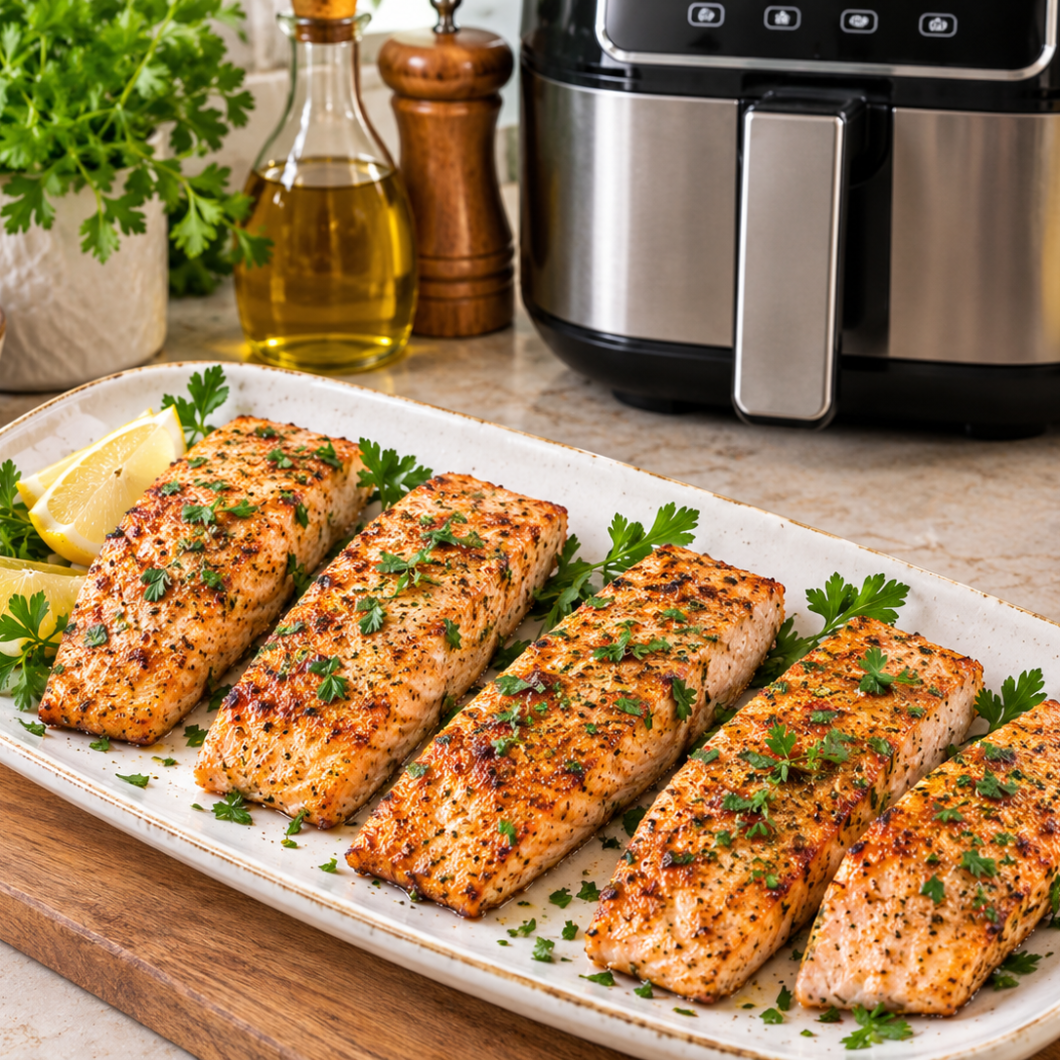
Air Fryer Salmon
Tender salmon fillets cooked in the air fryer and coated with a simple bang bang sauce made from mayo, sweet chili sauce, and sriracha. The sauce is creamy, sweet, and spicy, with extra sauce reserved for dipping.
4
servings5
minutes10
minutes272
kcal15
minutesIngredients
1/3 cup mayo
1/3 cup sweet chili sauce
1 to 2 Tbsps sriracha (more or less depending on spice preference)
1 pound salmon (cut into 2 to 4 fillets)
kosher salt
- Optional
parsley for garnish
Directions
- Put the mayo, sweet chili sauce, and sriracha in a bowl. Whisk until fully combined. Transfer about 3/4 of the sauce to a separate bowl for dipping.
- Brush most of the remaining sauce over the salmon, saving a small amount to brush on halfway through cooking. Season the salmon with kosher salt.
- Place the salmon fillets skin side down in the air fryer basket, leaving enough space around them for proper air circulation.
- Cook at 400°F for 9 to 11 minutes. Brush the salmon with the saved sauce halfway through the cooking time.
- Check the salmon near the end of the cooking time and make sure it is cooked through. Cooking time can vary depending on the thickness of the fillets.
- Garnish with parsley if desired and serve warm with the reserved bang bang sauce for dipping.