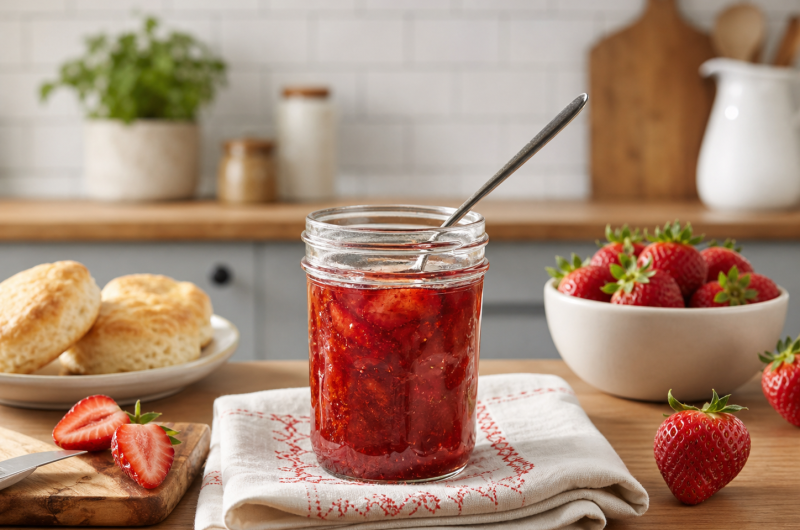
Rhubarb has a flavor that is hard to mistake. It is naturally tart, slightly sharp, and becomes wonderfully soft when cooked with sugar. That makes it a great choice for homemade jam, especially when you want something a little different from the usual strawberry or raspberry spread.
This easy rhubarb jam recipe uses just a few basic ingredients and doesn’t require any special equipment. The chopped rhubarb is cooked slowly with sugar, lemon juice, lemon zest, and a pinch of salt until it softens and turns into a thick, glossy jam. A little vanilla at the end rounds everything out.
The finished jam is lovely on toast, but that’s only the beginning. It can be spooned over pancakes, stirred into yogurt, spread on scones, or used as a sweet-tart addition to desserts.
What Makes Rhubarb Jam So Good?
Fresh rhubarb is quite tart on its own. Rather than trying to hide that flavor, this recipe uses sugar to balance it while keeping some of rhubarb’s natural sharpness.
The lemon juice adds another little layer of brightness. Lemon zest makes the citrus flavor more noticeable, while vanilla gives the finished jam a softer, more rounded taste.
As the rhubarb cooks, it releases plenty of moisture and gradually breaks down. By the end of cooking, the pieces become soft and the mixture thickens into a spreadable jam.
How to Prepare the Rhubarb
Start by washing the rhubarb and trimming the ends. Remove and discard the leaves, then cut the stalks into pieces about ½ inch in size.
Try to keep the pieces fairly similar in size. They don’t have to be perfect, but evenly cut pieces will cook at roughly the same rate.
Once the rhubarb is chopped, it is ready to go into the saucepan.
Start by Combining Everything
Put the chopped rhubarb into a medium saucepan along with the sugar, lemon juice, lemon zest, and salt.
Give everything a good stir so the sugar is distributed throughout the rhubarb. Let the mixture stand for about 10 minutes before turning on the heat.
This short resting time allows the sugar to draw some moisture from the rhubarb. You should notice the mixture becoming a little juicier before it even starts cooking.
There is no need to add water.
Cook the Rhubarb Slowly
Place the saucepan over medium heat. As the rhubarb warms up, it will release more of its juices.
Stir occasionally as it cooks. Once the mixture comes to a gentle boil, turn the heat down and allow it to simmer.
This is where the jam really starts to come together.
The rhubarb will gradually soften and break apart while the liquid reduces. After about 25 to 35 minutes, the mixture should look noticeably thicker and glossy.
Don’t be tempted to walk away from the pan completely. Give it a stir from time to time, particularly as the mixture gets thicker. This helps prevent the jam from sticking to the bottom.
How Do You Know When Rhubarb Jam Is Ready?
The cooking time can vary a little, so it’s better to pay attention to the consistency rather than relying only on the clock.
A simple cold-plate test works well.
Place a small plate in the refrigerator or freezer beforehand so it becomes cold. When you think the jam is ready, put a small spoonful onto the cold plate and let it sit for about a minute.
Push the jam gently with your finger. If it wrinkles slightly, the consistency is ready.
Don’t worry if the jam seems a little loose while it is still hot. It will continue to thicken as it cools.
Overcooking can leave you with a jam that is much thicker than intended, so it’s better to stop when it has reached a good glossy, spoonable consistency.
Add the Vanilla at the End
Once the jam has reached the right consistency, remove the saucepan from the heat.
Stir in the vanilla extract.
Adding it at the end keeps the vanilla flavor fresh and noticeable without having it cook away during the longer simmering stage.
At this point, you can also decide what texture you want.
Smooth or Chunky Rhubarb Jam?
The cooked rhubarb naturally breaks down quite a bit, but some pieces may remain.
For a smoother jam, mash the cooked rhubarb with a potato masher or briefly blend it.
If you prefer a little texture, simply leave the small pieces as they are.
Neither option is wrong. It really comes down to how you like your jam.
A slightly textured version is particularly nice when spread over toast or scones because you can still see and taste little pieces of softened rhubarb.
Let the Jam Cool
Transfer the finished jam to clean jars and allow it to cool.
It may appear somewhat thinner immediately after cooking than you expect. That’s normal. As the temperature drops, the jam will firm up.
Once cooled, keep the jam refrigerated.
For longer storage, use a tested water-bath canning method rather than simply filling jars with hot jam and sealing them. Proper canning involves specific processing instructions, so don’t rely on an ordinary jar-sealing method for room-temperature storage.
Ways to Serve Rhubarb Jam
There are plenty of easy ways to use a jar of homemade rhubarb jam.
For breakfast, spread it over warm toast, English muffins, or scones. It also works beautifully with pancakes and waffles.
For something quick, stir a spoonful into plain or vanilla yogurt. The tart rhubarb cuts through the creamy yogurt and adds plenty of flavor.
You can also spoon it over oatmeal or overnight oats when you want a little sweetness and fruit flavor.
Rhubarb jam isn’t limited to breakfast, either. Use it as a filling for cakes and cookies, or serve it alongside a cheese board. The sweet and tart combination works especially well with savory foods.
For a slightly different sandwich, try spreading a thin layer inside a grilled cheese sandwich. The sweetness of the jam and the richness of the cheese make an interesting combination.
Tips for Making Better Rhubarb Jam
Use fresh rhubarb when possible
Firm, brightly colored rhubarb stalks give the best flavor and texture. Wash them thoroughly and remove the leaves before chopping.
Keep the heat under control
The jam needs enough heat to simmer and reduce, but cooking it too aggressively can cause the mixture to scorch before it has thickened properly.
Once it reaches a gentle boil, reducing the heat is important.
Stir as it cooks
You don’t need to stir constantly, but check the saucepan regularly. As the liquid reduces, the mixture becomes thicker and more likely to stick.
A quick stir every so often is enough to keep things moving.
Don’t judge the texture while it’s piping hot
This is one of the easiest mistakes to make with homemade jam.
Hot jam is naturally looser. If you keep cooking simply because it doesn’t look thick enough straight from the saucepan, you may end up with an overly firm jam once it cools.
Use the cold-plate test and remember that the jam will continue to set as it cools.
Adjust the texture after cooking
If you like completely smooth jam, mash or briefly blend the cooked rhubarb.
For a more rustic homemade texture, leave the softened pieces intact.
Can Frozen Rhubarb Be Used?
Yes, frozen rhubarb can be used for this jam.
It may take slightly longer to reach the desired consistency because frozen rhubarb can release additional moisture as it cooks.
The important thing is to cook the mixture until it reaches the right consistency rather than stopping at an exact time.
Can Strawberries Be Added?
Strawberry and rhubarb are a classic combination, and strawberries can be used to make a strawberry-rhubarb jam.
However, this recipe is specifically written for rhubarb jam, so the ingredient quantities here remain unchanged.
If you want to make a strawberry-rhubarb version, it should be treated as a different recipe because changing the fruit changes the amount of moisture and can also affect the cooking time and final texture.
How to Store Rhubarb Jam
Once cooled, keep the jam in a clean, sealed jar in the refrigerator.
For the best quality, use refrigerated homemade rhubarb jam within a few weeks.
If you want to keep it for several months, freezing is another simple option.
Allow the jam to cool completely before transferring it to freezer-safe containers. Leave a little space at the top to allow for expansion, then freeze for up to several months for the best quality.
When you’re ready to use it, thaw the jam in the refrigerator.
Frequently Asked Questions
Does rhubarb jam need pectin?
Not for this recipe. No additional pectin is included in the ingredients. The rhubarb, sugar, and lemon juice are cooked together until the mixture naturally thickens.
Why is my rhubarb jam still runny?
If the jam is hot, it may simply need time to cool. If it remains too loose after cooling, it can be returned to the saucepan and simmered for a few more minutes.
Use the cold-plate test to check the consistency before continuing to cook.
Why did my rhubarb jam become too thick?
It may have been cooked for too long. Remember that jam continues to thicken as it cools, so it should look slightly softer while hot than the consistency you want when chilled.
Can I make the jam completely smooth?
Yes. Once the rhubarb has cooked down, use a potato masher or briefly blend the mixture to create a smoother texture.
How long does homemade rhubarb jam last?
When stored in a clean, sealed jar in the refrigerator, it should be used within a few weeks. For longer storage, freezing or a properly tested canning method is recommended.
A Simple Way to Use Fresh Rhubarb
This homemade rhubarb jam is a straightforward way to make the most of fresh rhubarb. The process doesn’t involve complicated techniques or a long list of ingredients. Chop the rhubarb, combine everything in a saucepan, cook it slowly, and let it cool.
The result is a bright, sweet-tart jam with a soft fruit texture and a hint of lemon and vanilla. Keep it in the refrigerator for easy breakfasts, snacks, desserts, or whenever a piece of toast needs something a little more interesting.
Easy Breakfast Homemade Rhubarb Jam
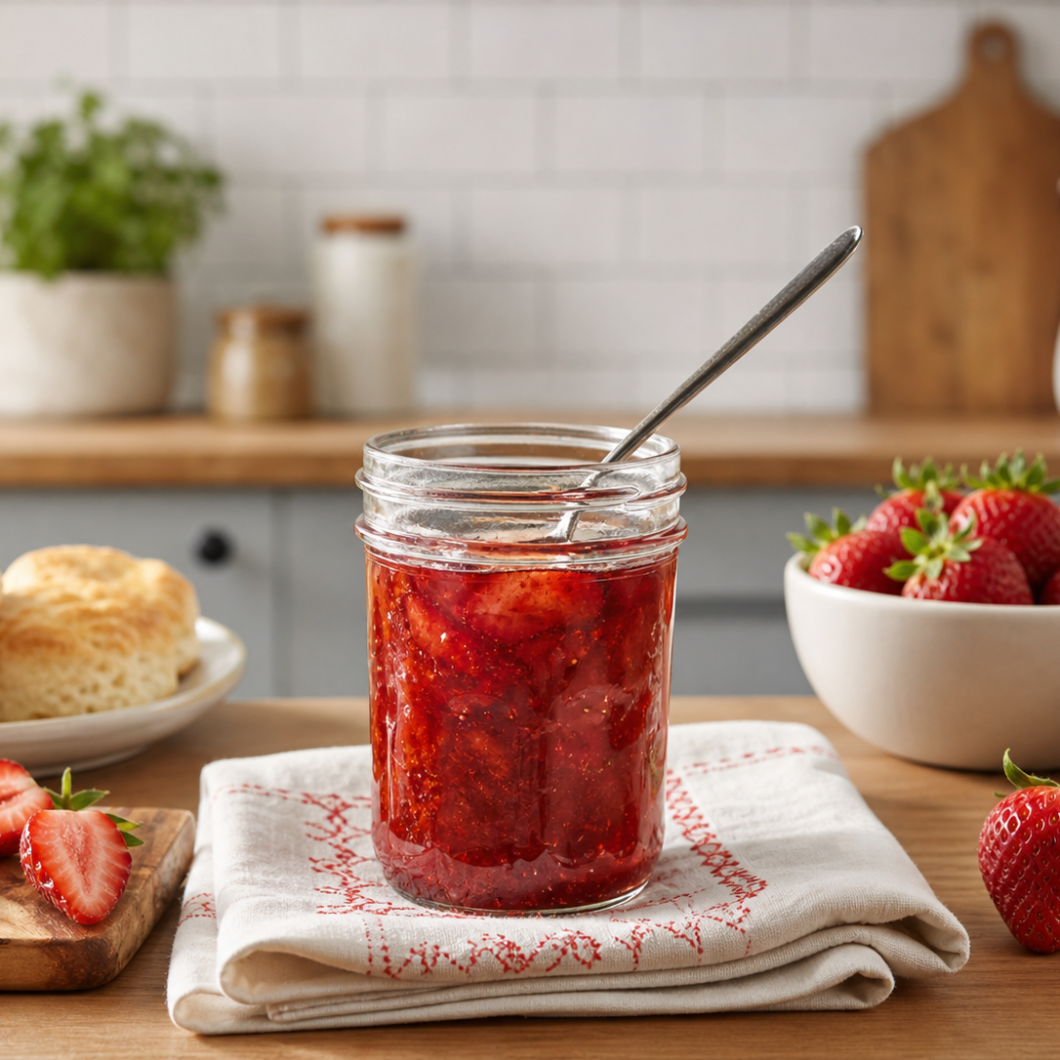
A simple homemade rhubarb jam made with fresh rhubarb, sugar, lemon juice, lemon zest, vanilla, and a pinch of salt. It’s sweet, tart, glossy, and perfect for spreading on toast, scones, pancakes, or stirring into yogurt.
10
minutes35
minutes45
kcal45
minutesIngredients
4 cups fresh rhubarb, chopped into small pieces
2 cups granulated sugar
2 tablespoons fresh lemon juice
1 teaspoon lemon zest
1 teaspoon vanilla extract
pinch of salt
Directions
- Wash the rhubarb, trim the ends, and remove the leaves. Cut the stalks into small, roughly ½-inch pieces.
- Add the chopped rhubarb, sugar, lemon juice, lemon zest, and salt to a medium saucepan.
- Stir well and let the mixture sit for about 10 minutes so the sugar can draw moisture from the rhubarb
- Place the saucepan over medium heat and cook until the rhubarb begins releasing its juices.
- Bring the mixture to a gentle boil, then reduce the heat and simmer for 25–35 minutes, stirring occasionally
- Continue cooking until the rhubarb is soft and the mixture is thick and glossy.
- Test the jam on a cold plate. If it wrinkles slightly when pushed, it is ready.
- Remove the saucepan from the heat and stir in the vanilla extract.
- For smooth jam, mash the rhubarb with a potato masher or briefly blend it. For a more textured jam, leave the softened pieces intact.
- Transfer the jam to clean jars and allow it to cool before refrigerating.
Notes
- The jam will thicken more as it cools, so avoid overcooking it.
- Stir occasionally while the jam simmers to prevent it from sticking to the bottom of the saucepan.
- Frozen rhubarb can also be used and may take slightly longer to reach the right consistency.
- Store cooled jam in a clean, sealed jar in the refrigerator and use within a few weeks.
- For longer storage, freeze the jam or follow a tested water-bath canning method.