A Traditional Side Dish That Never Goes Out of Style
Yorkshire puddings are one of those recipes that can turn a simple meal into something memorable. Although they use only a handful of pantry staples, the results are impressive when every step is followed carefully. The crisp golden exterior and airy center make them an excellent companion for roast dinners, rich gravies, and hearty vegetables.
I enjoy making Yorkshire puddings at home because they require very little preparation while delivering bakery-quality results straight from the oven. The secret isn’t using fancy ingredients—it’s paying attention to the batter, allowing it to rest, and making sure the cooking fat is piping hot before adding the mixture.
Whether prepared in individual muffin cups or baked as one large pudding, this recipe produces beautifully risen Yorkshire puddings with crisp edges and a soft interior.
Why This Recipe Works
The beauty of Yorkshire pudding lies in its simplicity. Flour provides structure, eggs help create lift, milk gives the batter the right consistency, and hot fat produces the signature rise.
When these ingredients are combined correctly, they transform into light, puffy puddings with crisp edges and a hollow center that easily holds gravy.
Even though the ingredient list is short, each step contributes to the final texture. Skipping the resting time or using fat that isn’t hot enough can affect the rise considerably.
Ingredients That Build the Perfect Batter
Every ingredient has an important purpose.
All-Purpose Flour
The flour forms the structure of the pudding. Once mixed with eggs and milk, it develops enough strength to trap steam while baking, creating the characteristic puff.
Salt
Only a small amount of salt is needed to enhance the overall flavor without overpowering the batter.
Eggs
Eggs provide structure while helping the batter rise in the hot oven. Fresh eggs generally create a stronger structure during baking.
Whole Milk
Whole milk gives richness and contributes to a smooth batter. It also helps create a soft interior while keeping the exterior crisp.
Cooking Fat
Beef drippings create the most traditional flavor and encourage exceptional browning.
Lard also works well, while vegetable oil provides an alternative with a higher smoke point.
Preparing the Batter
The batter comes together quickly.
Start by combining the flour and salt in a mixing bowl. Creating a small well in the center makes it easier to gradually mix in the eggs.
Once the eggs are added, whisk them into the flour until partially combined before slowly adding the milk.
Adding the milk gradually helps prevent lumps from forming and creates a smooth batter with an even consistency.
The finished batter should resemble heavy cream. It should pour easily but still have enough body to coat a spoon lightly.
Why Resting the Batter Matters
Allowing the batter to rest is one of the most valuable steps in the recipe.
Leaving it at room temperature for 30 minutes to one hour gives the flour enough time to fully absorb the liquid while allowing the gluten to relax.
This simple waiting period helps produce lighter Yorkshire puddings with improved texture and a better rise inside the oven.
Although it may be tempting to bake immediately, resting the batter is worth the extra time.
Heating the Fat
While the batter rests, prepare the oven.
Preheat it to 425°F (220°C).
Place about one teaspoon of beef drippings, lard, or vegetable oil into each muffin cup or use the fat in a roasting dish if making one large pudding.
Allow the tray to heat inside the oven for approximately five to ten minutes until the fat becomes extremely hot.
The fat should be close to smoking before adding the batter.
This high temperature creates instant steam the moment the batter touches the pan, producing the impressive rise Yorkshire puddings are known for.
Filling the Pan
Carefully remove the hot pan from the oven.
Working carefully, pour the batter into each cup until approximately halfway full.
Avoid stirring or moving the batter after pouring.
The hot fat immediately begins cooking the outside while steam expands inside the batter during baking.
Baking Without Disturbing the Oven
Return the pan to the oven immediately.
Bake for 20 to 25 minutes.
During this time the batter will rise dramatically while developing a deep golden color.
One of the most important rules is to avoid opening the oven door.
Allowing cold air into the oven before the puddings are fully baked may cause them to collapse before setting.
For extra crisp edges, increase the oven temperature to 450°F (230°C) during the last two to three minutes.
Serving Yorkshire Puddings
Yorkshire puddings are best enjoyed straight from the oven.
Their crisp shell contrasts beautifully with the tender center.
They pair especially well with roast beef and gravy but also complement sausages, vegetables, and other comforting family meals.
Because they have a neutral flavor, they absorb sauces exceptionally well.
Common Baking Problems
Puddings Don’t Rise
Several factors may prevent proper rising.
The oven may not be fully preheated.
The cooking fat may not have reached the correct temperature.
The batter could also be too thick.
Each of these factors reduces the amount of steam produced during baking.
Soft or Soggy Bottoms
If the pan isn’t hot enough before adding the batter, the bottoms may remain soft instead of crisp.
Using too little fat can also prevent proper browning.
Dense Texture
Overmixing the batter can develop excess gluten, making the puddings chewier than intended.
Likewise, baking too slowly at a lower temperature may prevent them from becoming light and airy.
Helpful Baking Tips
A metal muffin tin generally produces better results than glass because it heats more quickly and evenly.
Maintaining a consistent oven temperature throughout baking helps every pudding rise evenly.
Once the batter is poured into the hot fat, it should go directly back into the oven without delay.
Recipe Variations
Large Yorkshire Pudding
Instead of individual puddings, pour the batter into one deep roasting tray.
Bake for approximately 35 to 40 minutes until golden and crisp.
Herb Version
Fresh thyme or rosemary can be stirred into the batter before baking for a subtle herbal flavor.
Beer Batter
Replacing one-quarter cup of the milk with beer creates a slightly lighter batter with a gentle tang.
Getting the Batter Consistency Right
Although the batter comes together quickly, taking a few extra moments while mixing makes a difference.
Gradually adding the milk while whisking prevents lumps and produces a silky batter. Once mixed, it should be smooth enough to pour easily without being watery.
A batter that resembles heavy cream is ideal. If it is too thick, the puddings may not expand properly. If it becomes too thin, they may not develop enough structure during baking.
Whisk only until everything is fully combined. Overmixing can develop too much gluten, resulting in a firmer texture after baking.
Why Resting Should Never Be Skipped
Allowing the batter to rest is one of the easiest ways to improve the final result.
During this time, the flour absorbs the liquid more evenly, producing a smoother batter with better consistency. The resting period also allows the gluten to relax, helping the puddings become lighter instead of chewy.
Keeping the batter at room temperature while it rests also means it won’t experience a dramatic temperature change when it reaches the hot pan, helping it rise more evenly inside the oven.
Even though this step requires patience, it contributes greatly to the classic airy texture that Yorkshire puddings are known for.
Creating the Perfect Rise
The dramatic rise of Yorkshire puddings comes from steam.
When the cool batter is poured into smoking-hot fat, the liquid quickly turns to steam. As the steam expands, it pushes the batter upward, creating the tall sides and hollow center.
This is why preheating both the oven and the cooking fat is essential.
If either one is not hot enough, the batter begins cooking too slowly and cannot generate enough steam for a good rise.
Working carefully but quickly when pouring the batter helps preserve the temperature of the pan before it goes back into the oven.
Timing Is Everything
Baking time should remain consistent once the puddings enter the oven.
Avoid checking them too early, even if they appear to be rising quickly. Opening the oven door allows cooler air to enter, reducing the temperature and increasing the chance that the puddings will collapse before the structure has fully set.
Once they have developed a rich golden color and firm edges, they are ready to serve immediately while still hot.
If a crispier finish is preferred, increasing the oven temperature during the final few minutes creates an even crunchier exterior without drying the inside.
Storage and Reheating
Yorkshire puddings taste best immediately after baking.
If there are leftovers, allow them to cool completely before storing.
To reheat, place them in a 400°F (200°C) oven for five to seven minutes until warmed and crisp again.
Freezing is not recommended because the puddings lose much of their crisp texture after thawing.
Final Thoughts
Yorkshire puddings prove that a few everyday ingredients can create an impressive addition to any meal. By resting the batter, thoroughly heating the fat, and allowing the puddings to bake undisturbed, they develop their classic tall rise, crisp exterior, and tender center. Whether served with roast beef, sausages, or vegetables, this timeless recipe is simple enough for everyday cooking while still being special enough for holiday meals.
- The batter should have a consistency similar to heavy cream.
- Resting the batter improves texture and rise.
- Smoking hot fat is essential for tall Yorkshire puddings.
- Do not open the oven door during baking.
- A metal muffin tin gives better results than glass.
- For one large Yorkshire pudding, bake in a roasting tray for 35–40 minutes.
- Leftovers can be reheated at 400°F (200°C) for 5–7 minutes.
- Freezing is not recommended because crispness is reduced after thawing.
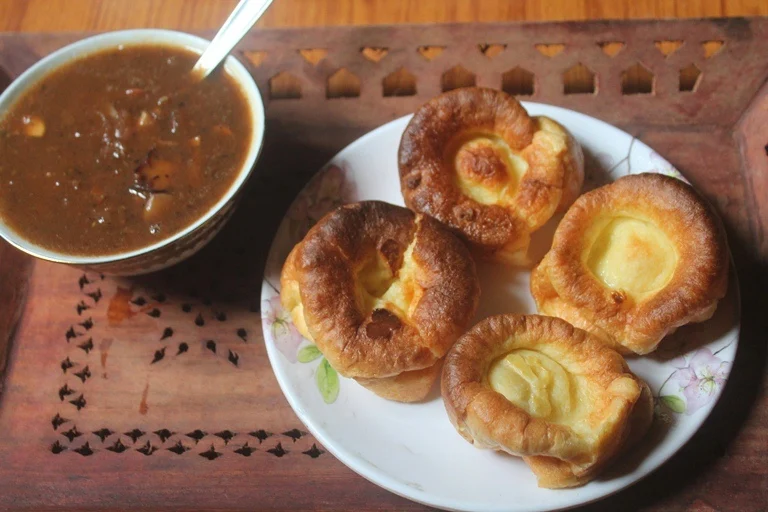
Yorkshire Puddings – Light, Crispy, and Perfectly Golden
Classic homemade Yorkshire puddings with crisp golden edges, a light airy center, and a rich flavor. Made with simple pantry ingredients and baked in hot fat for maximum rise, they are perfect alongside roast dinners, gravy, vegetables, or sausages.
12
servings10
minutes25
minutes78
kcal35
minutesIngredients
1 cup (120g) all-purpose flour
1/2 teaspoon salt
2 large eggs
1 cup(240 ml) whole milk
2 teaspoons beef drippings, lard, or vegetable oil
Directions
- In a mixing bowl, combine the flour and salt.
- Make a well in the center and add the eggs.
- Whisk the eggs into the flour, then gradually pour in the milk while whisking until the batter becomes smooth and lump-free.
- Let the batter rest at room temperature for 30 minutes to 1 hour.
- Preheat the oven to 425°F (220°C).
- Add about 1 teaspoon of beef drippings, lard, or vegetable oil into each muffin cup or use the fat in a roasting dish.
- Heat the pan in the oven for 5–10 minutes until the fat is smoking hot.
- Carefully remove the hot pan and fill each cup about halfway with batter.
- Return the pan to the oven immediately.
- Bake for 20–25 minutes without opening the oven door.
- For extra crispiness, bake for an additional 2–3 minutes at 450°F (230°C).
- Serve immediately while hot.
Notes
- The batter should have a consistency similar to heavy cream.
- Resting the batter improves texture and rise.
- Smoking hot fat is essential for tall Yorkshire puddings.
- Do not open the oven door during baking.
- A metal muffin tin gives better results than glass.
- For one large Yorkshire pudding, bake in a roasting tray for 35–40 minutes.
- Leftovers can be reheated at 400°F (200°C) for 5–7 minutes.
- Freezing is not recommended because crispness is reduced after thawing.
Nutrition Facts
- Total number of serves: 12
- Calories: 78kcal
- Fat: 3.7g
- Saturated Fat: 1.1g
- Cholesterol: 34mg
- Sodium: 123mg
- Carbohydrates: 8.2g
- Sugar: 1.2g