Equipment Needed
- Shallow oven-safe dish
- Glass, ceramic, or enameled metal
- Cream should be no more than 1–2 inches deep
- Oven with reliable low-temperature control
- Aluminum foil or lid (optional)
- Refrigerator
- Slotted spoon or spatula
- Storage container with lid
Method Overview
- Gently heat the cream for many hours at low temperature
- Cool completely to allow clots to set
- Skim the thick cream from the surface
- Store and use
This process takes time, but requires very little active work.
Step-by-Step Instructions
Step 1: Prepare the Cream
Pour the heavy cream into your shallow dish. The depth is important. If the cream is too deep, it will not clot evenly. Aim for a depth between 1 and 2 inches.
Do not stir the cream. Leave it completely still.
Step 2: Slow Heating
Preheat your oven to 170–180°F (75–82°C).
Place the uncovered dish of cream into the oven.
Let it heat undisturbed for 10 to 12 hours.
What Happens During This Time
- The fat slowly rises to the surface
- A thick crust forms on top
- The cream underneath becomes thinner
You may see bubbles, wrinkling, or a golden skin forming. This is normal. The surface should never boil or simmer aggressively.
Step 3: Cooling Period
After heating, turn off the oven.
Remove the dish carefully and let it cool to room temperature without disturbing it.
Once cooled, place the dish in the refrigerator for at least 8 hours, preferably overnight.
This chilling step is essential. It allows the clotted layer to fully set and separate from the liquid cream beneath.
Step 4: Skimming the Clotted Cream
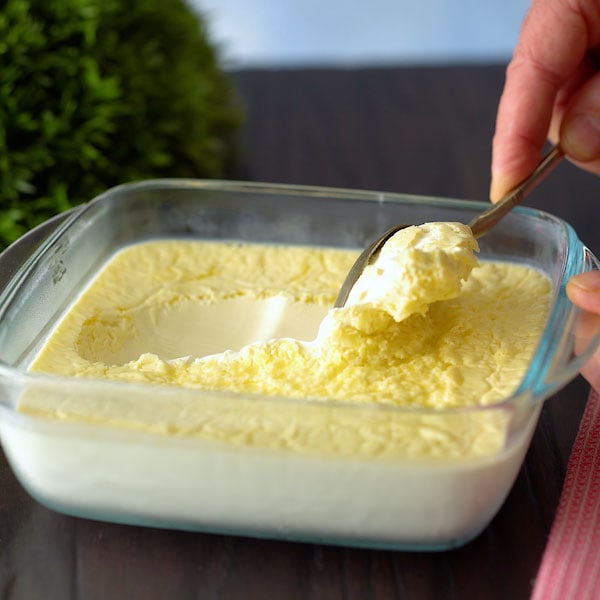
After chilling, you will see a thick, yellowish crust on top.
Using a slotted spoon or spatula, gently lift the clotted cream from the surface. Try to keep the clots as intact as possible.
Transfer the clotted cream into a clean container.
Do not mix vigorously. Gentle folding is fine if you want a smoother consistency.
Step 5: Handling the Remaining Liquid
Underneath the clotted cream is a thin, milk-like liquid.
You can:
- Save it for baking
- Add it to pancakes or bread dough
- Use it in soups or sauces
Do not discard it unless you choose to.
Texture and Appearance
Proper clotted cream should be:
- Thick and spreadable
- Slightly grainy but smooth
- Pale ivory to light yellow
- Able to hold soft peaks
If it is runny, the cream was likely too low in fat or heated at too high a temperature.