Essential Equipment
- Deep pot or heavy-bottomed pan
- Cooking thermometer
- Long chopsticks or tongs
- Wire rack or paper towels
- Mixing bowls
- Sharp knife
- Slotted spoon
Ingredients
Tempura Batter
- 1 cup cake flour (preferred) or all-purpose flour
- 1 large egg
- 1 cup ice-cold water
- A few ice cubes (optional but recommended)
Frying Oil
- Neutral oil with high smoke point
Examples:- Vegetable oil
- Canola oil
- Rice bran oil
You will need enough oil to reach at least 5 cm depth in your pan.
Common Tempura Ingredients
Choose a mix of seafood and vegetables.
Seafood Options
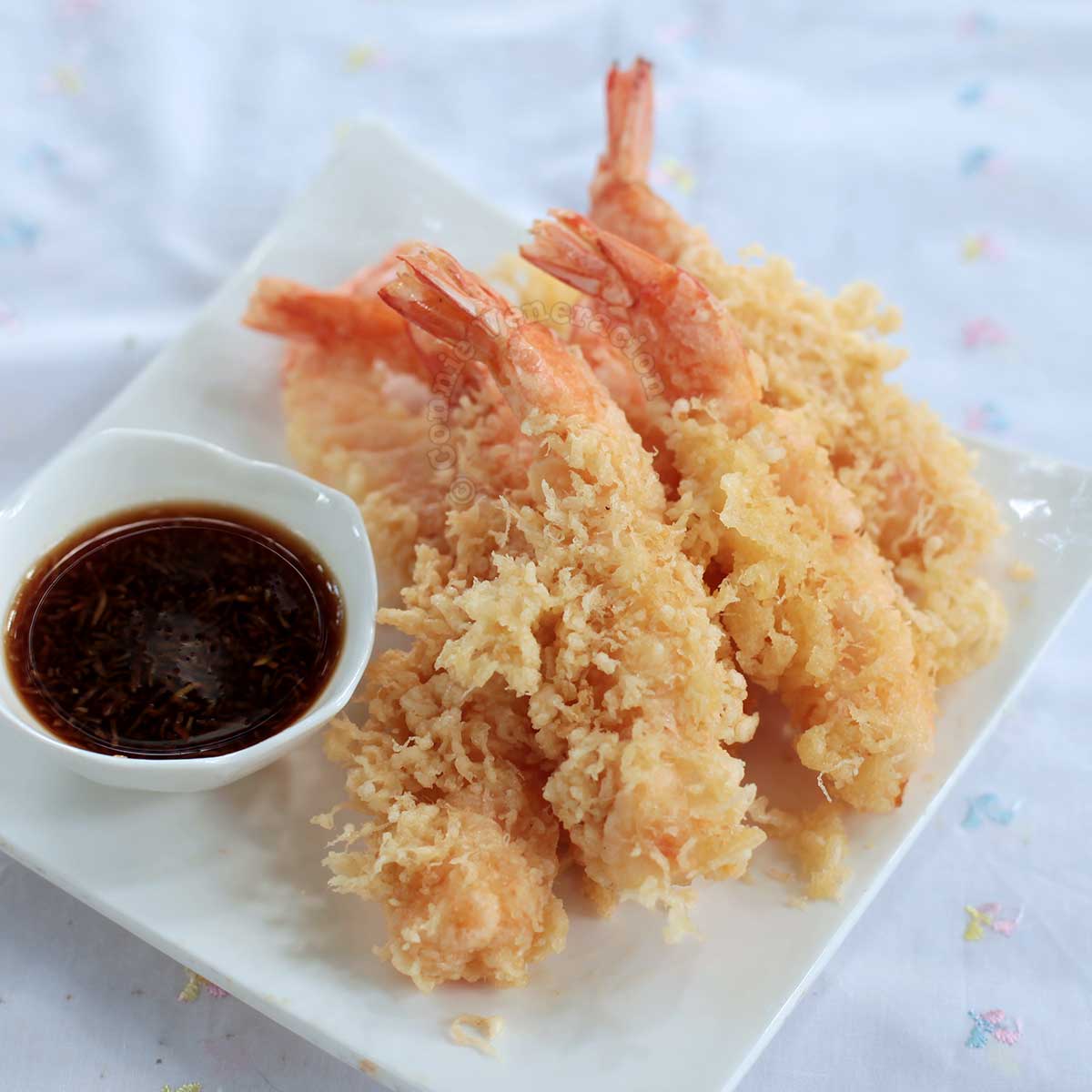
- Shrimp (shell removed, tail on)
- White fish (cod, pollock, whiting)
- Squid
- Scallops
Vegetable Options
- Sweet potato
- Eggplant
- Zucchini
- Pumpkin
- Bell pepper
- Onion
- Green beans
- Shiso leaves
- Mushrooms (shiitake or enoki)
Tempura Dipping Sauce (Tentsuyu)
- 240 ml dashi stock
- 60 ml soy sauce
- 60 ml mirin
- Optional additions:
- Grated daikon radish
- Fresh grated ginger
Step 1: Preparing the Ingredients
Vegetables
- Cut vegetables into uniform sizes so they cook evenly.
- Slice sweet potato and pumpkin thinly (about 3 mm thick).
- Cut eggplant lengthwise and lightly score the skin to prevent curling.
- Pat all vegetables completely dry.
Moisture causes oil splatter and weakens the batter.
Shrimp Preparation (Important)
- Peel shrimp, leaving the tail intact.
- Remove the vein.
- Make small diagonal cuts on the belly side.
- Gently press to straighten the shrimp.
This prevents curling during frying and improves appearance.
Step 2: Preparing the Dipping Sauce
- Combine dashi, soy sauce, and mirin in a small saucepan.
- Bring to a gentle simmer.
- Remove from heat and let cool slightly.
Serve warm or room temperature.
Grated daikon and ginger are added individually at the table.
Step 3: Preparing the Batter
This is the most critical step.
- Place egg in a bowl and lightly beat until just combined.
- Add ice-cold water.
- Add flour all at once.
- Mix very gently using chopsticks or a fork.
- Stop mixing while the batter is still lumpy.
Do not aim for smoothness.
Overmixing activates gluten, which makes the coating heavy.
Keep the batter cold at all times.
Step 4: Heating the Oil
- Heat oil to 170–180°C.
- Test by dropping a small amount of batter:
- It should sink slightly, then rise and float.
- It should sizzle gently, not aggressively.
Temperature control is essential.
Too hot burns the batter.
Too cool makes tempura oily.
Step 5: Frying Technique
General Rules
- Fry in small batches.
- Do not overcrowd the pan.
- Dip ingredients lightly, never thickly.
- Shake off excess batter before frying.
Frying Vegetables
- Dip vegetables into batter.
- Gently slide into oil.
- Fry for 1 to 2 minutes depending on thickness.
- Turn once if needed.
- Remove when batter is pale and crisp.
Vegetables should be tender but not mushy.
Frying Shrimp and Seafood
- Dip shrimp lightly into batter.
- Hold tail and lower gently into oil.
- Fry for 1.5 to 2 minutes.
- Remove when the batter looks airy and set.
Shrimp should be just cooked, not rubbery.
Step 6: Draining
- Remove tempura with a slotted spoon.
- Drain briefly on a wire rack or paper towels.
- Serve immediately.
Tempura loses crispness quickly if left standing.
How to Eat Tempura
- Dip lightly into tentsuyu.
- Do not soak.
- Eat while hot.
The goal is balance, not saturation.
Common Mistakes and How to Avoid Them
- Batter too thick
Add a little more cold water. - Batter too thin
Add a small amount of flour, gently. - Greasy tempura
Oil temperature too low. - Hard or bready coating
Batter overmixed or oil too hot.
Variations
Kakiage (Mixed Tempura)
- Thinly slice onion, carrot, and shrimp.
- Mix lightly with batter.
- Fry as a loose fritter.
Tempura Donburi (Tendon)
- Serve tempura over rice.
- Drizzle with sweet soy sauce.
Tempura Udon or Soba
- Serve tempura on top of hot noodle soup.
Storage Notes
- Tempura is best eaten immediately.
- Reheating is not recommended.
- If necessary, reheat briefly in an oven, not a microwave.