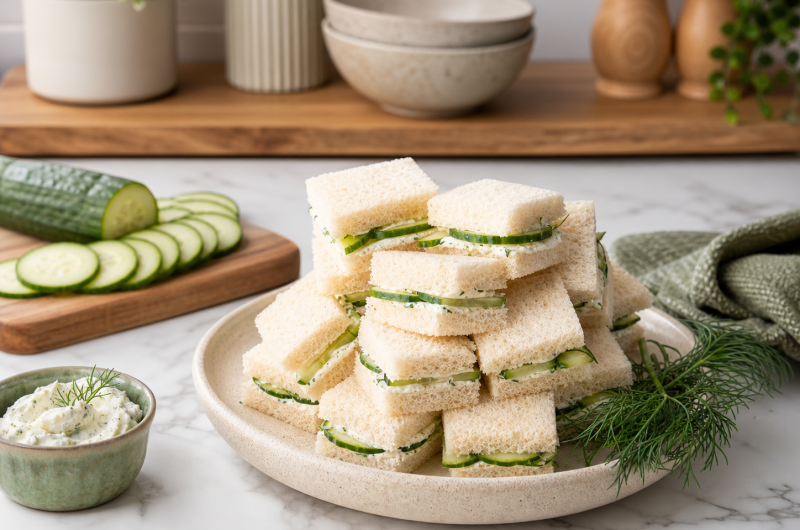
Cucumber sandwiches are one of those simple recipes that do not need complicated ingredients to taste special. Soft bread, crisp cucumber, and a creamy herb-filled spread come together to make a light sandwich that works beautifully for lunch, afternoon tea, brunch, snacks, or small gatherings.
The key to making good cucumber sandwiches is paying attention to the texture of each ingredient. The bread should stay soft, the cucumber should be fresh and crisp, and the cream cheese mixture should be smooth enough to spread easily. When everything is prepared properly, each bite has a pleasant contrast between creamy, tangy, herby, and refreshing flavors.
This version uses a dilly cream cheese spread instead of plain butter. The cream cheese gives the sandwiches a richer texture, while lemon juice adds a little brightness. Dried dill brings an herby flavor, and green onion gives the spread a mild savory bite. Garlic powder, salt, and black pepper round everything out without overpowering the cucumber.
Why These Cucumber Sandwiches Work So Well
The combination is simple, but each ingredient has a purpose. The cucumber provides freshness and crunch, while the cream cheese creates a creamy layer that brings the sandwich together.
The lemon juice keeps the cream cheese from tasting too heavy and adds a subtle tang. Dill is especially good with cucumber because the two flavors naturally complement one another. Green onion adds a little freshness and savory flavor, while garlic powder and black pepper give the spread more depth.
Using soft white bread keeps the sandwiches delicate. Since cucumber sandwiches are usually made in small portions, soft bread also makes them easy to bite into without making the sandwich feel too heavy.
Start With the Bread
One small preparation step makes a noticeable difference when making these sandwiches: freeze the bread before assembling them.
Place all 12 slices of white bread on a parchment-lined baking sheet and put them in the freezer for at least one hour. The bread does not need to become completely frozen solid. The purpose is simply to firm it up enough that it will be easier to handle and slice.
Soft bread can easily flatten when you press a knife through it. This can make the finished sandwiches look uneven, especially if the crusts are being removed. Chilling the bread gives it more structure and helps create cleaner edges.
This step is particularly useful if the sandwiches are being cut into small pieces for a tea table, brunch, party, or appetizer tray.
Make the Dilly Cream Cheese Spread
While the bread is chilling, prepare the cream cheese mixture.
Place the room-temperature cream cheese in a bowl. Add the dried dill, garlic powder, salt, black pepper, lemon juice, and sliced green onion.
Mix everything together until the ingredients are evenly distributed and the cream cheese becomes soft and spreadable. Since the cream cheese is at room temperature, it should be easy to combine without much effort.
Take a moment to make sure there are no large areas of plain cream cheese left in the bowl. The dill and green onion should be spread throughout the mixture so that each sandwich gets a little of every flavor.
The finished spread should be creamy rather than runny. A spread that is too loose can make the bread softer than desired, especially when combined with fresh cucumber.
Prepare the Cucumber
The cucumber is the fresh element of the sandwich, so choose one with a crisp texture.
An English cucumber is the best choice because it has a thinner skin and smaller, softer seeds. The skin can be left on, completely peeled, or partially peeled. Leaving some of the green skin gives the sandwich a little extra color, while peeling it completely creates a more delicate appearance.
If using a regular cucumber, peeling it is recommended. The skin of a conventional cucumber can be tougher and may not suit the soft texture of the bread and cream cheese.
Once the cucumber is prepared, slice it very thinly. A sharp knife works well, but a mandoline can also be used. If using a mandoline, a ⅛-inch setting, or about 3 mm, works well.
Thin slices are important because thick cucumber pieces can make the sandwiches difficult to bite and can also make them feel bulky. Thin slices give you a nice layer of cucumber without overwhelming the bread.
Assemble the Sandwiches
Once the bread has chilled and the cucumber has been sliced, it is time to assemble the sandwiches.
Work with two slices of bread at a time. Spread approximately 1½ tablespoons of the cream cheese mixture over the surface of each slice.
Make sure the cream cheese reaches all the way to the edges. This is more than just a way to make the sandwiches look finished. The cream cheese creates a protective layer between the moist cucumber and the bread.
If the center is covered but the edges are left bare, moisture from the cucumber can reach those exposed areas and make the bread soggy. A complete layer of cream cheese helps maintain a better texture.
After spreading the cream cheese, arrange the thin cucumber slices over one slice of bread. Try to create an even layer rather than piling the cucumber in the center.
Place the second slice of bread on top, with the cream cheese side facing the cucumber.
Press the sandwich together gently. There is no need to press hard because doing so can flatten the soft bread and push the filling toward the edges.
Trim and Cut
For a traditional cucumber sandwich presentation, remove the crusts from each assembled sandwich.
Use a sharp knife and cut carefully through the bread. Since the bread has been chilled, it should be easier to cut without crushing it.
After trimming the crusts, each sandwich can be cut in half or divided into four small pieces.
For a casual lunch or snack, cutting the sandwiches in half is simple and practical. For afternoon tea, parties, brunches, or appetizer trays, four small pieces make a neat bite-sized serving.
If there are extra cucumber slices, they can be used as a small garnish on top of the sandwiches.
Keeping the Sandwiches Fresh
Cucumber sandwiches are at their best when served soon after they are assembled. The bread is soft and delicate, while the cucumber naturally contains a lot of moisture.
For the best texture, serve the sandwiches within 1–2 hours of assembly.
If they need to sit for a short time before serving, keep them covered and chilled. Avoid assembling them much earlier than necessary because the longer the cucumber sits against the bread, the greater the chance that the bread will become soft and damp.
The cream cheese layer helps reduce this problem, but it cannot completely prevent moisture from the cucumber from affecting the bread over a long period.
For this reason, the most convenient approach is to prepare the components ahead of time and assemble the sandwiches closer to serving.
A Few Helpful Tips
Use Room-Temperature Cream Cheese
The cream cheese should be at room temperature before mixing. Soft cream cheese combines much more easily with the dill, lemon juice, seasonings, and green onion.
Cold cream cheese can be stiff and difficult to spread evenly, which may cause you to press too hard on the bread.
Slice the Cucumber Thinly
Thin cucumber slices give the sandwiches their delicate texture. If the slices are too thick, the cucumber can dominate the sandwich and make it harder to cut neatly.
A sharp knife is enough, but a mandoline can help create more uniform slices.
Cover the Bread Completely
Do not stop the cream cheese layer in the middle of the bread. Spread it from edge to edge.
This helps protect the bread from the moisture in the cucumber and also ensures that every bite has the creamy, tangy spread.
Keep the Bread Soft
Soft white bread works particularly well because it matches the light character of the filling. Freezing the slices before assembly is mainly a cutting technique; once assembled, the sandwiches can be served with their soft texture intact.
Assemble Close to Serving
These sandwiches do not need much time to come together, so there is little reason to assemble them far in advance. Preparing the spread and cucumber ahead of time can make serving easier while allowing the sandwiches to retain a fresher texture.
Optional Creamy Addition
The cream cheese mixture can also include mayonnaise if a slightly creamier spread is preferred. The amount should be kept modest because too much mayonnaise can loosen the filling.
For this version, add 1–2 tablespoons of mayonnaise, beginning with 1 tablespoon. This is an optional addition and does not replace any of the ingredients already listed.
Fresh Dill Instead of Dried Dill
Dried dill is convenient because it can be kept in the pantry and used whenever needed. If fresh dill is available, it can be used instead.
Use 1½ teaspoons of fresh chopped dill in place of the ½ teaspoon of dried dill listed in the recipe.
The rest of the cream cheese ingredients remain the same.
Serving Ideas
These sandwiches are light enough to serve as a snack but also make a lovely addition to a larger spread.
For afternoon tea, arrange the small four-piece sandwiches on a serving plate. They can be paired with other small snacks or served as part of a simple brunch.
For a casual meal, cutting the sandwiches into halves gives a more substantial portion. They can also be packed for a light lunch, provided they are kept chilled and eaten within a short period.
The fresh cucumber and creamy dill spread make these sandwiches especially refreshing when served cold.
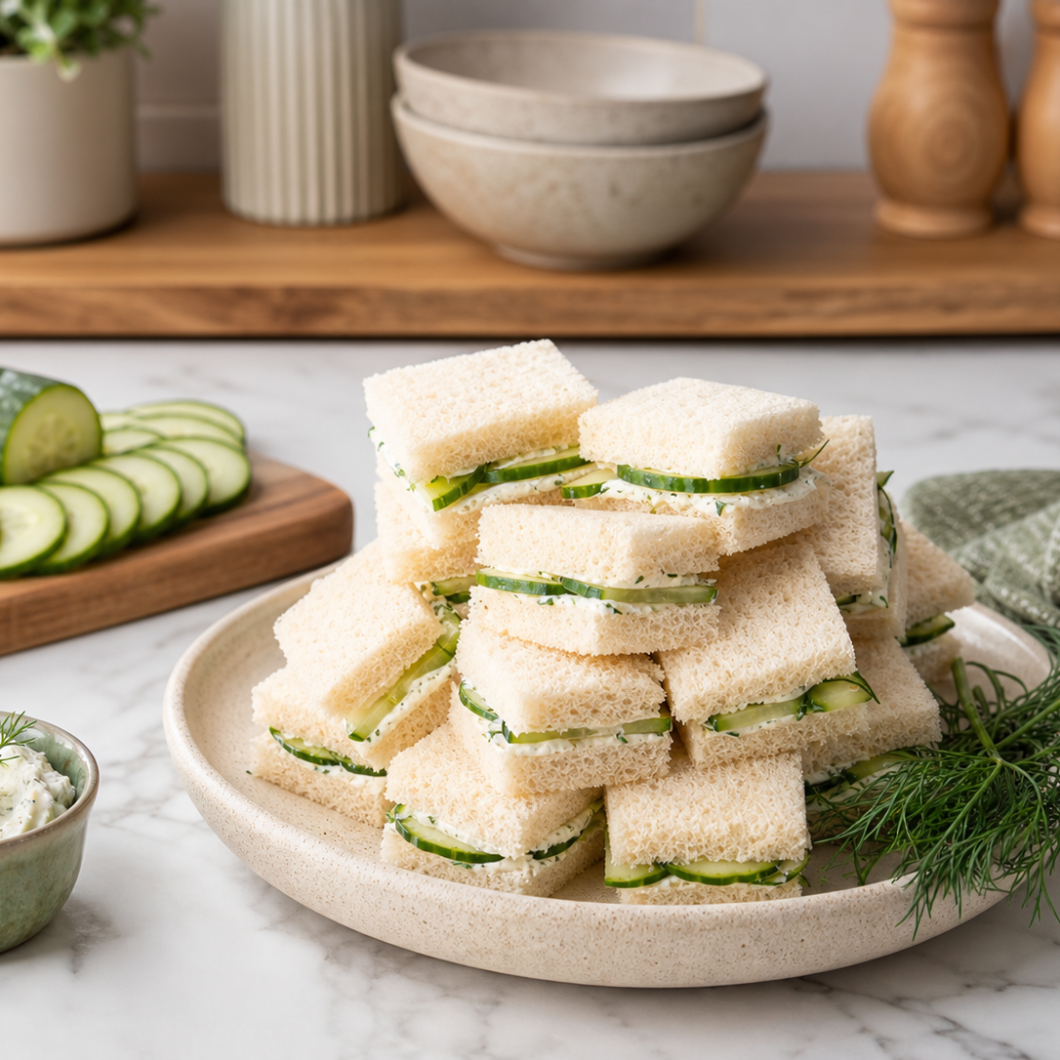
Healthy Cucumber Tea Sandwich
Soft white bread layered with thinly sliced English cucumber and a creamy, tangy dill and green onion cream cheese spread. A light and refreshing sandwich for lunch, snacks, afternoon tea, brunch, or appetizers.
6
servings10
minutes190
kcal10
minutesIngredients
12 slices white bread
8 oz cream cheese, room temperature
1/2 dried dill
1/4 garlic powder
1/4 salt
1/4 black pepper, freshly cracked
2 tablespoons lemon juice
1 green onion, sliced
1 large English cucumber
Directions
- Arrange the bread slices on a parchment-lined baking sheet. Freeze for at least 1 hour to make the bread easier to cut
- Add the cream cheese, dried dill, garlic powder, salt, black pepper, lemon juice, and sliced green onion to a bowl.
- Mix until the cream cheese is smooth, soft, and evenly combined.
- Peel the cucumber if desired and slice it very thinly, about ⅛ inch (3 mm).
- Take two bread slices at a time. Spread about 1½ tablespoons of the cream cheese mixture over the entire surface of each slice, reaching all the way to the edges
- Arrange the cucumber slices over one piece of bread. Place the second slice on top, with the cream cheese side facing the cucumber
- Carefully remove the crusts with a sharp knife.
- Cut each sandwich in half or into four small pieces.
- Garnish with any extra cucumber slices if desired and serve within 1–2 hours.
Notes
- English cucumbers work best because they have thin skin and small, soft seeds.
- Regular cucumbers can be used, but peeling them is recommended.
- Fresh dill can replace dried dill. Use 1½ tsp fresh chopped dill instead of ½ tsp dried dill.
- For an optional creamier spread, add 1–2 Tbsp mayonnaise, starting with 1 tablespoon.
- Spread the cream cheese completely to the edges to help prevent the cucumber from making the bread soggy.
- For the best texture, assemble the sandwiches as close to serving time as possible.
Nutrition Facts
- Total number of serves: 6
- Calories: 190kcal
- Fat: 10g
- Saturated Fat: 5g
- Cholesterol: 25mg
- Sodium: 300mg
- Carbohydrates: 19g
- Fiber: 1g
- Sugar: 3g
- Protein: 5g